 The Two Fridas © Schalkwijk/Art Resource, NY © 2013 Banco de México Diego Rivera Frida Kahlo Museums Trust, Mexico, D.F./Artists Rights Society (ARS), New York
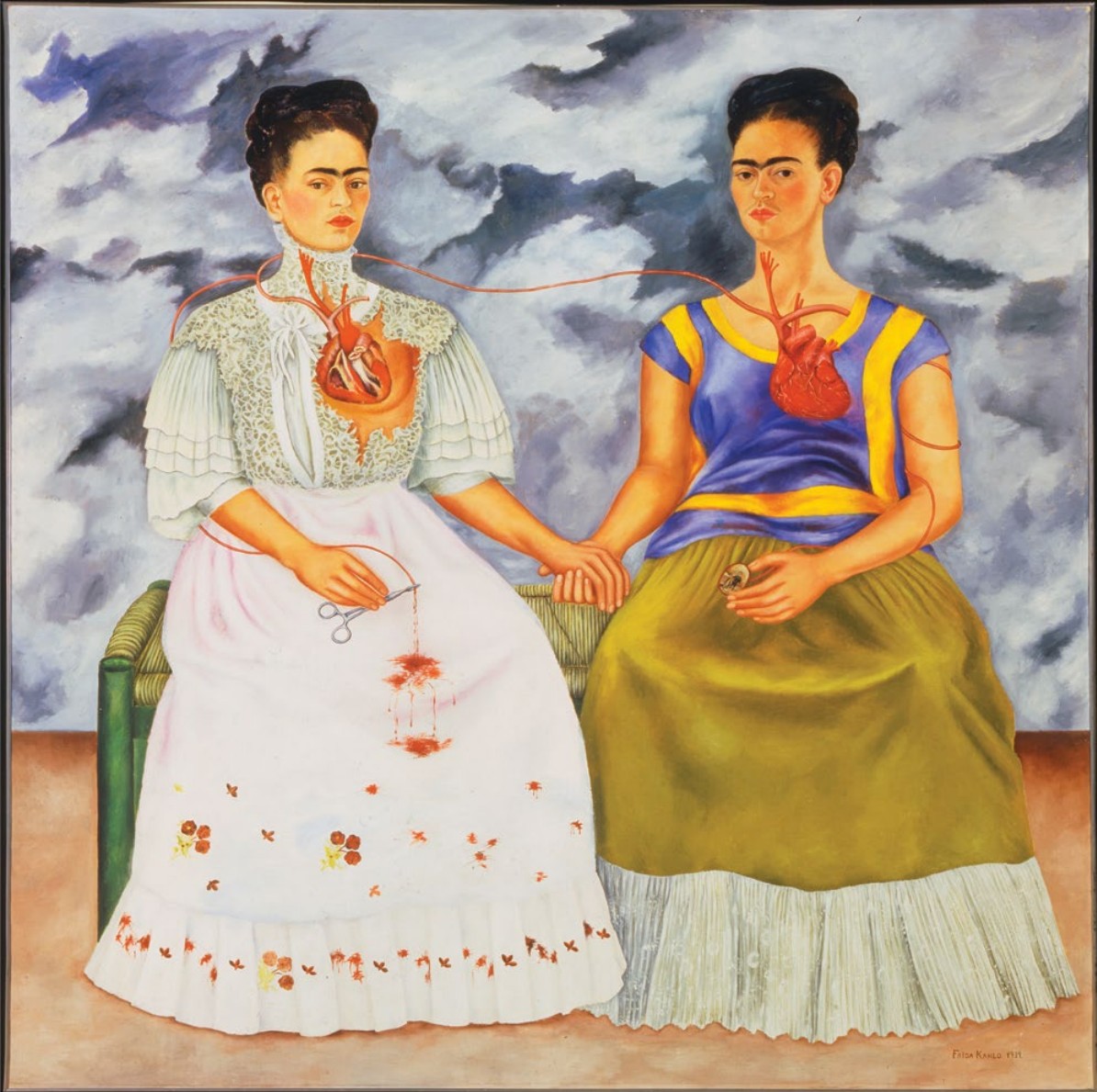
The Two Fridas
Frida Kahlo. 1939 C.E. Oil on canvas.
Curator Note
"Paintied during her divorce from Diego Rivera, this double self-portrait expresses Kahlo's split identity. Ideally, the "Mexican Frida" (right) in traditional Tehuana dress was loved by Diego, while the "European Frida" (left) in a Victorian wedding dress was rejected. The exposed hearts and shared bloodline depict her emotional pain and physical suffering."
Form
- Double self-portrait.
- Surrealist elements (exposed hearts, stormy sky).
- Stiff, seated pose (like colonial portraiture).
- Anatomical detail (veins/hearts).
- Vibrant colors adjacent to white.
Function
- To express her pain over the divorce.
- To explore her dual heritage (Mestiza).
- To validate her own reality ("I paint my own reality").
- To act as a therapeutic release.
- To assert independence (holding her own hand).
Content
- Mexican Frida: holds a miniature of Diego; heart is whole.
- European Frida: holds a hemostat clamping a bleeding vein; heart is broken.
- The blood drips onto the white dress: flowers/miscarriage/surgery.
- The vein connects the two: they sustain each other.
- Stormy sky: turmoil.
Context
- Kahlo had a German father and Mexican mother.
- Suffered lifelong pain from a bus accident (polio/spine).
- Rivera encouraged her Mexican identity.
- Surrealists claimed her, but she rejected the label.
- Personal diary on canvas.