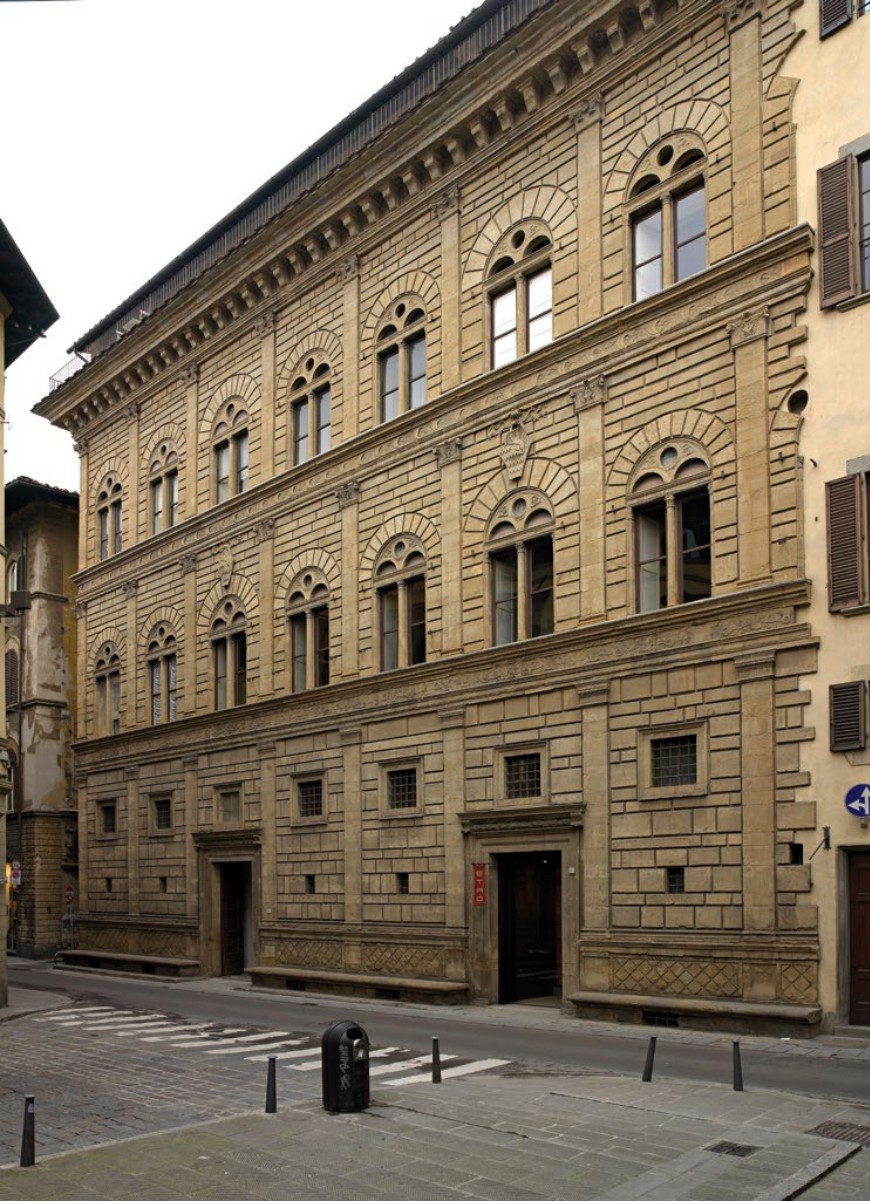
 Palazzo Rucellai © Scala/Art Resource, NY
Palazzo Rucellai
Florence, Italy. Leon Battista Alberti (architect). c. 1450 C.E. Stone, masonry.
Curator Note
"A model of Renaissance domestic architecture. Alberti applied the system of the Roman Colosseum (tiers of different columns) to a flat facade. It projects an image of order, measure, and civic pride, contrasting with the fortress-like palaces of earlier times."
Form
- Rusticated stone facade (smoother as it goes up).
- Three tiers of pilasters: Tuscan, Ionic, Corinthian (Superposition).
- Strong horizontal entablatures.
- Benches included for citizens (civic humanism).
- Grid-like, rational geometry.
Function
- Home for the wealthy Rucellai merchant family.
- To display status and good taste ("measure").
- Business headquarters on ground floor.
- Living quarters above.
- To beautify the city.
Content
- Rucellai sail emblem (wind in sails) on the frieze.
- Medici ring and feathers emblem (showing loyalty).
- Loggia built opposite for weddings.
- Classical orders reference Rome.
- No defensive towers (peaceful times).
Context
- Alberti wrote the book on architecture ("De Re Aedificatoria").
- Bernardo Rossellino likely executed the construction.
- Rucellai was a rival turn ally of Medici.
- Based on the Colosseum and Palazzo Medici.
- Humanism emphasizes rational design.