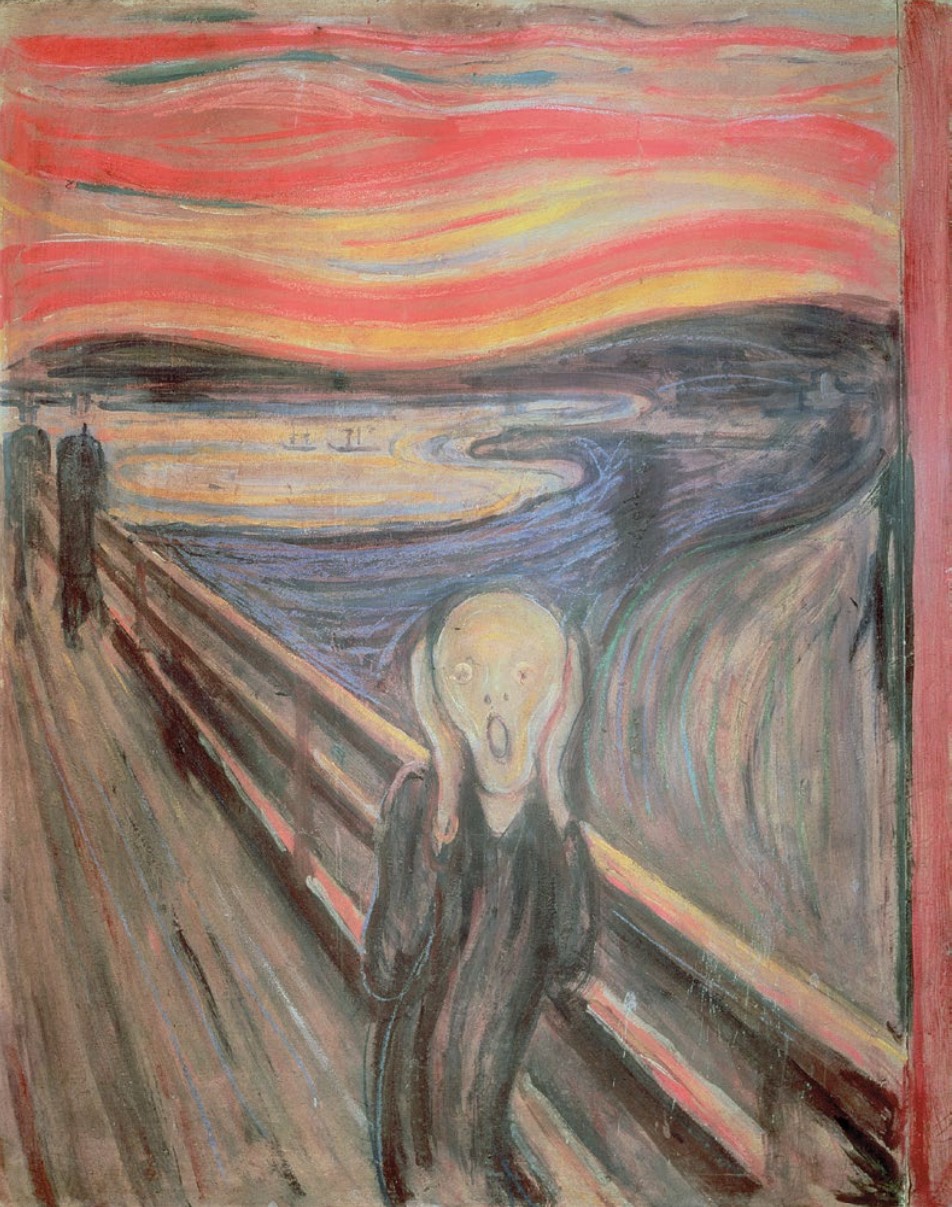
 The Scream Digital Image © Bridgeman Art Library © 2013 The Munch Museum/TheMunch-Ellingsen Group/Artists Rights Society (ARS), New York
The Scream
Edvard Munch. 1893 C.E. Tempera and pastels on cardboard.
Curator Note
"The universal icon of modern anxiety and existential dread. Munch depicts a figure on a bridge, clutching its face and screaming as the sky turns blood red. The landscape dissolves into swaying lines that echo the sound of the scream. It is a subjective, psychological reality, not an objective one."
Form
- Garish, clashing colors (orange, blue).
- Undulating, curvilinear lines (Art Nouveau influence).
- Distorted, skeletal figure.
- Steep diagonal perspective of the bridge.
- Rough application of tempera and pastel.
Function
- To express the artist's inner overwhelming anxiety.
- To visualize the "scream of nature".
- To break with Realism entirely.
- To explore the themes of life, death, and fear.
- Symbolist manifesto.
Content
- The Androgynous figure: universal human/skull-like.
- The Red Sky: "blood and tongues of fire" (volcanic dust?).
- Two figures in background: indifferent to the suffering.
- The bridge: a precipice/transition.
- The scream is felt rather than heard.
Context
- Based on a personal experience Munch had while walking with friends.
- Krakatoa eruption might have caused the red skies.
- Symbolism/Expressionism precursors.
- Munch suffered from trauma and illness.
- Existentialism: the isolation of the individual.