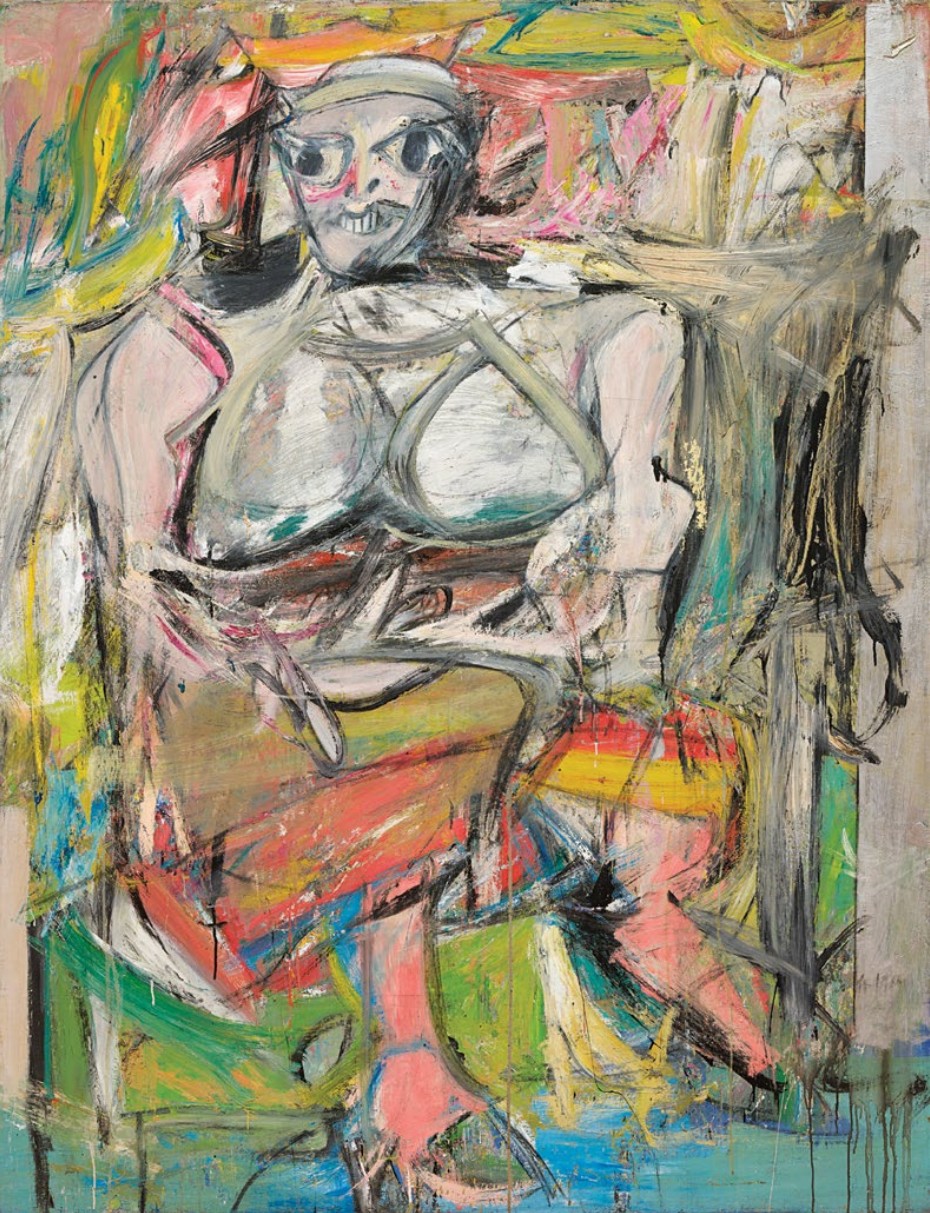
 Woman, I Photo © 2013 The Museum of Modern Art/Licensed by SCALA/Art Resource, NY © 2013 The Willem de Kooning Foundation/Artists Rights Society (ARS), New York
Woman, I
Willem de Kooning. 1950–1952 C.E. Oil on canvas.
Curator Note
"An aggressive, energetic masterpiece of Abstract Expressionism (Action Painting). De Kooning painted, scraped off, and repainted this canvas for two years. The figure of the woman is grotesque, with staring eyes and ferocious teeth, reflecting a conflicted view of women—referencing pin-ups, goddesses, and demons simultaneously."
Form
- Action Painting: visible, aggressive brushstrokes.
- Layers of paint (process is visible).
- Garish colors.
- Distorted, grotesque figure.
- Merging of figure and background.
Function
- To depict the "process" of painting.
- To explore the archetype of the female.
- To express raw emotion/angst.
- To bridge abstraction and figuration.
- To challenge the ideal of the "pretty" nude.
Content
- The Woman: large breasts (fertility/pin-up), toothy grin (devouring/threatening).
- Staring eyes: confrontational.
- References: Venus of Willendorf, 1950s models, Mesopotamian idols.
- Violence of execution: slicing strokes.
- Ambiguity: is it misogyny or awe?
Context
- New York School (Abstract Expressionism).
- Reaction against the purity of Clement Greenberg's formalism (De Kooning kept the figure).
- Post-WWII existentialism.
- Influence of commercial culture (Camel cigarette smile).
- The canvas as an "arena in which to act".