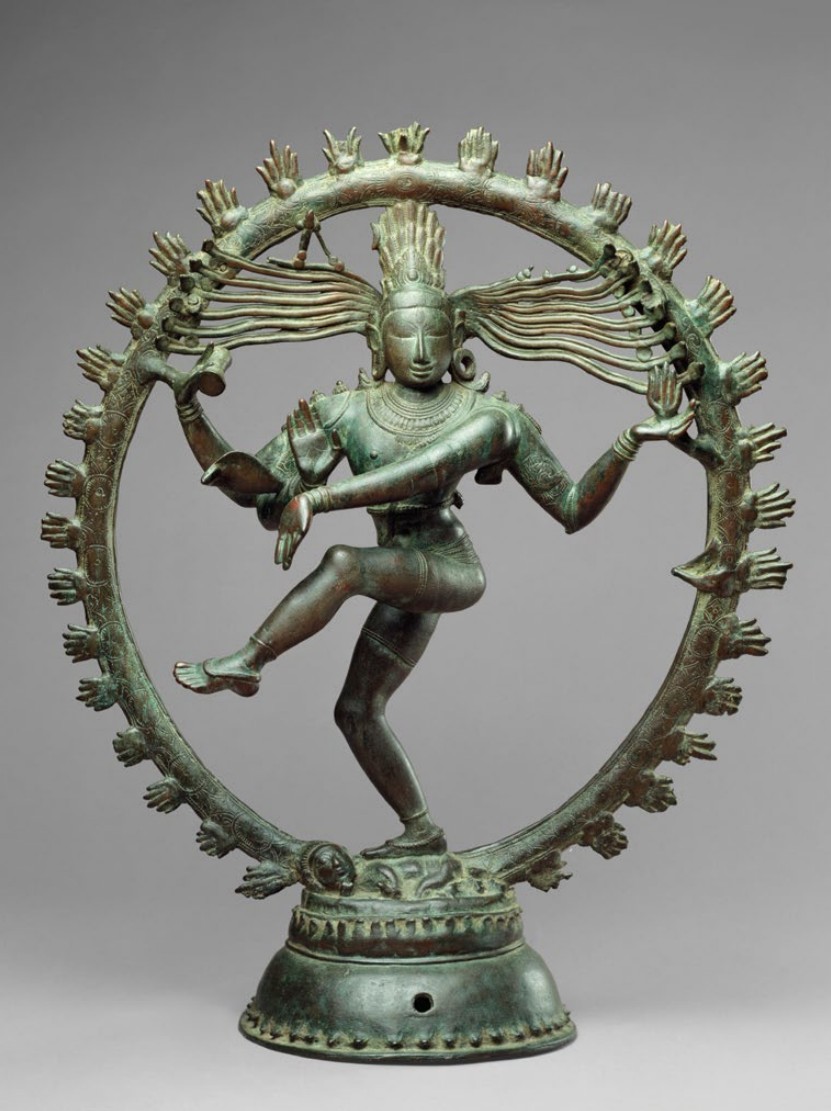
 Shiva as Nataraja © The Metropolitan Museum of Art/Image Source © Art Resource, NY
Shiva as Lord of Dance (Nataraja)
Hindu; India (Tamil Nadu), Chola Dynasty. c. 11th century C.E. Cast bronze.
Curator Note
"The dance of the cosmos. Shiva dances the universe into existence and destroys it, all in a ring of fire. This portable bronze statue was designed to be carried in processions, allowing the god to "see" his devotees in the streets. It perfectly visualizes the rhythm of life, death, and rebirth."
Form
- Medium: Cast bronze (Lost-wax process / Cire perdue).
- Composition: Dynamic balance; Shiva stands on one leg (Apasmara).
- Ring: Surrounded by a flaming nimbus (prabha mandala).
- Proportions: Conforms to the Shilpa Shastras (canons of perfection).
- Portable: Lugs at the base for carrying poles.
Function
- Processional Image: Carried outside the temple during festivals.
- Darshan: Viewing the god confers blessing.
- Theological Diagram: Summarizes the 5 acts of Shiva (Creation, Preservation, Destruction, Illusion, Grace).
- Devotion: Adorned with silks and flowers (puja).
- Royal Patronage: Chola queens notably sponsored these bronzes.
Content
- Drum (Damaru): Upper right hand; sound of creation.
- Fire (Agni): Upper left hand; flame of destruction.
- Abhaya Mudra: Lower right hand; "Fear not" gesture.
- Pointing Finger: Lower left hand points to raised foot (refuge/liberation).
- Demon (Apasmara): The dwarf of ignorance being trampled.
- Ganga: The river goddess caught in his matted locks.
Context
- Chola Dynasty: Powerful maritime empire in South India (Tamil Nadu).
- Bronze Age: Masters of metallurgy.
- Hinduism: Shift towards Bhakti (personal devotion).
- Location: Chidambaram is the specific temple associated with the dance.
- Philosophy: The dance is not chaos, but the rhythmic order of the universe.