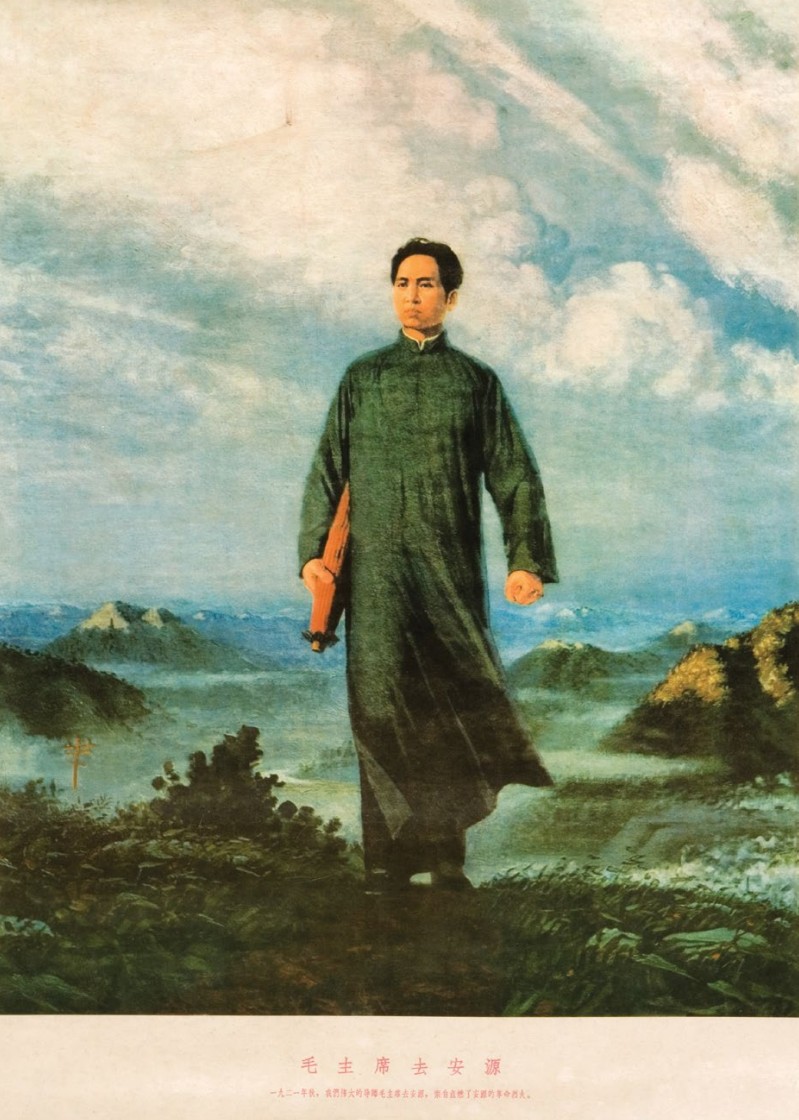
 Chairman Mao en Route to Anyuan © The Chambers Gallery, London/The Bridgeman Art Library
Chairman Mao en Route to Anyuan
Artist unknown; based on an oil painting by Liu Chunhua. c. 1969 C.E. Color lithograph.
Curator Note
"A god for the atheist age. During the Cultural Revolution, traditional art was destroyed, and Mao was elevated to a deity. This painting showing a young, idealized Mao marching to lead a miner's strike is thought to be the most reproduced image in human history (900 million copies). It is pure, potent propaganda."
Form
- Medium: Oil on canvas original; reproduced as color lithograph.
- Style: Socialist Realism (idealized, heroic, precise).
- Composition: Mao is central, vertical, towering over the landscape.
- Lighting: Divine/Ethereal lighting highlighting his face.
- Perspective: Low viewpoint makes him look larger than life.
Function
- Propaganda: Solidify Mao's cult of personality.
- Revisionism: Rewrote history to center Mao in the Anyuan strike (he wasn't really the leader).
- Icon: Hung in every home, replacing ancestor portraits.
- Model: Served as the model for all other art (Model Operas, etc).
- Inspiration: Encouraged the Red Guards.
Content
- Young Mao: Depicted as a scholar/student, not the aging ruler.
- Umbrella: Symbol of working/traveling (practicality).
- Fist: Clenched determination.
- Wind: Blowing his robe, suggesting forward momentum of the revolution.
- Landscape: Mist and mountains traditional to Chinese art but repurposed.
Context
- Cultural Revolution (1966-76): Purge of "old customs" and intellectuals.
- Socialist Realism: Art style imported from the Soviet Union.
- Anyuan Miners' Strike (1922): A key moment in CCP history.
- Liu Chunhua: A Red Guard artist; individual authorship was discouraged ("unknown" collective).
- Ubiquity: Reproduced on posters, plates, stamps.