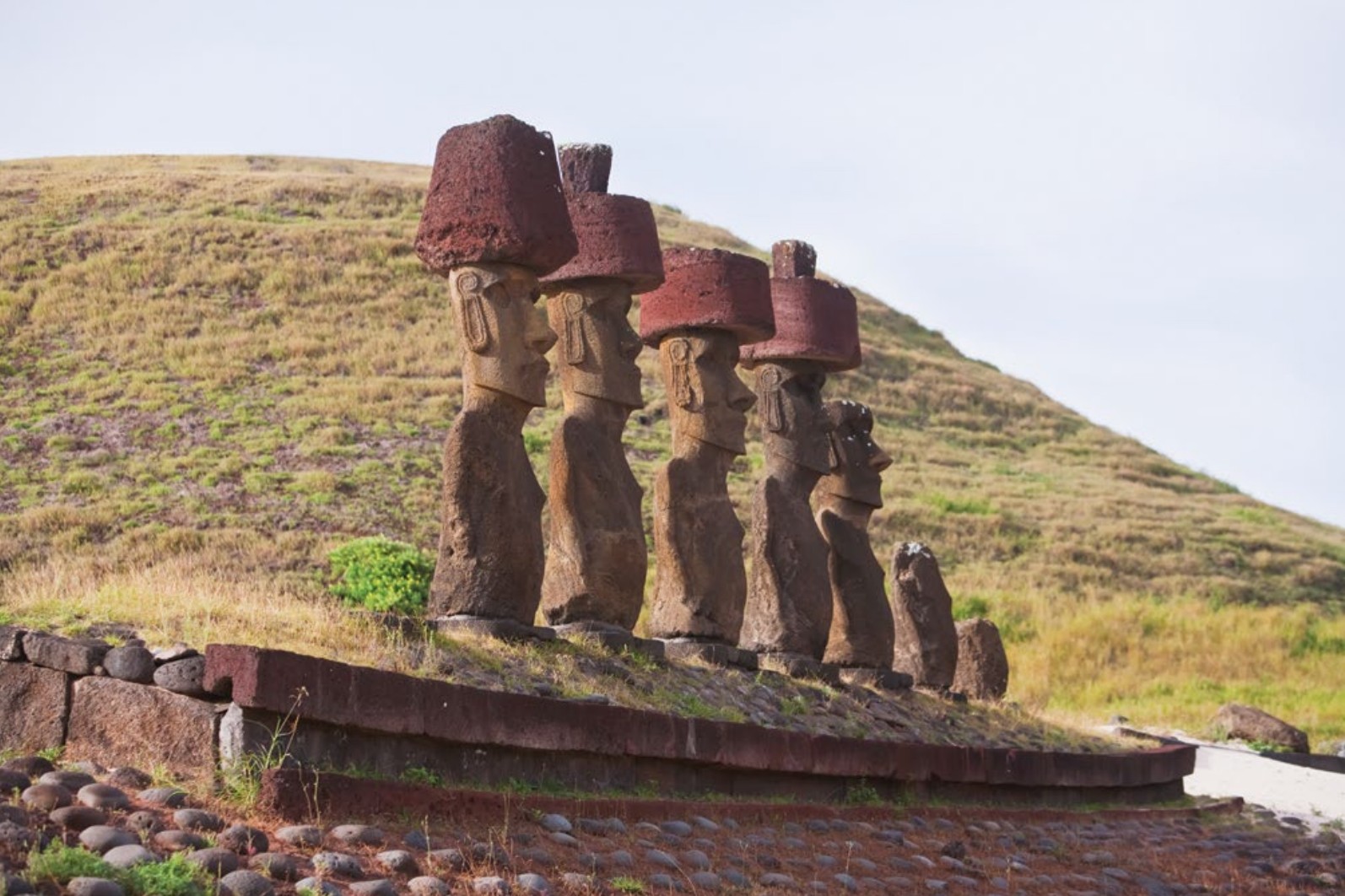
 Moai © Peter Langer/Design Pics/Corbis
Moai on platform (ahu)
Rapa Nui (Easter Island). c. 1100–1600 C.E. Volcanic tuff figures on basalt base.
Curator Note
"The silent watchers of the ancestors. These massive stone figures were carved to channel the mana (protection/power) of ancestors to the community. They almost all face INWARD toward the island, watching over the people, rather than looking out to sea."
Form
- Material: Primarily carved from volcanic tuff (soft rock) from the Rano Raraku quarry.
- Stylized figures: Prominent heavy brows, elongated ears, oval nostrils, and clavicles.
- Proportions: Head is 1/3 to 1/2 of the total height.
- Pukao: Some moai have red scoria cylinders (topknots/hair) on their heads.
- Eyes: Originally inlaid with coral and obsidian which "activated" the mana.
Function
- Ancestral worship: Commemorated deified ancestors.
- Protection: Channeled mana (spiritual energy) to protect the clan/village.
- Boundary markers: Defined territories between different clans.
- Status: Larger statues proved the greater power/wealth of the chief.
- Intermediary: Bridged the gap between the human and spirit worlds.
Content
- Ahu: The stone platform on which the Moai stand (sacred/holy ground).
- Back carvings: Relief carvings added later (Birdman cult symbols).
- Topknots (Pukao): Represent hair tied in a bun, a sign of mana.
- Posture: Arms at sides, hands resting on omphalos (navel).
- Expression: Stern, intimidating gaze watching over the descendants.
Context
- Ecological collapse: Construction likely contributed to deforestation (rolling logs).
- Toppling: Many were toppled during internal wars (17th-19th C.) to destroy rival mana.
- Birdman Cult: After the collapse, the religion shifted to the Birdman competition (Orongo).
- Isolation: Rapa Nui is one of the most remote inhabited islands on Earth.
- Restoration: Many standing today were re-erected by archaeologists.