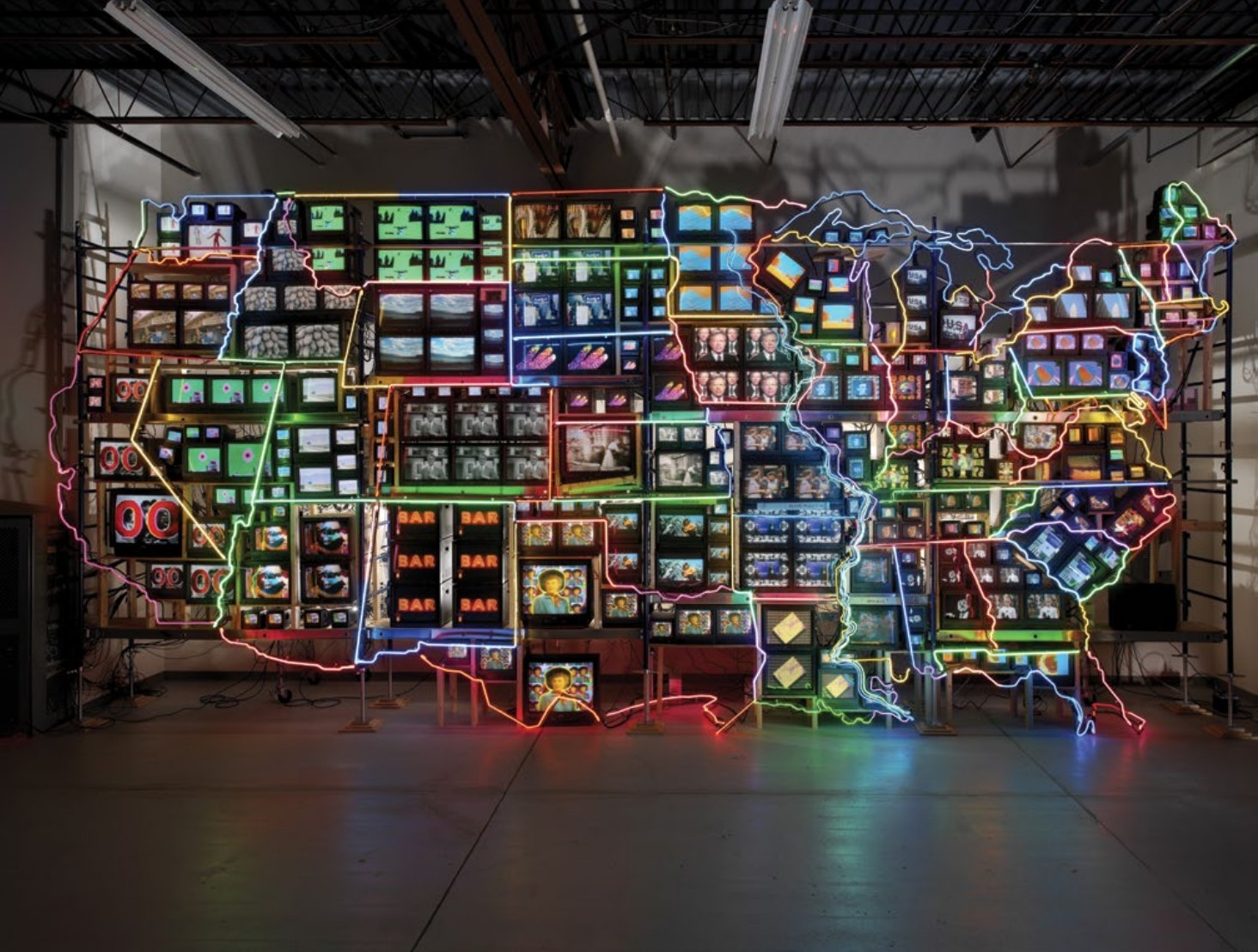
 Electronic Superhighway Photo © Smithsonian American Art Museum, Washington, DC/Art Resource, NY
Electronic Superhighway
Nam June Paik. 1995 C.E. Mixed-media installation (49-channel closed-circuit video installation, neon, steel, and electronic components)
Curator Note
"A massive map of the United States outlined in neon lights, with each state ("electronic superhighway") filled with video monitors playing clips relevant to that state. Paik, the "father of video art," predicted the internet age where media connects everyone. The work celebrates the sheer scale and cultural diversity of the US as seen through the lens of television and information."
Form
- Monumental scale (approx. 15 x 40 feet).
- 313 television monitors rearranged to form a map of the continental US.
- Neon lighting outlines the state borders in different colors.
- A cacophony of sound and moving images from the multiple screens.
- Steel scaffolding supports the complex wiring and electronics.
Function
- To map the cultural landscape of the United States through media.
- To visualize the concept of the "information superhighway" (internet).
- To celebrate the connectivity and speed of modern communication.
- To predict how technology would define national identity.
- To transform the passive act of TV watching into an immersive experience.
Content
- Each state displays images associated with it (e.g., potatoes for Idaho, Wizard of Oz for Kansas).
- Neon outlines suggest the interstate highway system, a network of physical travel.
- Video screens represent the electronic network of information travel.
- The viewer is reflected in the screens, becoming part of the information stream.
- Information overload: too much to see at once.
Context
- Paik was a Korean-born artist who moved to the US in the 1960s.
- Coined the term "electronic superhighway" well before the internet was common.
- Influenced by Fluxus (chance, performance) and Cage’s avant-garde music.
- Marks the beginning of New Media/Digital Art in the museum context.
- Reflects the 1990s optimism about global connectivity.