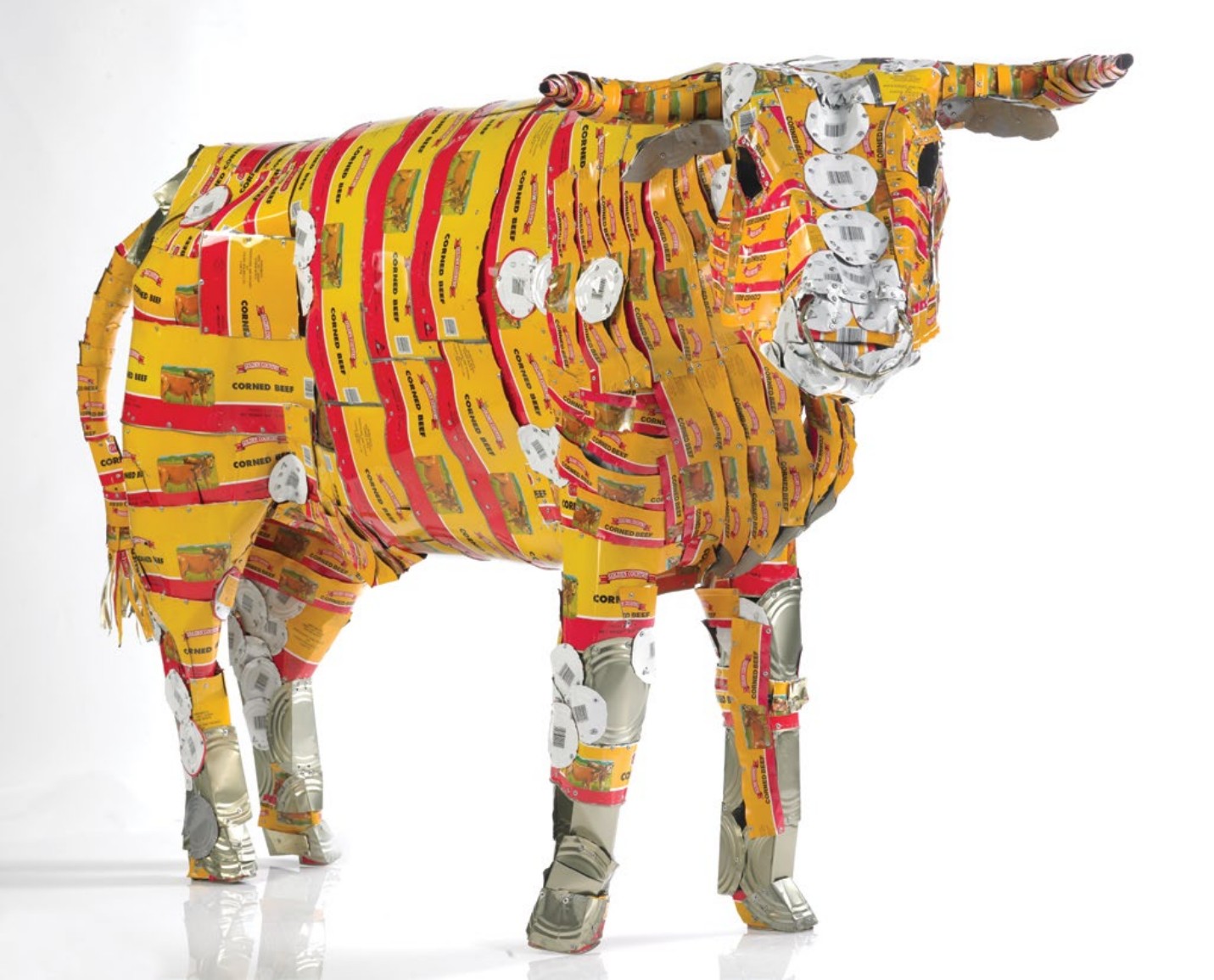
 Pisupo Lua Afe © Michel Tuffery MNZM/Museum of New Zealand Te Papa Tongarewa #FE010516
Pisupo Lua Afe (Corned Beef 2000)
Michel Tuffery. 1994 C.E. Mixed media
Curator Note
"A life-sized sculpture of a bull made entirely from flattened yellow corned beef tins. Tuffery, a New Zealander of Samoan descent, uses this "upcycled" material to critique the impact of colonial trade and imported Western diet on Pacific Island health (obesity, diabetes). The "tin bull" is both a festive object and a warning."
Form
- Life-sized sculpture of a bull.
- Constructed from hundreds of flattened "Pisupo" (corned beef) cans.
- The cans are riveted together to form an armored, metallic skin.
- Hard, industrial edges contrast with the organic animal form.
- Mobile: the sculpture has wheels and can be moved/performed.
Function
- To critique the health crisis (diabetes, heart disease) in Pacific communities caused by imported processed foods.
- To comment on the environmental impact of waste and litter.
- To explore the legacy of colonial economic exchange.
- To question the value placed on imported goods (pisupo) over traditional gifts.
- To serve as a performance object (sometimes containing fireworks).
Content
- "Pisupo": originally meant pea soup, now a generic term for tinned food.
- Corned beef: a high-fat, high-salt luxury import given at weddings and funerals.
- The bull: represents the cattle industry introduced by colonizers, destroying native landscapes.
- The red and gold branding makes it look festive but also dangerous (like fire).
- A "Trojan Horse" of colonization.
Context
- Michel Tuffery identifies as Polynesian/Pacific Islander.
- Corned beef is a major import to Samoa and brings prestige but also poor health.
- Reflects the "Global Contemporary" use of recycled/found materials.
- Addresses the tension between maintaining tradition and modern realities.
- Highlights food sovereignty issues in the Pacific.