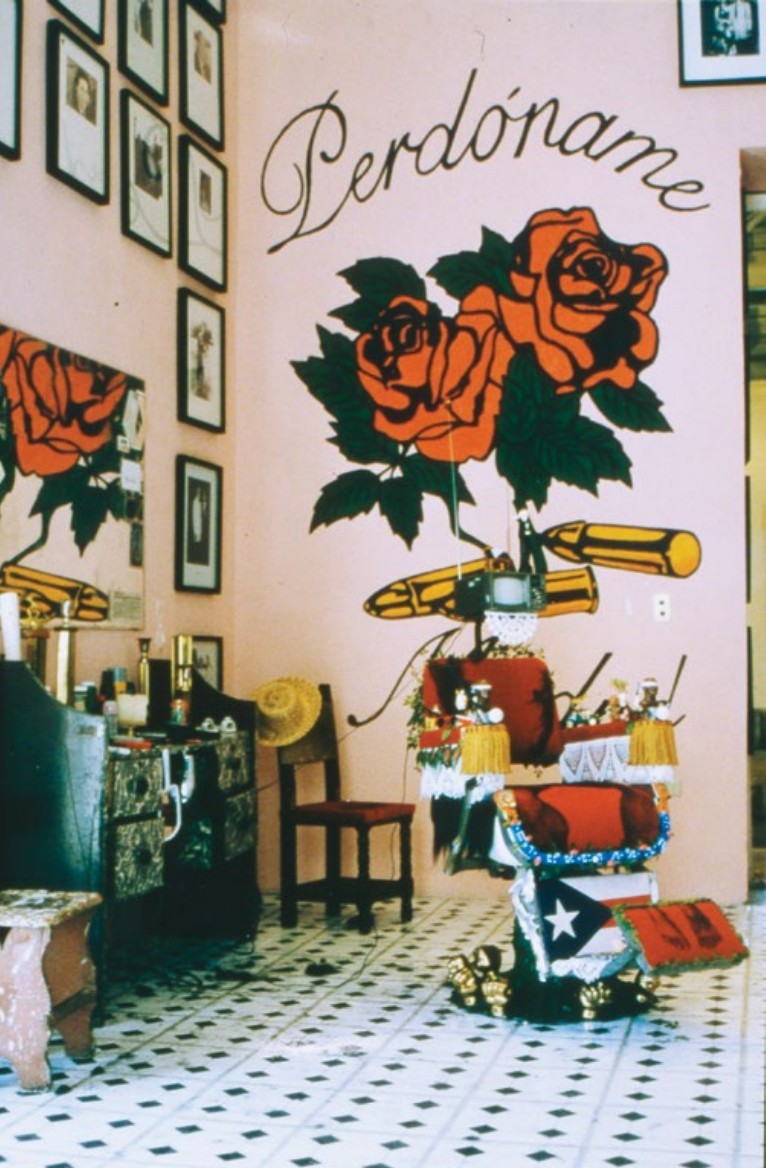
 En la Barberia no se Llora Courtesy Ronald Feldman Fine Arts, New York/www.feldmangallery.com
En la Barbería no se Llora (No Crying Allowed in the Barbershop)
Pepón Osorio. 1994 C.E. Mixed-media installation
Curator Note
"An immersive installation recreating a barbershop, packed with masculine symbols like baseballs, action figures, and car seats. Osorio, a Puerto Rican artist, challenges the definition of "machismo" and Latino male identity. The barbershop, traditionally a space for male bonding, becomes a site to question toxic masculinity and violence."
Form
- Room-sized installation recreating a functional barbershop.
- "Kitsch" aesthetic: crowded with cheap, mass-produced objects (chuchería).
- Includes real barbershop chairs, mirrors, and video monitors.
- Decorated with Puerto Rican flags, sports memorabilia, and plastic religious figures.
- Walls are covered in masculine imagery (sperm, bullets, phallic symbols).
Function
- To challenge and deconstruct the concept of machismo in Latino culture.
- To create a space for dialogue about male identity and vulnerability.
- To broaden the audience for art by placing it in a community setting.
- To highlight the relationship between social codes and behavior.
- To explore the connection between masculinity and violence.
Content
- Videos show men crying, contrasting with the title "No Crying Allowed".
- The barbershop represents a "temple" of masculinity.
- The abundance of objects reflects the Nuyorican aesthetic of "abundance".
- Images of circumcision and tattoos link masculinity to pain.
- The title references a childhood memory of being told men don't cry.
Context
- Osorio often works with the local community, originally installing this in a storefront.
- Reflects the "Nuyorican" (New York Puerto Rican) experience.
- Engages with the Global Contemporary focus on identity and community.
- Influenced by his background in social work.
- Part of the 1990s "multiculturalism" debates in the US art world.