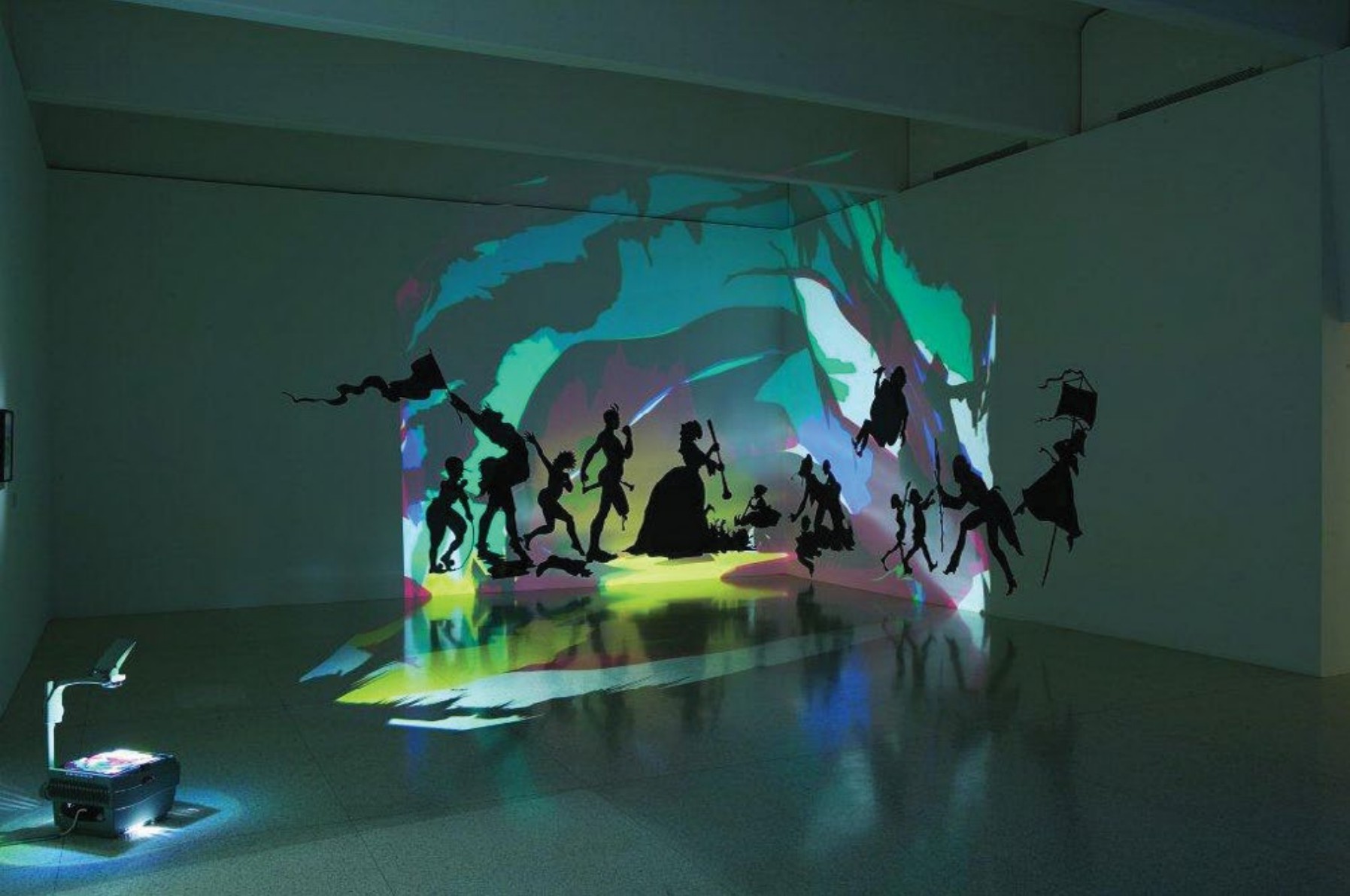
 Darkytown Rebellion Used by Permission
Darkytown Rebellion
Kara Walker. 2001 C.E. Cut paper and projection on wall
Curator Note
"A nightmarish scene of antebellum violence depicted through black silhouette cutouts projected onto a wall with colored lights. The viewer’s shadow becomes part of the scene, implicating them in the history of slavery. Walker uses the polite, Victorian medium of the silhouette to expose the gruesome reality of racial stereotypes and historical trauma."
Form
- Installation of black cut-paper silhouettes adhered to the wall.
- Overhead projectors cast colored light (blues, pinks, yellows) onto the scene.
- Life-size scale (approx. 37 feet wide).
- Viewer’s shadow interacts with the artwork when walking past.
- Contrast between the "whimsical" medium and the horrific subject matter.
Function
- To force the viewer to confront gruesome racial stereotypes and history.
- To implicate the audience: you cannot look without your shadow joining the scene.
- To question the reliability of historical narratives.
- To explore the "monstrosity" of racism and the grotesque.
- To subvert the sentimental tradition of the silhouette portrait.
Content
- Characters depicted in exaggerated racial stereotypes (minstrel style).
- Scenes of violence, torture, and absurdity.
- Abstract shapes of light suggest a dream or nightmare landscape.
- No clear narrative; it's a chaotic rebellion or massacre.
- Merging of past (antebellum South) and present (viewer).
Context
- Walker is an African American artist known for controversial use of stereotypes.
- Based on a landscape painting "Darkytown", but twisted into a rebellion.
- Critique of the "romance" of the Old South (Gone with the Wind).
- Silhouettes were a "feminine", domestic craft in the 18th/19th century.
- Global Contemporary: dealing with the legacy of colonialism and slavery.