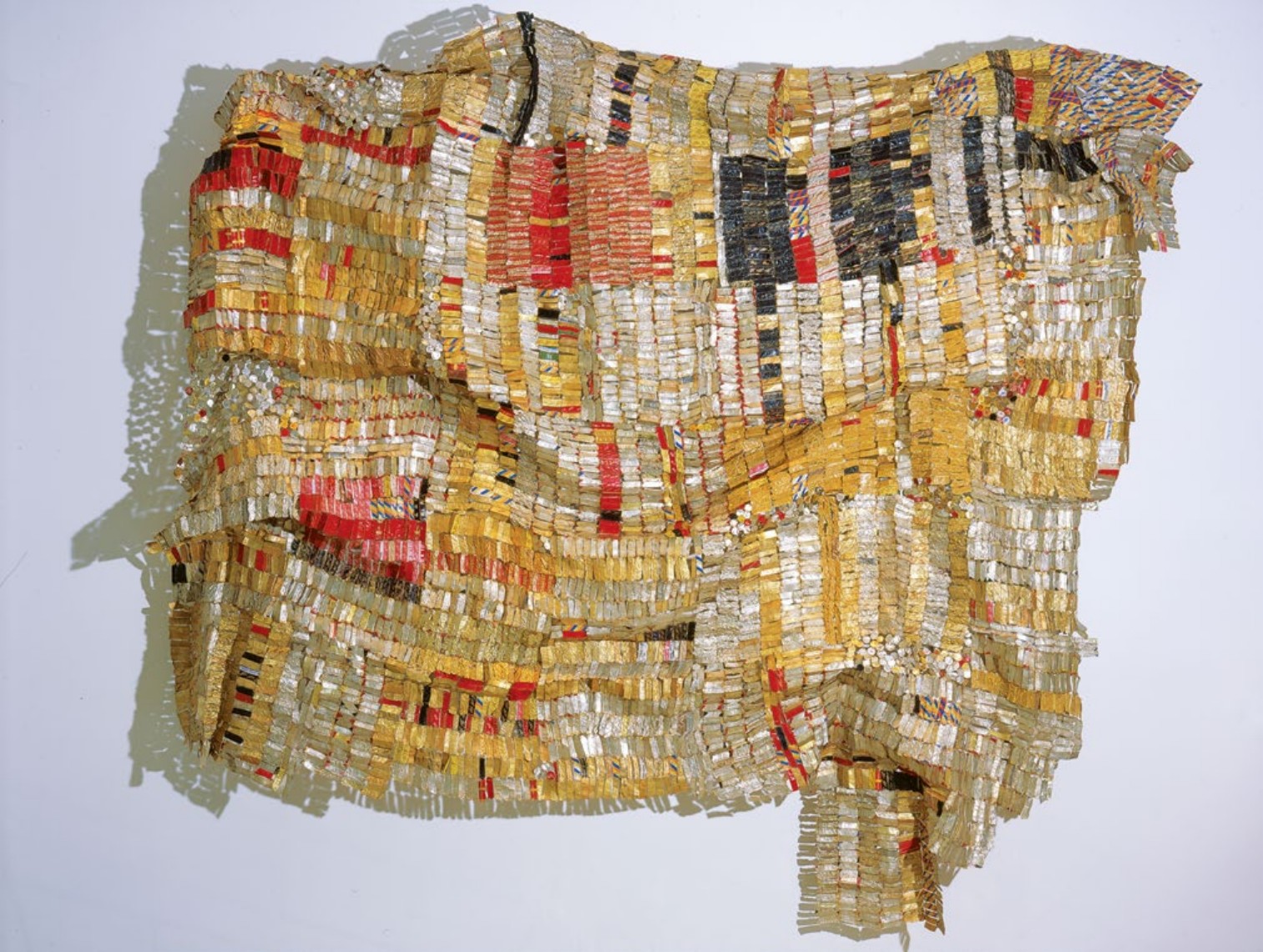
 Old Man’s Cloth © Samuel P. Harn Museum of Art, University of Florida, Gainesville/Museum purchase with funds from friends of the Harn Museum
Old Man’s Cloth
El Anatsui. 2003 C.E. Aluminum and copper wire
Curator Note
"A massive, shimmering wall hanging that looks like textile (Kente cloth) but is made from thousands of flattened aluminum liquor bottle caps wired together. El Anatsui, from Ghana, uses these discarded materials to reference the triangular trade (alcohol for slaves). The work is mutable; it has no fixed form and is re-draped every time it is installed."
Form
- Large-scale metal wall hanging (approx 16 x 17 feet).
- Composed of thousands of flattened liquor bottle caps and neck bands.
- Joined with copper wire, creating a flexible, fabric-like structure.
- Uneven, undulating surface with folds and peaks.
- Gold, red, and black colors mimic traditional Ghanaian Kente cloth.
Function
- To connect the history of African abstraction with European trade history.
- To transform waste material into an object of beauty and value (alchemy).
- To challenge the category of "sculpture" vs. "craft" vs. "painting".
- To allow curators to be co-creators by deciding how to drape the work.
- To symbolize the fluid, non-rigid nature of culture.
Content
- Liquor bottle caps: reference alcohol introduced by Europeans during the slave trade.
- Gold color: references Ghana’s history as the "Gold Coast".
- Kente cloth patterns: references royal Ashanti textiles.
- The title "Old Man's Cloth": suggests wisdom, tradition, and fragility.
- The material is "poor" but the effect is rich and royal.
Context
- El Anatsui is part of the Sankofa movement (reclaiming African traditions).
- Born in Ghana, works in Nigeria.
- Alcohol was a key currency in the transatlantic slave trade.
- Breaks the Western museum rule of "do not touch" or "fixed form".
- Global Contemporary: using local materials to tell global stories.