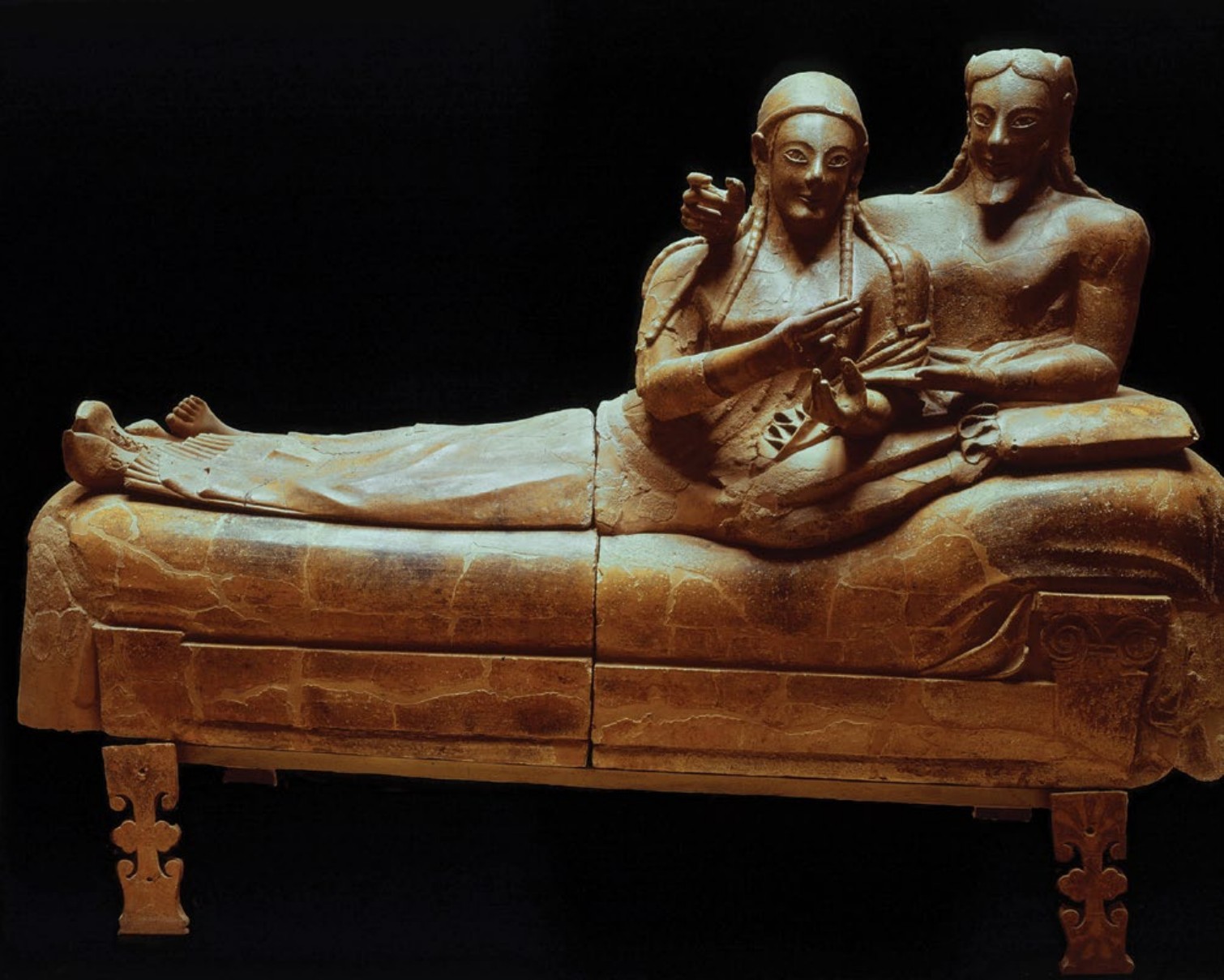
 Sarcophagus of the Spouses © Gianni Dagli Orti/The Art Archive at Art Resource, NY
Sarcophagus of the Spouses
Etruscan. c. 520 B.C.E. Terra cotta.
Curator Note
"A snapshot of Etruscan equality. Unlike in Greece, where women were excluded from symposia, this Etruscan couple reclines together at a banquet, animated and affectionate."
Form
- Painted terra cotta (baked clay), a favored medium of the Etruscans.
- Molded in four separate sections and assembled (technical mastery of kiln firing).
- Stylized features: Archaic smiles, braided hair, elongated fingers.
- Emphasis on the upper body and communicative gestures; legs are flat and summary.
- Reclining pose on a kline (dining couch) with a sense of animated interaction.
Function
- Monumental sarcophagus (funerary urn) containing the ashes of the deceased.
- Placed in a tomb to represent the couple hosting a banquet in the afterlife.
- Celebrates the marital bond and familial unity extending beyond death.
- Demonstrates the high status and wealth of the deceased couple.
- Replaces the sombre mood of death with a festive celebration of life.
Content
- Husband and wife reclining together at a banquet (symposium).
- The husband places a protective arm around the wife.
- Their hands are posed to hold objects (eggs? cups? perfume?) that are now lost.
- They interact intimately, looking out at the viewer/mourners.
- Clothing and hair are stylized in the Archaic fashion (Ionic influence).
Context
- Etruscan civilization (pre-Roman Italy) c. 520 B.C.E.
- Found in the Banditaccia necropolis at Cerveteri.
- Highlights the unique status of Etruscan women: They attended banquets with men, owned property, and kept their names (scandalous to Greeks).
- Etruscans viewed the afterlife as a continuation of life's pleasures.
- Contrast with Greek art: Etruscan art focuses on terra cotta (not marble) and energy (not perfect proportion).