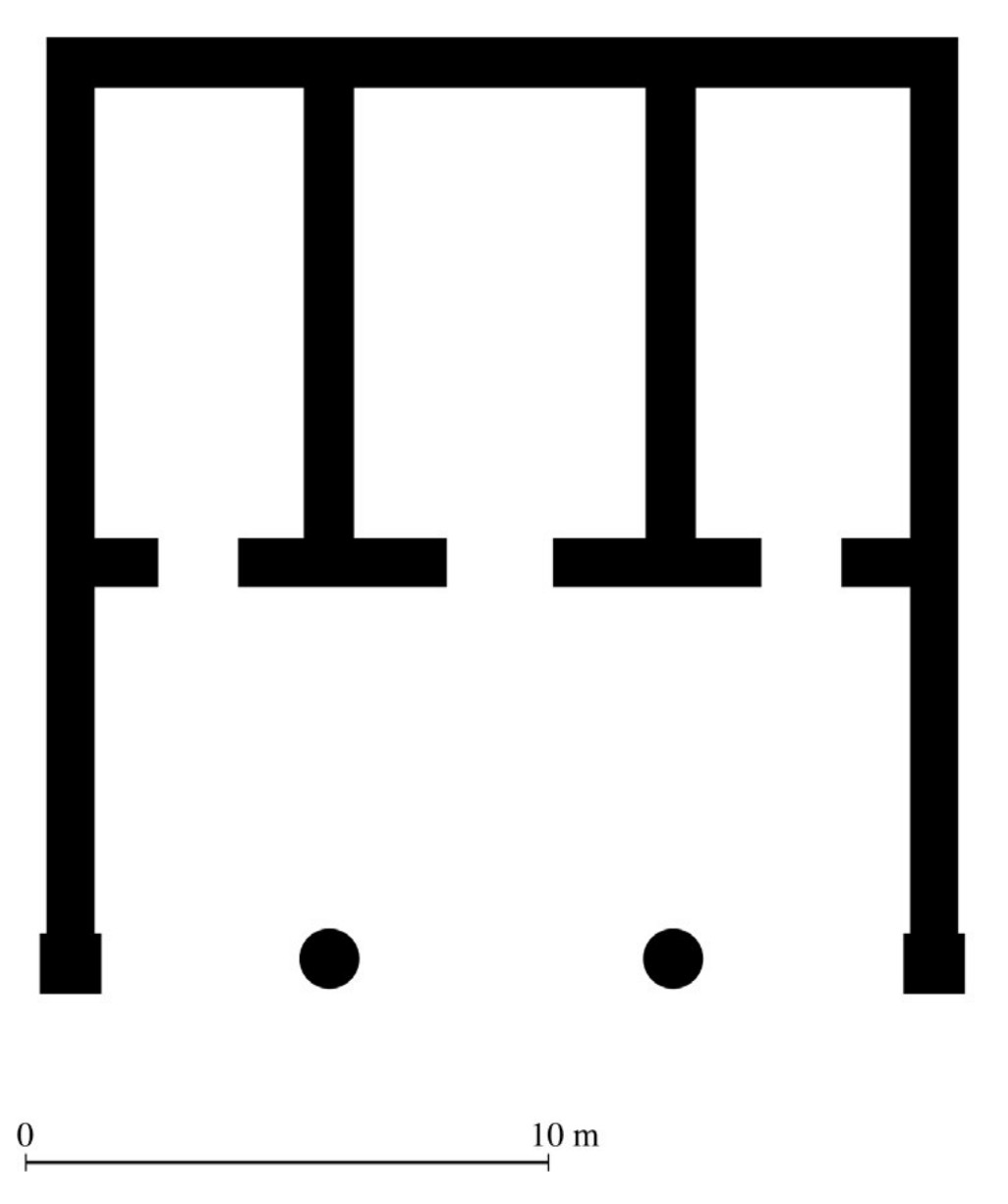
 Temple of Minerva plan
Temple of Minerva and Sculpture of Apollo
Veii, near Rome, Italy. Master Sculptor Vulca. c. 510–500 B.C.E. Original temple of wood, mud brick, or tufa (volcanic rock); terra cotta sculpture.
Curator Note
"Etruscan gods needed a roof. Unlike the Greeks who focused on the exterior colonnade, the Etruscans built deep porches and placed dynamic terra cotta statues on the roofline, like this striding Apollo."
Form
- Temple layout based on the description by Roman architect Vitruvius (Tuscan Order).
- Deep front porch (pronaos) with widely spaced Tuscan columns (unfluted, with base).
- Constructed of ephemeral materials: wood (columns/roof), mud brick (walls), and tufa (foundation).
- T-shaped plan with three separate cellas (rooms) for the triad of gods.
- Statues were placed on the roof (acroterion) rather than inside the pediment, creating a lively silhouette.
Function
- Dedicated to the Etruscan triad: Tinia (Zeus), Uni (Hera), and Menrva (Athena).
- A space for religious rituals performed by priests in the open porch.
- Narrative storytelling: The roof statues enacted a specific myth (Likely the Contest of Herakles and Apollo).
- Demonstrates the Etruscan assimilation of Greek mythology but adapted to their own style.
- Served as a civic and religious center for the city of Veii.
Content
- Temple: Triple cella design indicates worship of three deities simultaneously.
- Apollo of Veii: Life-sized terra cotta sculpture depicting the god striding forward.
- Apollo wears a chiton and cloak; his archaic smile and braided hair show Greek Archaic influence.
- Hercules (fragmentary) was struggling with Apollo over the Ceryneian Hind (sacred deer).
- Animated pose with outstretched arms (dynamic movement) contrasts with the rigid Greek Kouros.
Context
- Veii was a powerful Etruscan city-state near Rome (eventually conquered by Rome in 396 B.C.E.).
- Created by "Master Sculptor Vulca," the only Etruscan artist known by name (mentioned by Pliny).
- Etruscan art heavily influenced early Roman art; Vulca was even summoned to Rome to work.
- The use of terra cotta allowed for more dynamic poses than stone but required great technical skill (firing).
- Shows the cross-cultural exchange between Greece, Etruria, and Rome.