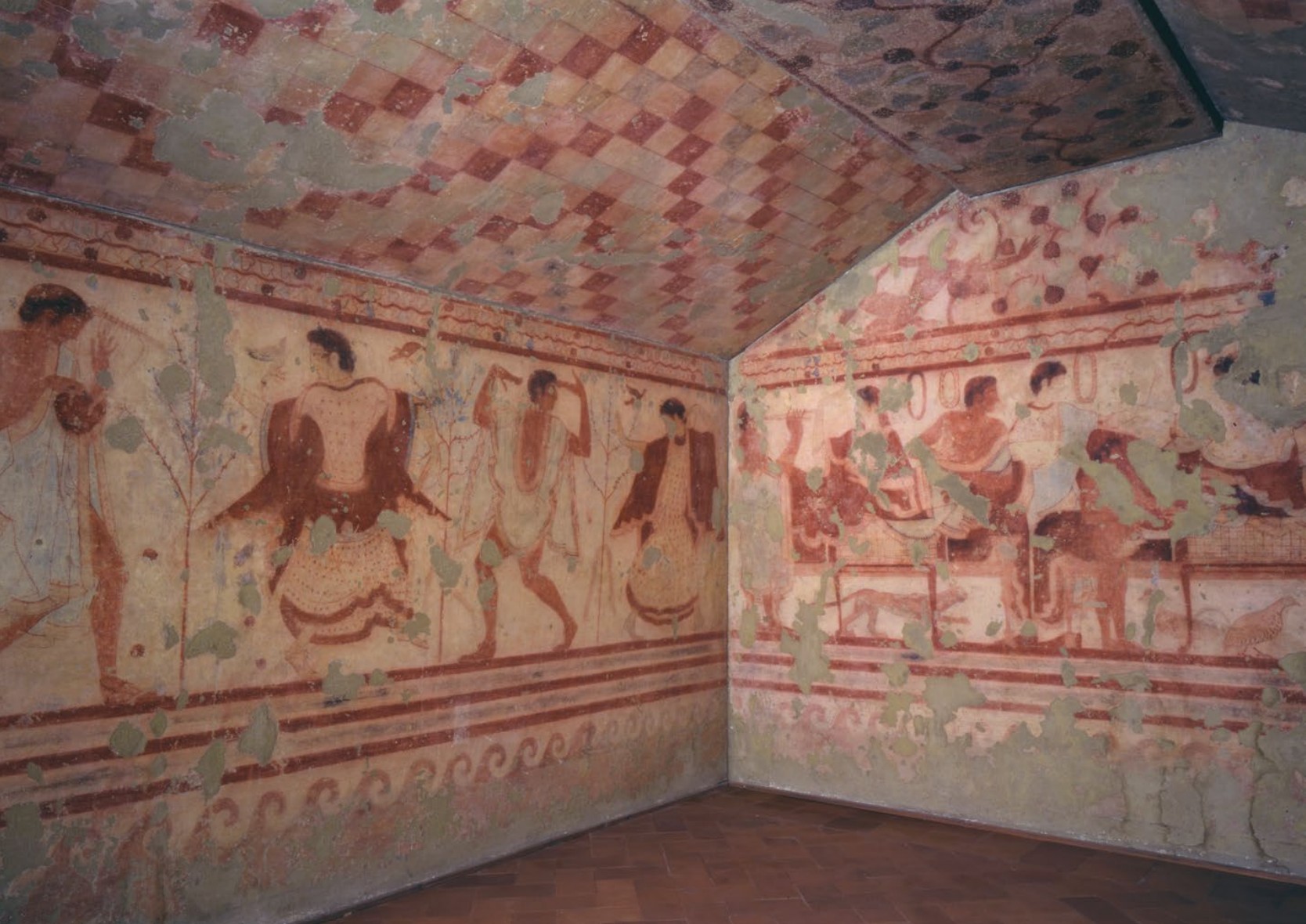
 Tomb of the Triclinium © Nimatallah/Art Resource, NY
Tomb of the Triclinium
Tarquinia, Italy. Etruscan. c. 480–470 B.C.E. Tufa and fresco.
Curator Note
"An Etruscan funeral was a party. The walls of this tomb depict a lively banquet with music, dancing, and checkered ceilings, celebrating the deceased's transition to a festive afterlife."
Form
- Chamber tomb cut into the living tufa rock (subterranean).
- Walls covered in fresco (pigment on wet plaster) with vivid colors.
- Ceiling painted with a checkered pattern to mimic a fabric tent or canopy.
- Stylized figures: Men painted in dark red/brown, women in lighter skin tones (Egyptian convention).
- Figures are captured in motion (dancing), with exaggerated gestures and large hands.
Function
- Burial chamber for a wealthy Etruscan family (Triclinium = dining room).
- Designed to accompany the deceased into the afterlife with images of joy and provision.
- Replicates the funeral banquet held by the living to honor the dead.
- Reinforces the social status and clan identity of the deceased.
- Creates a "domestic" environment for the eternal soul.
Content
- Main rear wall: Three couples reclining on dining couches (kline) at a banquet.
- Side walls: Dancers and musicians (lyre and flute players) in a festive procession.
- Servants attending to the banqueters beneath the couches.
- Birds and trees fill the background spaces, indicating an outdoor setting.
- The atmosphere is festive and celebratory, not mournful.
Context
- Located in the Monterozzi necropolis of Tarquinia, Italy (c. 480–470 B.C.E.).
- Etruscan funerary games and banquets were elaborate social events used to display power.
- Contrasts sharply with the Greek view of a shadowy, grim afterlife (Hades).
- Demonstrates the high status of Etruscan women, who dined openly with men.
- Reflects the "joie de vivre" characteristic of Etruscan art before their conquest by Rome.