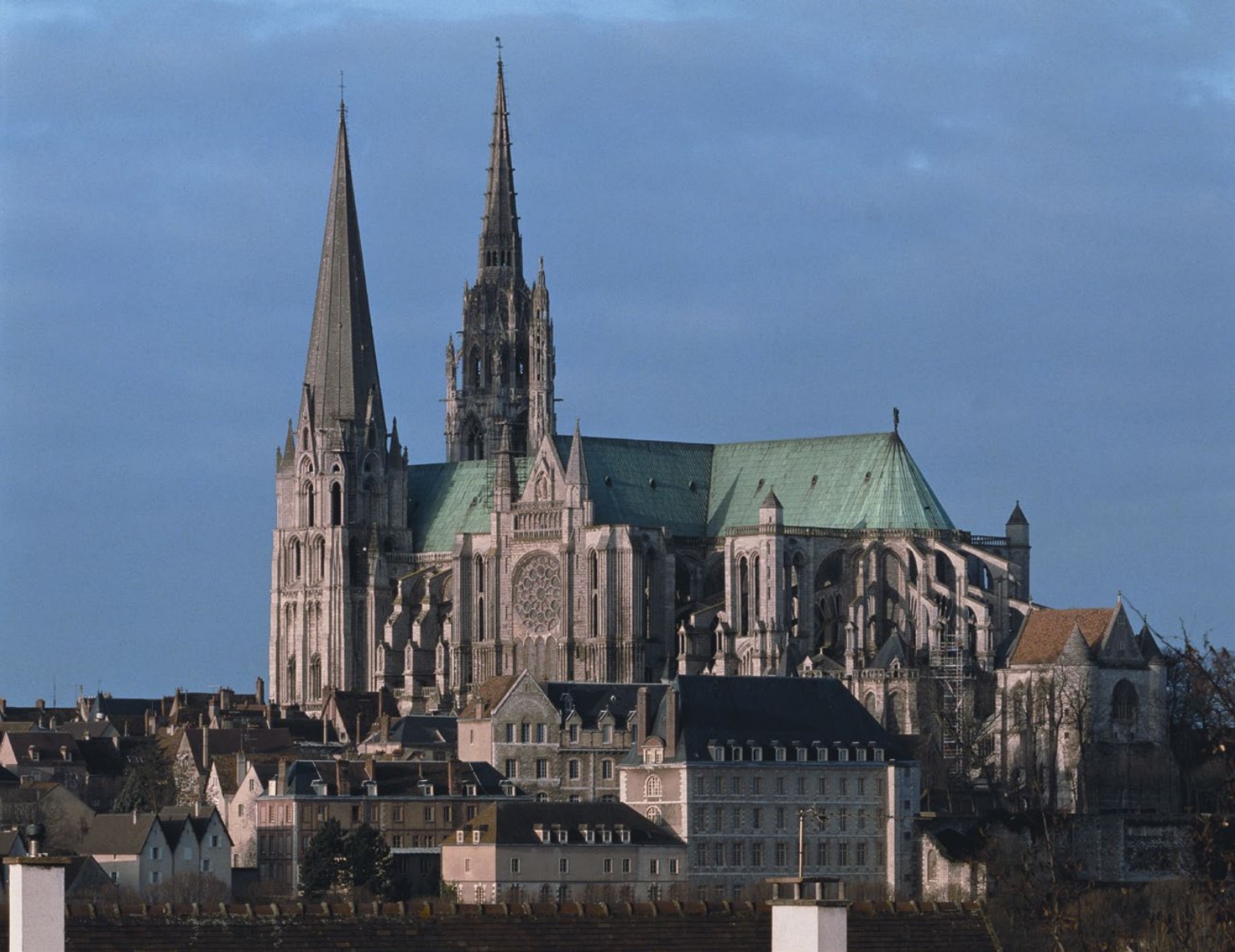
 Chartres Cathedral © Alinari Archives/Corbis
Chartres Cathedral
Chartres, France. Gothic Europe. Original construction c. 1145–1155 C.E.; reconstructed c. 1194–1220 C.E. Limestone, stained glass.
Curator Note
"The quintessential High Gothic cathedral. Rebuilt after a fire (which miraculously spared the "Sancta Camisa" relic of Mary), it features the first use of flying buttresses to allow for massive stained glass windows. The light-filled interior was intended to transport the soul to the "New Jerusalem.""
Form
- High Gothic style: pointed arches, rib vaults.
- Flying buttresses (exterior support) allow thin walls.
- Cruciform plan with wide nave.
- Stained glass windows (Lux Nova).
- Asymmetrical towers (one Romanesque, one Gothic/Flamboyant).
Function
- Top pilgrimage site (Tunic of Mary).
- Cathedral of the Bishop of Chartres.
- To symbolize the heavenly city (Jerusalem).
- Economic hub for the city (fairs held nearby).
- Didactic: stained glass/sculpture taught the bible.
Content
- Royal Portal: Kings/Queens of Old Testament (ancestors of Christ/French Kings).
- Notre Dame de la Belle Verrière: Famous blue glass window of Mary.
- Labyrinth on the floor: for walking meditation.
- Rose Windows: circular windows symbolizing the universe.
- Sculpture evolves from stiffness (jamb figures) to high relief.
Context
- The Cult of the Virgin Mary was at its peak.
- Burnt down in 1194, sparing the West facade and relic.
- Rebuilt quickly (26 years) by townspeople contributions.
- Scholasticism (faith + reason) influenced the geometry.
- The model for Gothic cathedrals generally.