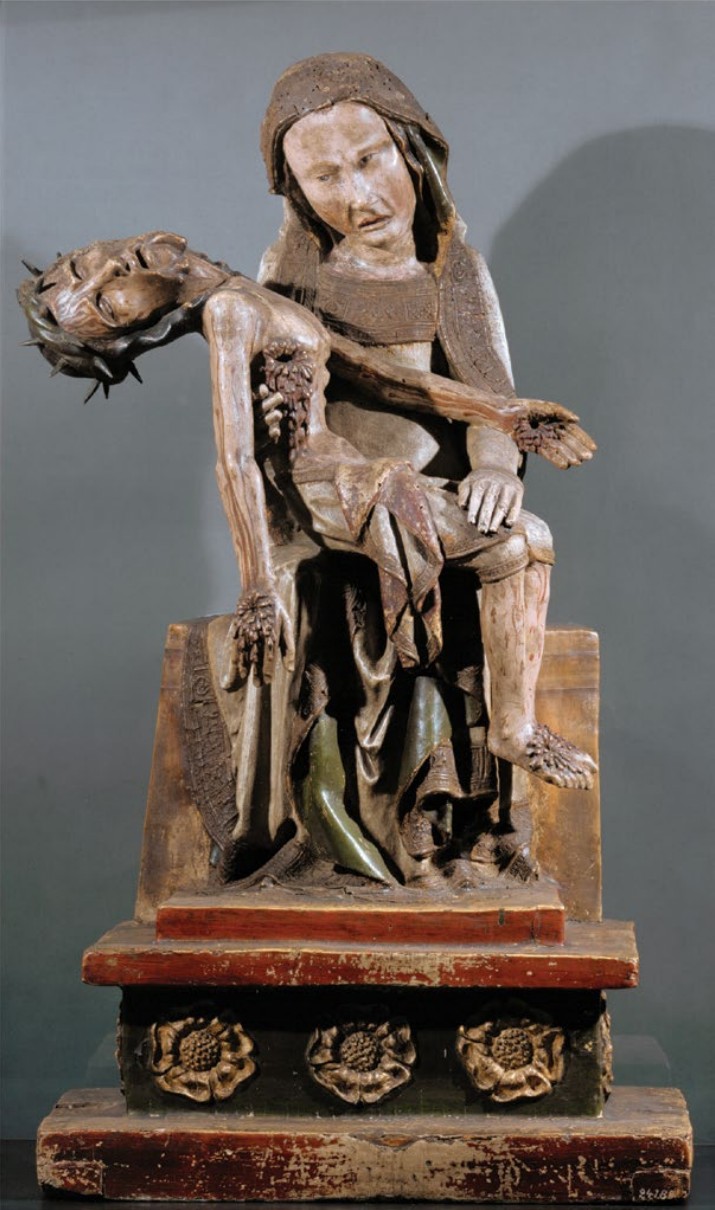
 Röttgen Pietà © Erich Lessing/Art Resource, NY
Röttgen Pietà
Late medieval Europe. c. 1300–1325 C.E. Painted wood.
Curator Note
"A gruesome, emotionally charged wooden sculpture of Mary holding the dead Christ (Pietà). Unlike earlier divine, triumphant depictions, this Gothic "Andachtsbild" (devotional image) emphasizes human suffering, blood, and grief to elicit a strong emotional response and empathy from the viewer."
Form
- Polychrome (painted) wood.
- Expressionist distortion: skinny arms, large heads.
- Graphic depiction of wounds (blood, thorns).
- Mary's face is twisted in agony.
- Small scale (cabinet size).
Function
- Andachtsbild: Used for private devotion/contemplation.
- To evoke empathy for Christ's suffering (mysticism).
- To connect the viewer's suffering with God's.
- Part of the "Cult of Suffering".
- Correction to the "distant" divine images.
Content
- Pietà: Mary mourning the dead Christ.
- Exploding flowers of blood from wounds.
- Mary is no longer the Queen of Heaven, but a grieving mother.
- Christ looks starved and broken.
- Focus on the humanity of Jesus.
Context
- Germany/Rhineland (Late Gothic).
- Time of war, plague, and famine (14th century misery).
- Rise of mysticism (personal connection to God).
- Contrast with the serene Classical style.
- Influence of St. Francis (humanity of Christ).