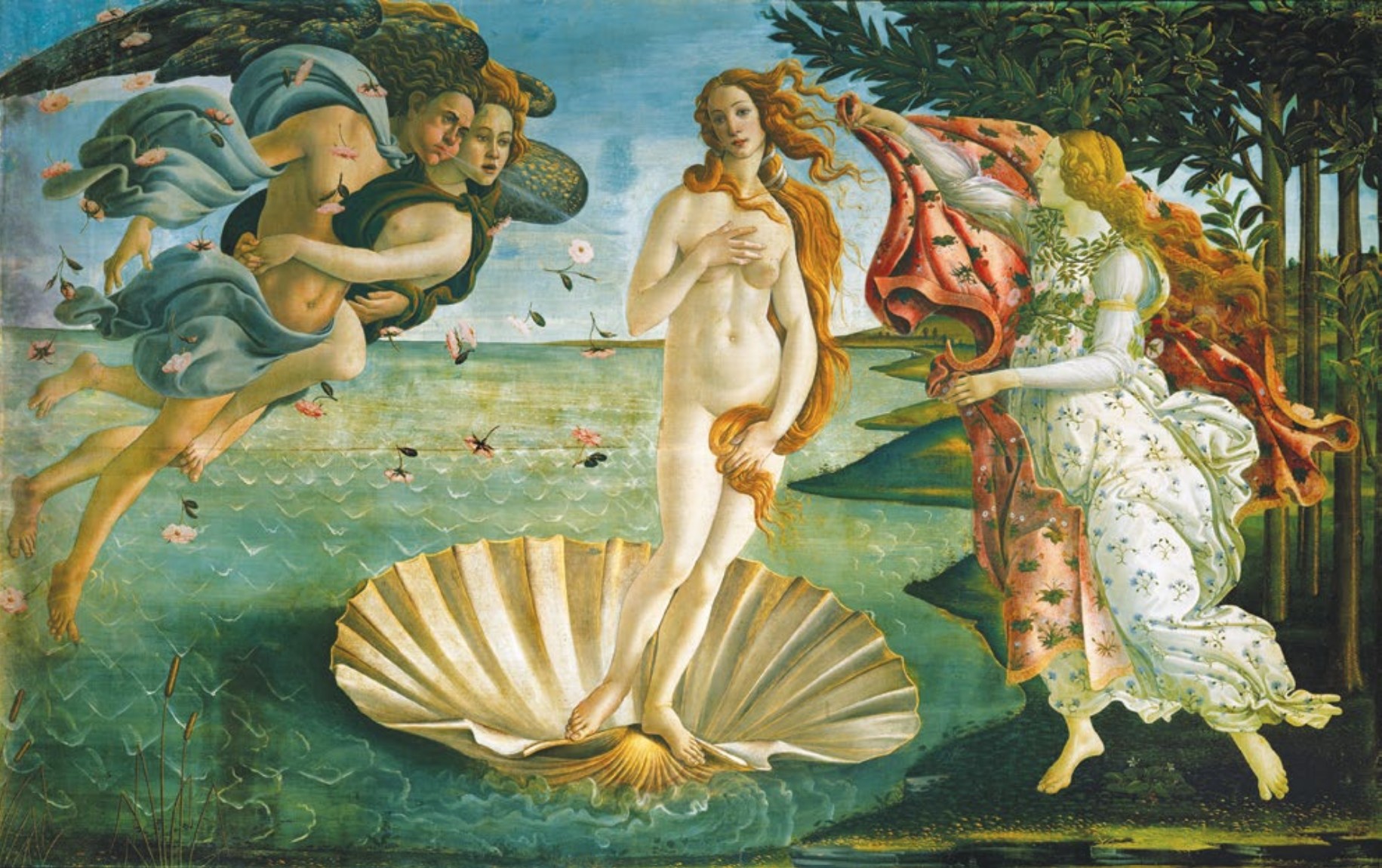
 Birth of Venus © Erich Lessing/Art Resource, NY
Birth of Venus
Sandro Botticelli. c. 1484–1486 C.E. Tempera on canvas.
Curator Note
"The first large-scale painting of a pagan mythological subject. Botticelli depicts the birth of Venus, goddess of love, arriving on a shell. Influenced by Neoplatonism, it argues that physical beauty leads the mind to spiritual love. The figure of Venus is impossibly beautiful and weightless."
Form
- Tempera on canvas (rare for the time).
- Floating, weightless figures.
- Linear style; emphasis on outline/pattern, not depth.
- Pastel colors and gold highlights.
- Impossible anatomy (long neck, steep shoulders).
Function
- Wedding gift? (Associated with Medici family).
- To celebrate Neoplatonic philosophy.
- To revive mythological subject matter.
- Decorative and intellectual.
- A visual poem.
Content
- Venus: Based on the "Venus Pudica" (modest Venus) statue.
- Zephyr (West Wind) and Chloris blowing her to shore.
- Pomona (Nymph) ready to clothe her with a floral cloak.
- Roses blowing in the wind (love is painful/thorny).
- Shell constitutes a rebirth.
Context
- Commissioned by the Medici cousins.
- Savonarola (radical monk) later condemned such "pagan" art (Bonfire of Vanities).
- Botticelli ignored the new rules of perspective for poetic effect.
- Neoplatonism: Venus = Virgin Mary (Love = God).
- Iconic image of the Renaissance.