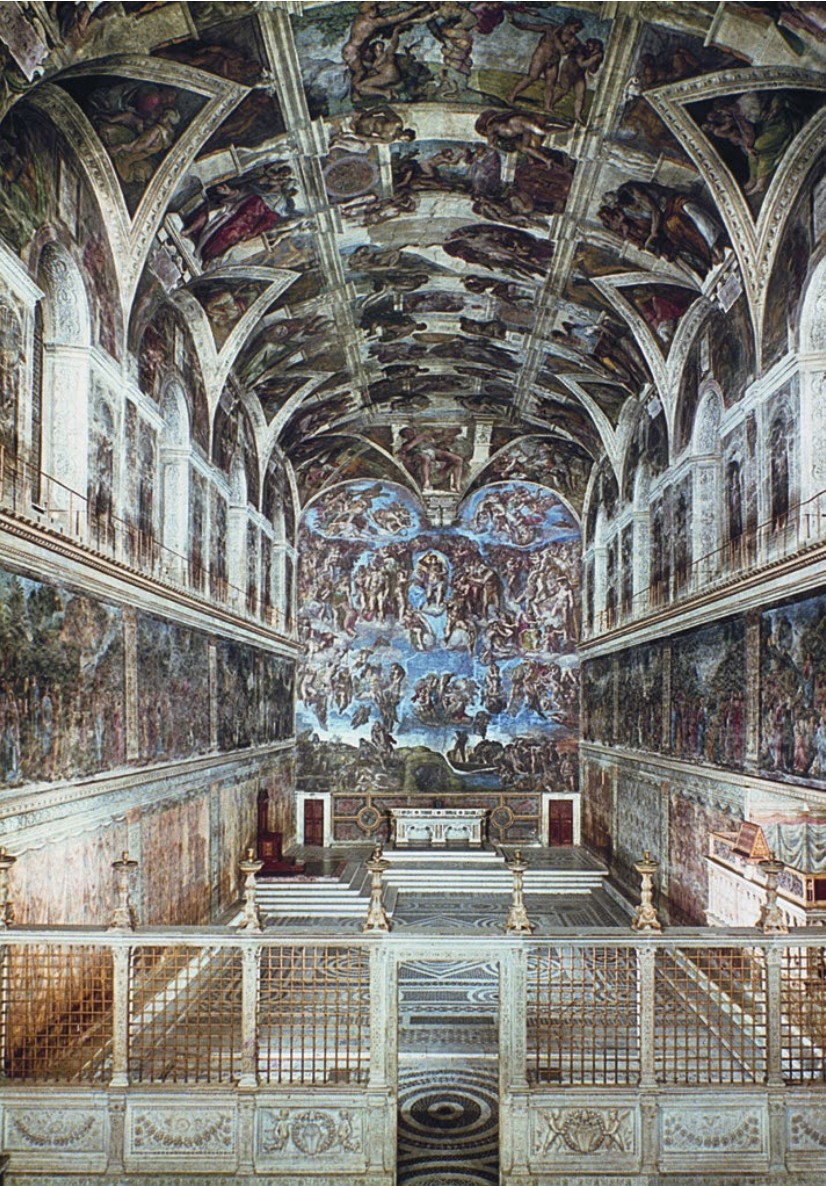
 Sistine Chapel © The Bridgeman Art Library
Sistine Chapel ceiling and altar wall frescoes
Vatican City, Italy. Michelangelo. Ceiling frescoes: c. 1508–1512 C.E.; altar frescoes: c. 1536–1541 C.E. Fresco.
Curator Note
"The supreme monument of High Renaissance painting. Michelangelo, a sculptor, was forced to paint the ceiling, creating a Neoplatonic history of the world from Creation to the Flood, featuring the iconic "Creation of Adam." Decades later, he returned to paint the "Last Judgment" on the wall, a darker, turbulent Mannerist vision reflecting the turmoil of the Reformation."
Form
- Buon fresco (true fresco).
- Herculian, sculptural figures (Ignudi).
- Bright, cangiante colors (shot colors).
- Complex architectural illusion (trompe l'oeil).
- Ceiling: Optimistic/Heroic. Wall: Pessimistic/Chaotic.
Function
- Papal chapel for elections (Conclave).
- To tell the history of salvation.
- To glorify the Papacy (Julius II and Paul III).
- To overwhelm the viewer with the power of God.
- Universal masterpiece.
Content
- Ceiling: 9 panels of Genesis (Creation, Adam, Eve, Flood, Noah).
- Prophets and Sibyls (foretellers of Christ).
- Creation of Adam: The spark of life/intellect.
- Last Judgment: Christ as Judge, saints with skin (St. Bartholomew holds Michelangelo's flayed skin).
- The Damned being dragged to hell.
Context
- Ceiling painted during High Renaissance (confidence).
- Wall painted after the Sack of Rome and Reformation (anxiety).
- Michelangelo hated painting ("I am no painter").
- Restoration in 1990s revealed bright colors, causing controversy.
- Modesty breeches added later to cover nudity.