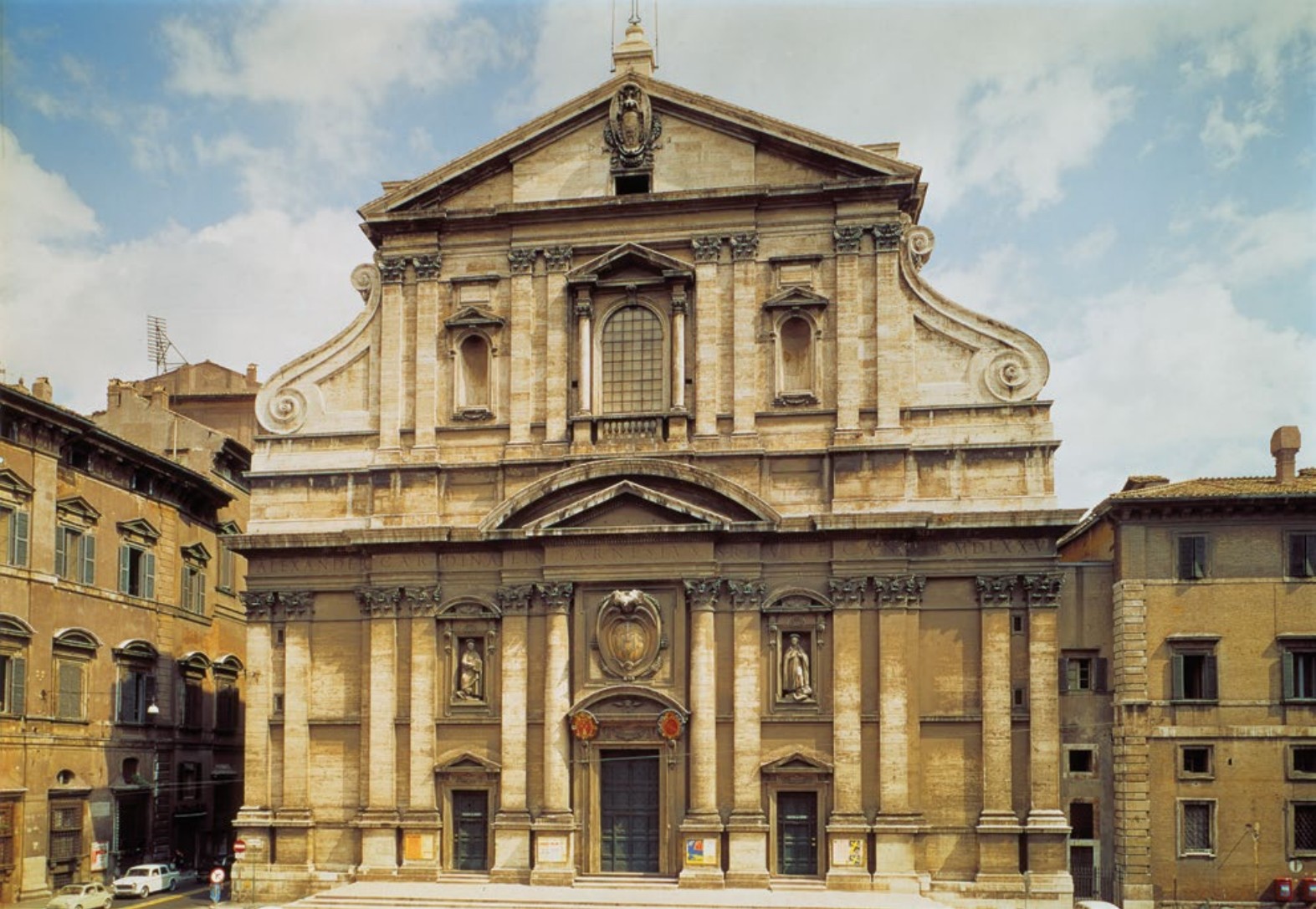
 Il Gesù © Scala/Art Resource, NY
Il Gesù, including Triumph of the Name of Jesus ceiling fresco
Rome, Italy. Giacomo da Vignola, plan (architect); Giacomo della Porta, facade (architect); Giovanni Battista Gaulli, ceiling fresco (artist). Church: 16th century C.E.; facade: 1568–1584 C.E.; fresco and stucco figures: 1676–1679 C.E. Brick, marble, fresco, and stucco.
Curator Note
"The Mother Church of the Jesuit Order. It embodies the Counter-Reformation spirit: aggressive, theatrical, and engaging. The wide nave is perfect for preaching, and the Baroque ceiling fresco ("Triumph of the Name of Jesus") dissolves the roof, creating an illusion of the heavens opening up to suck the faithful up/cast heretics down."
Form
- Architecture: Wide nave, no side aisles (single hall), transepts reduced.
- Facade: Transition from Renaissance scrolls to Baroque plasticity.
- Fresco: Di sotto in su (seen from below), extreme foreshortening.
- Ambiguous border between paint and stucco (3D effect).
- Contrast of light (heaven) and dark (heresy).
Function
- Mother church of the Society of Jesus (Jesuits).
- Acoustics designed for preaching (central dogma of Counter-Reformation).
- To overwhelm the senses and inspire conversion.
- Model for Jesuit churches worldwide.
- Burial place of St. Ignatius Loyola.
Content
- IHS monogram (Name of Jesus) in blinding light.
- The saved rising to heaven.
- The damned (heretics/Protestants) falling into shadow.
- Stucco angels blurring the line of reality.
- Focus on the altar.
Context
- Council of Trent demanded art be clear and emotional.
- Jesuits were the "soldiers" of the Pope.
- Baroque art aims to persuade.
- Gaulli (Baciccio) was a protege of Bernini.
- The facade influenced Baroque architecture everywhere.