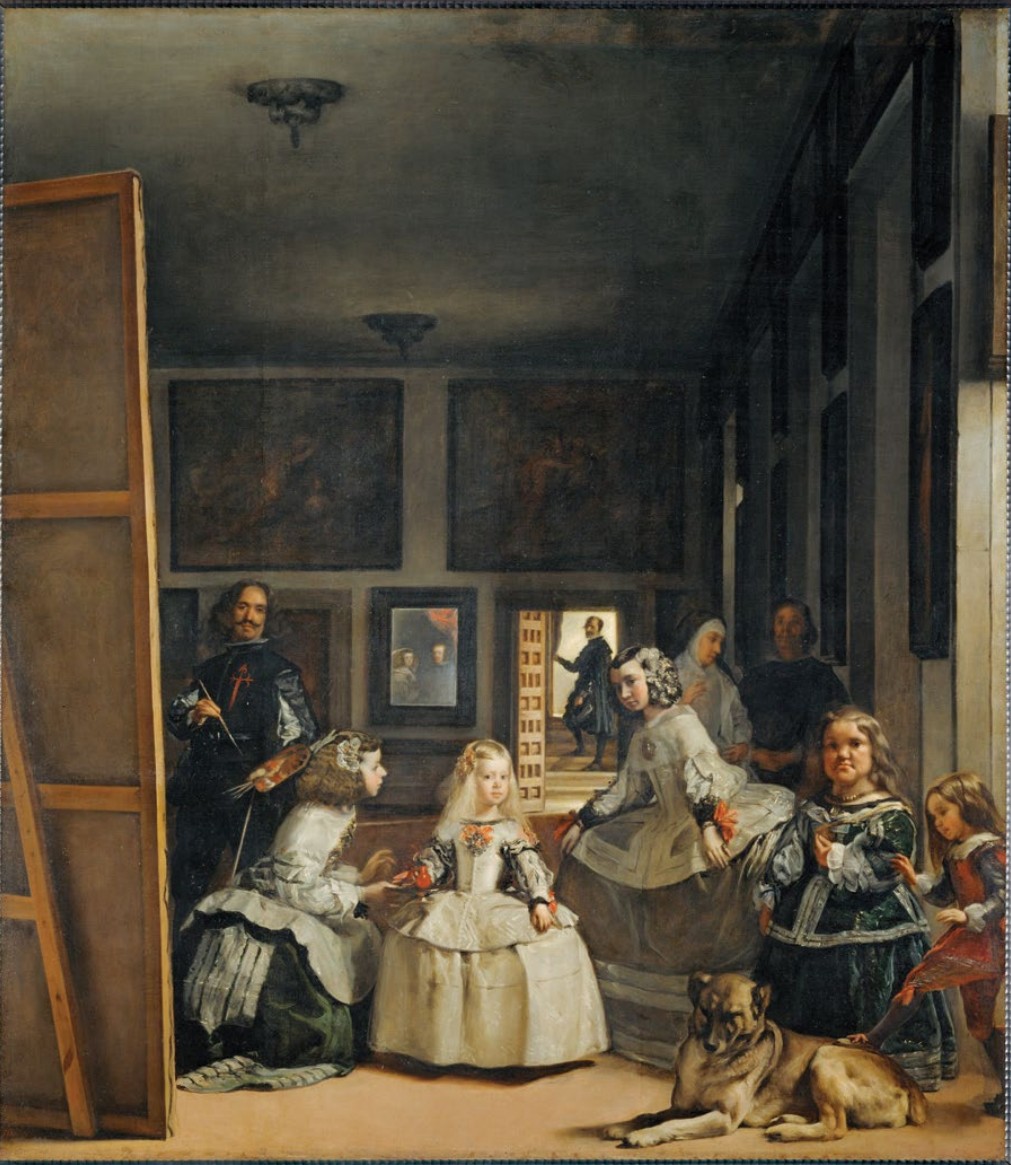
 Las Meninas © Erich Lessing/Art Resource, NY
Las Meninas
Diego Velázquez. c. 1656 C.E. Oil on canvas.
Curator Note
"The "Theology of Painting." Velázquez paints himself painting the King and Queen of Spain, but we only see them in a mirror. The true subject is the Princess (Infanta) and her maids (meninas). It is a complex puzzle about illusion and reality: who is looking at whom? It elevates the status of the artist to royalty."
Form
- Loose, painterly brushwork (pre-Impressionist).
- Aerial perspective (blurriness of background).
- Composition is casual yet strictly calculated.
- Play of light and shadow.
- Complex focal points.
Function
- Private portrait for King Philip IV's office.
- To claim nobility for the art of painting.
- To capture the "snap shot" of court life.
- To immortalize the Infanta Margarita.
- Intellectual game.
Content
- Infanta Margarita: Center, light hitting her.
- Meninas: Maids of honor serving her.
- Dwarfs: for entertainment (and contrast).
- Velázquez: Painting a huge canvas, wearing the Cross of Santiago (added later).
- Mirror: Reflection of King and Queen (the viewers).
- Man in doorway: Vanishing point.
Context
- Spanish Golden Age.
- Velázquez was the court painter.
- Spain was declining in power.
- Painting was considered a craft, not a liberal art (Velázquez wanted to change this).
- Influenced Goya, Picasso, Manet.