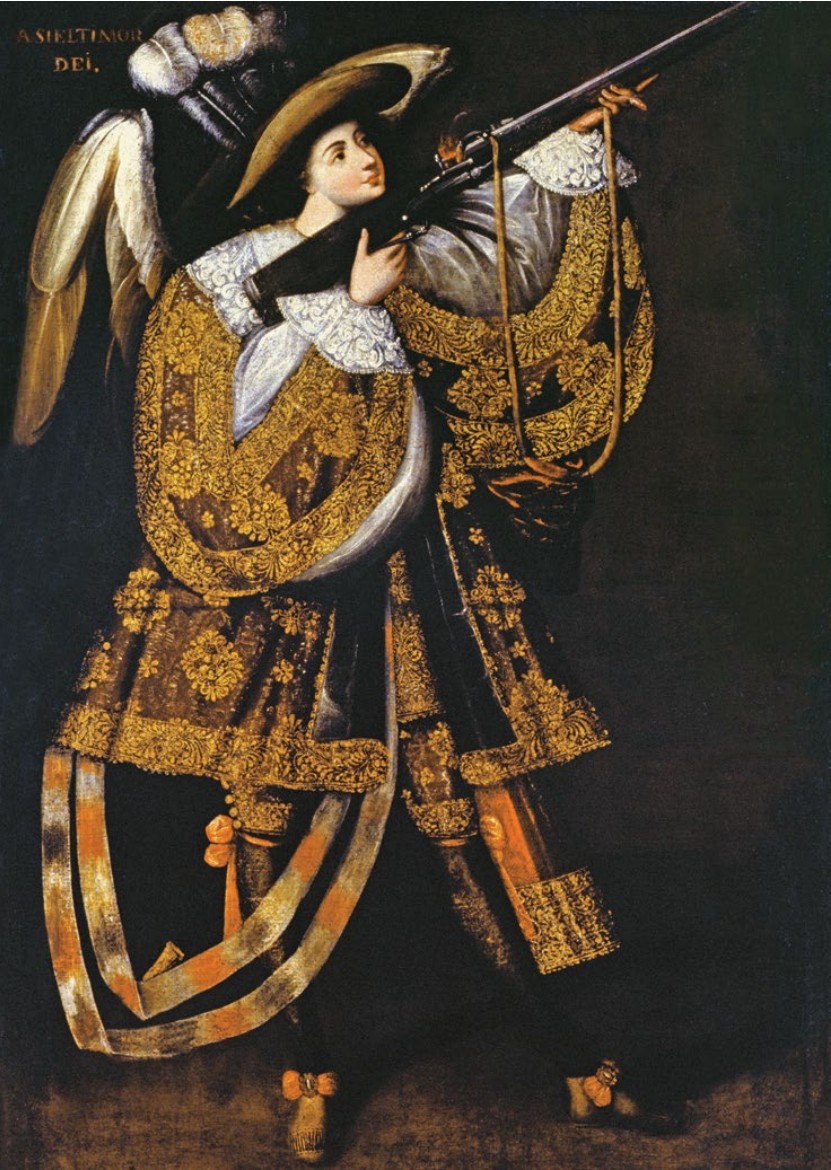
 Angel with Arquebus, Asiel Timor Dei © Paul Maeyaert/The Bridgeman Art Library
Angel with Arquebus, Asiel Timor Dei
Master of Calamarca (La Paz School). c. 17th century C.E. Oil on canvas.
Curator Note
"A uniquely Andean creation: a Gun-wielding Angel. Use by missionaries to convert indigenous people, these angels replaced local warrior gods. They are dressed in aristocratic Spanish fashion (balloon trousers) but hold harquebuses (guns), symbolizing the power of the church and the Spanish conquest."
Form
- Mannerist pose (stiff, dance-like).
- No sense of depth/background.
- Sumptuous costume (gold brocade, lace, feathers).
- Soft, androgynous face.
- Oil on canvas.
Function
- Propaganda: to equate the power of God with the power of the gun.
- To replace indigenous worship of stars/warriors.
- To represent the hierarchy of angels (military celestial army).
- Decoration for churches in the Andes.
- Symbol of Spanish protection.
Content
- Angel (Asiel): "Fears God".
- Arquebus: Early firearm (fearful weapon to natives).
- Clothing: Contemporary fashion of Spanish nobility.
- Feathered hat: Link to Inca nobility usage of feathers.
- Wings: Divine status.
Context
- Created in Bolivia (Viceroyalty of Peru).
- Council of Trent banned angel names, but they thrived in the Andes.
- Syncretism: Angel = Illapa (Inca god of thunder/lightning).
- La Paz School style.
- Guns were new technology in the Americas.