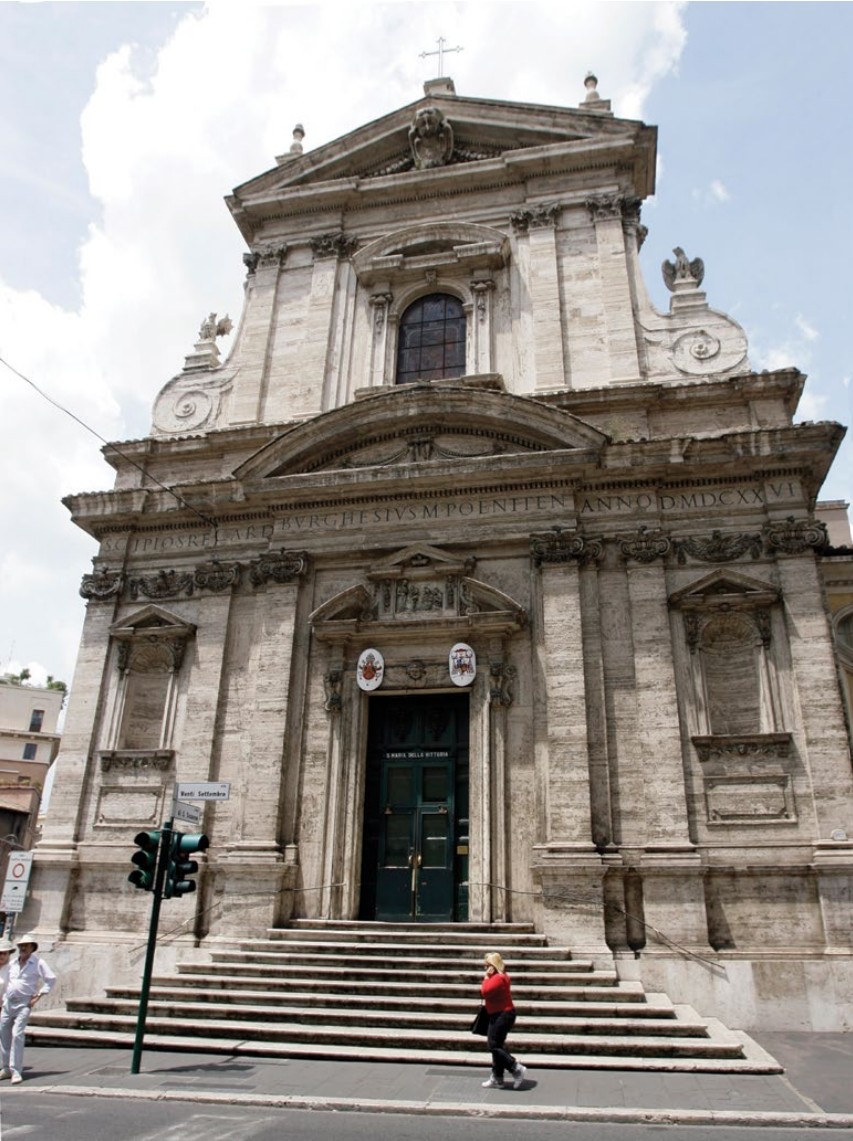
 Church of Santa Maria della Vittoria © ANDREW MEDICHINI/AP/Corbis
Ecstasy of Saint Teresa
Cornaro Chapel, Church of Santa Maria della Vittoria. Rome, Italy. Gian Lorenzo Bernini (sculptor). c. 1647–1652 C.E. Marble (sculpture); stucco and gilt bronze (chapel).
Curator Note
"The ultimate expression of the Baroque goal: to make the viewer feel the spiritual. Bernini turns a chapel into a theater. St. Teresa is shown in a moment of mystical rapture (described by her as an angel piercing her heart), depicted with such physical intensity that it verges on the sexual. Hidden light rays make the marble float."
Form
- Multimedia installation: Sculpture, architecture, painting, light.
- Marble carved to look like soft flesh and fluttering cloth.
- Golden rays (bronze) illuminated by a hidden window.
- Theatrics: Opera boxes on the side with stone spectators.
- Emotional intensity and movement.
Function
- Funerary chapel for Cardinal Cornaro.
- to depict the mystical experience of St. Teresa (Transverberation).
- To involve the viewer as an audience member.
- To defend the Catholic belief in saints/miracles.
- Counter-Reformation propaganda.
Content
- St. Teresa: swooning, mouth open, eyes rolled back.
- Angel: smiling, holding a golden spear (divine love).
- Patrons (Cornaro family): discussing the miracle in side boxes.
- Cloud: rough texture contrasts with polished figures.
- Ceiling fresco: The Holy Spirit.
Context
- St. Teresa was a recent Spanish mystic/saint.
- Bernini was a devout Catholic and theater set designer.
- Spiritual exercises of Ignatius Loyola (appeal to senses).
- Located in Santa Maria della Vittoria (victory of Catholicism).
- Blurs the line between sacred and sexual love.