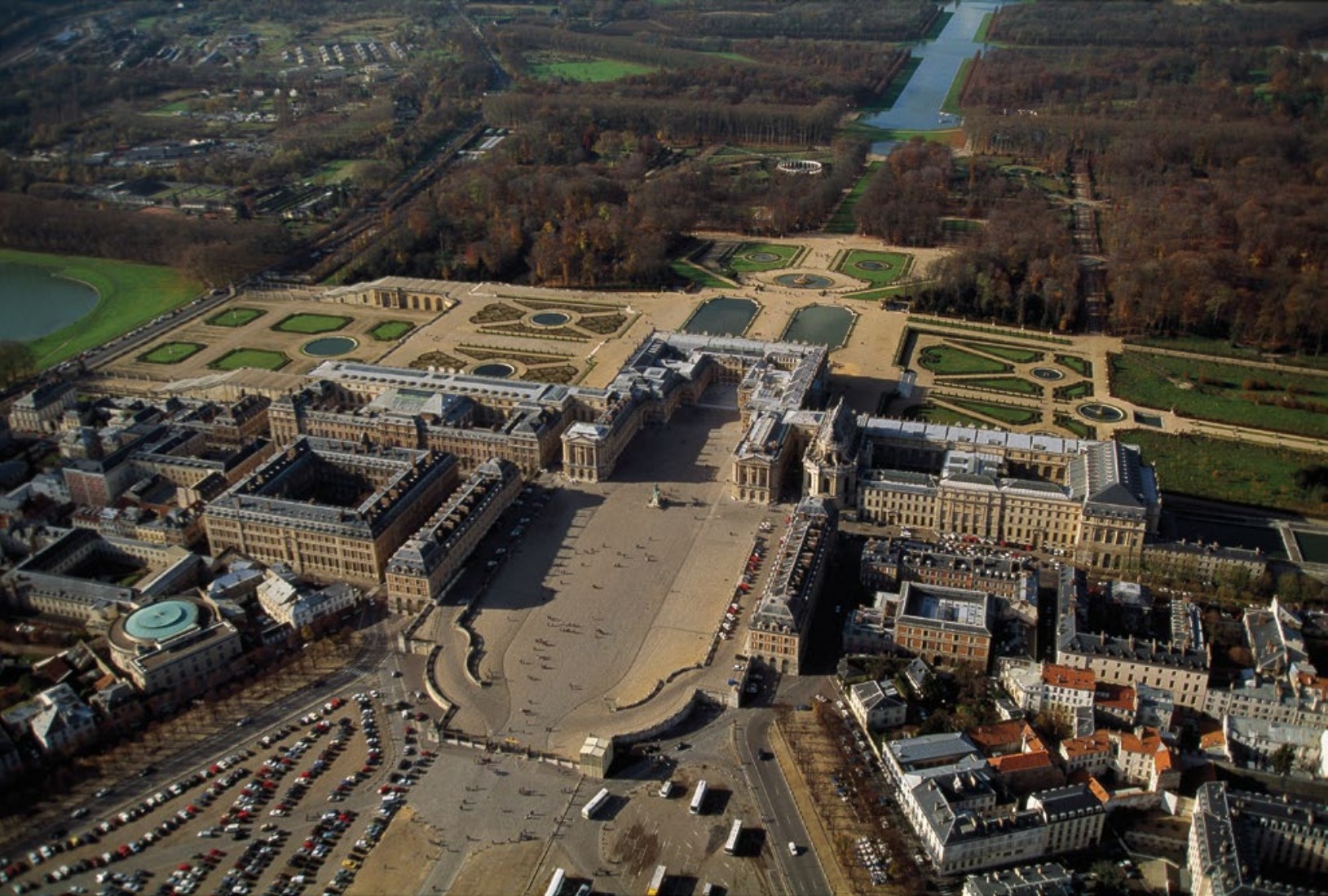
 The Palace of Versailles © Yann Arthus-Bertrand/ALTITUDE
The Palace of Versailles
Versailles, France. Louis Le Vau and Jules Hardouin-Mansart (architects). Begun 1669 C.E. Masonry, stone, wood, iron, and gold leaf (architecture); marble and bronze (sculpture); gardens.
Curator Note
"The ultimate symbol of Absolute Monarchy. Louis XIV, the "Sun King," moved the French court to this massive palace to control the nobility. Everything—from the Hall of Mirrors to the geometric gardens—radiates from the King’s bedroom like rays of the sun, demonstrating his dominance over nature and people."
Form
- French Baroque (Classical on outside, ornate inside).
- Massive scale (700 rooms).
- Hall of Mirrors: 357 mirrors reflecting 17 windows.
- Gardens: Geometric lines, fountains, axis stretching to infinity.
- Symmetrical, rigid layout.
Function
- Residence of King Louis XIV and the court.
- Seat of the French Government.
- Use "etiquette" to control the nobility (keep them busy).
- Propaganda: France is the center of the world.
- Venue for parties/treaties.
Content
- Hall of Mirrors: Treaty of Versailles signed here later; sunlight = Sun King.
- King's Bedroom: The center of the axis.
- Fountains: Apollo (Sun God) rising from the water.
- Orangery: Dominance over nature.
- Statues: Glorifying the King.
Context
- Louis XIV: "L'etat, c'est moi" (I am the state).
- Shift of power from Paris to Versailles.
- Bankrupted France eventually.
- Imitated by every monarch in Europe.
- Baroque art used for absolutist power.