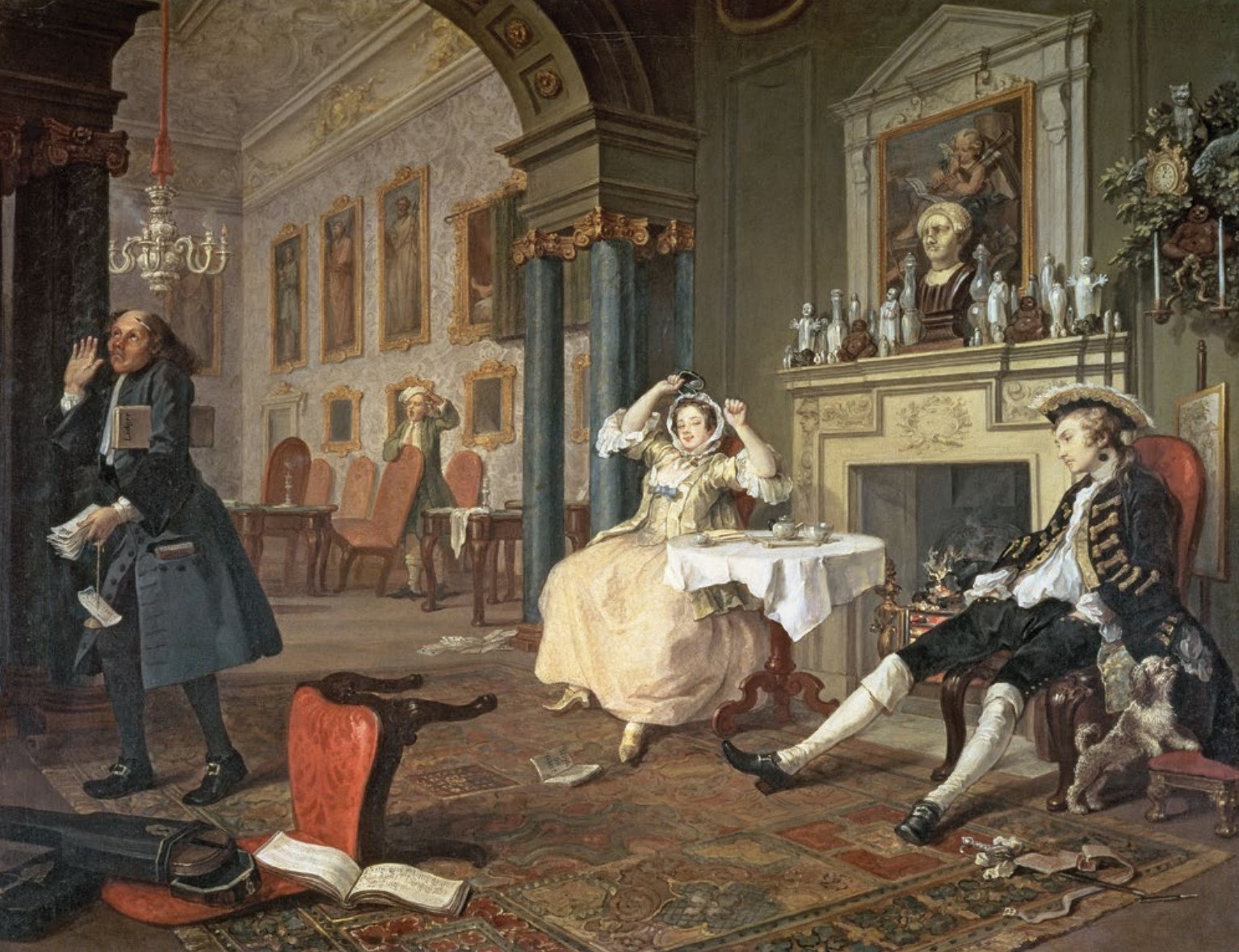
 The Tête-à-Tête © The National Gallery, London, UK/The Bridgeman Art Library
The Tête-à-Tête, from Marriage à-la-Mode
William Hogarth. c. 1743 C.E. Oil on canvas.
Curator Note
"A satirical swipe at the British aristocracy. Part of a narrative series, this scene shows a young arranged-marriage couple the morning after a night of debauchery. The husband has a syphilis mark and empty pockets; the wife looks bored and mischievous. The steward throws his hands up in despair. It warns that marriage for money leads to ruin."
Form
- Narrative series (like a storyboard).
- Rococo influence (pastel colors, frilly details).
- Cluttered composition (full of clues).
- Caricature-like expressions.
- Oil on canvas (later engraved).
Function
- To satire the decline of the aristocracy.
- To teach middle-class morality.
- Entertainment (funny and shocking).
- Mass produced as prints.
- Social commentary.
Content
- Husband: Exhausted, dog sniffing another woman's bonnet in his pocket.
- Wife: Just woke up, mirror signals vanity.
- Steward: Holding unpaid bills.
- Broken statue/Classical bust: Decay of values.
- Painting of cupid in ruins: Love is dead.
Context
- Industrial Revolution creating a new wealthy merchant class.
- Aristocrats were marrying merchants for money ("Squanderfield").
- Hogarth is the father of English satire.
- Criticism of French/foreign taste.
- Moral: Marry for love, not status.