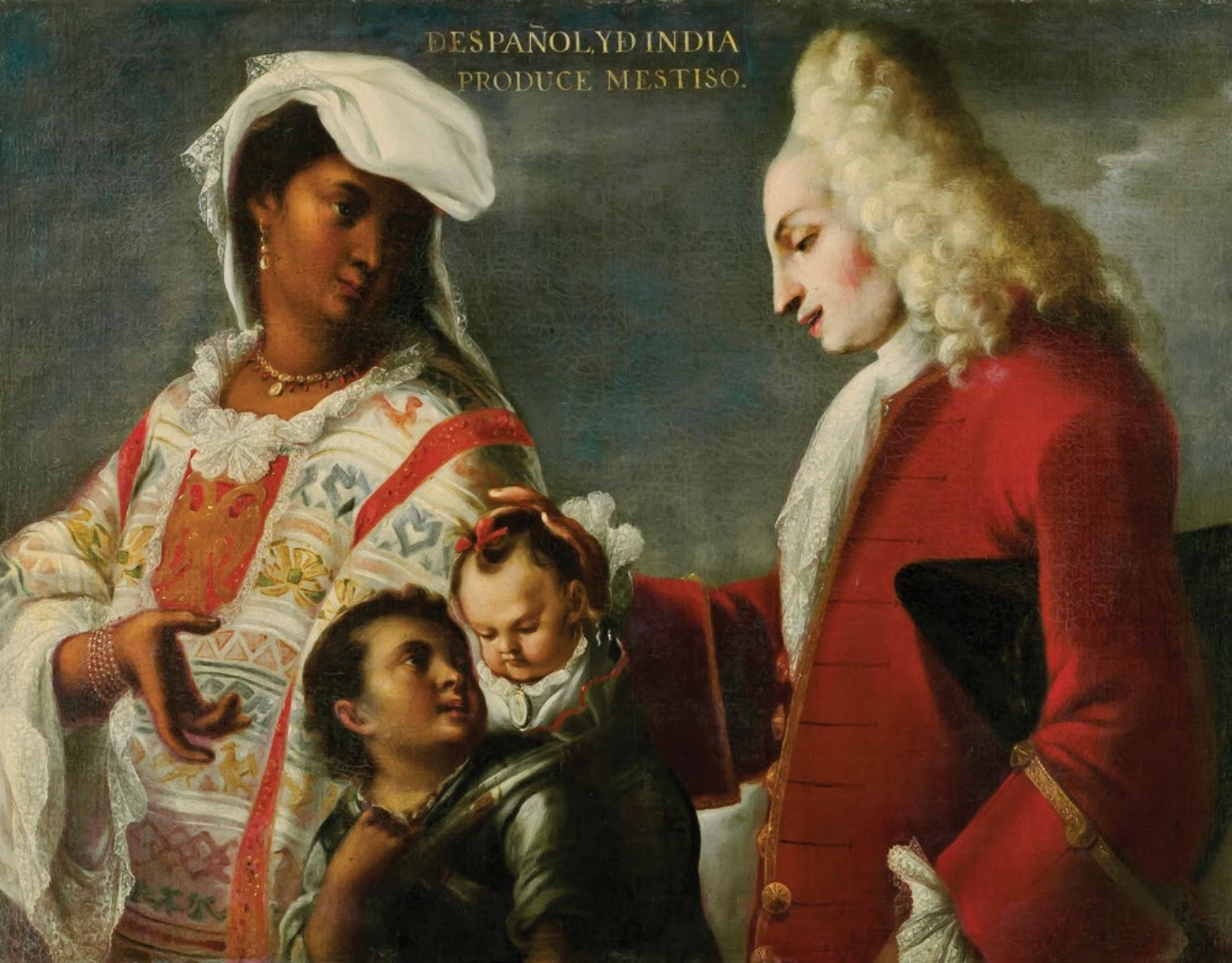
 Spaniard and Indian Produce a Mestizo © Breamore House, Hampshire, UK/The Bridgeman Art Library
Spaniard and Indian Produce a Mestizo
Attributed to Juan Rodríguez Juárez. c. 1715 C.E. Oil on canvas.
Curator Note
"A "Casta Painting" (Caste Painting), part of a series classifying the racial mixes of the New World. It depicts a Spanish father and Indigenous mother with their "Mestizo" child. While seemingly documenting reality, these works reinforced the racial hierarchy where "whiteness" was the pinnacle of status."
Form
- Casta painting (genre/portrait mix).
- Simple composition (Holy Family style).
- Labels identifying the race.
- Realistic costumes denoting class.
- Oil on canvas.
Function
- To classify and categorize the population of New Spain.
- To demonstrate the hierarchy of race (Limpieza de Sangre).
- Souvenir for Spaniards returning home.
- To warn against mixing? Or just document it?
- Enlightenment interest in taxonomy.
Content
- Father: European dress, powdered wig (Elite).
- Mother: Huipil (indigenous dress), beautiful.
- Child: Being presented like Jesus.
- Servant: carrying the baby.
- Inscription: "Spaniard and Indian make Mestizo".
Context
- The Caste System legally defined tax and status.
- Mestizos were the majority but had fewer rights.
- Reflects colonial anxiety giving way to a new identity.
- Typically 16 panels in a set.
- Juárez was an established artist in Mexico.