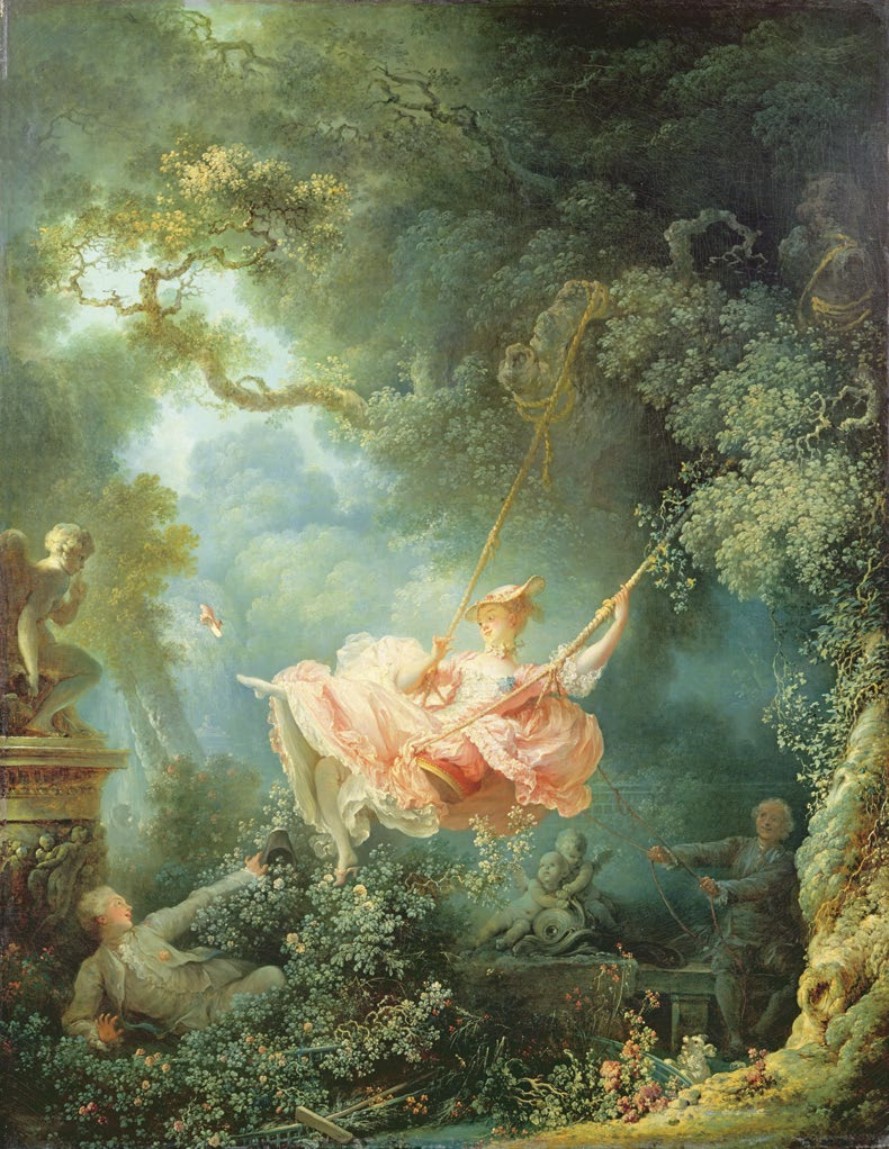
 The Swing © Wallace Collection, London, UK/The Bridgeman Art Library
The Swing
Jean-Honoré Fragonard. 1767 C.E. Oil on canvas.
Curator Note
"The epitome of the Rococo style, this painting depicts a frivolous, erotic scene of a mistress on a swing, playfully kicking off her shoe while her lover hides in the bushes to look up her dress. It represents the hedonistic, indulgent lifestyle of the French aristocracy just before the Revolution."
Form
- Pastel colors: soft pinks, fluid greens, and creamy whites.
- Loose, feathery brushstrokes creating a sense of motion and fluffiness.
- Diagonal composition following the rope of the swing.
- Atmospheric perspective with a misty, lush garden setting.
- Use of light to highlight the woman as the focal point.
Function
- To provide erotic entertainment for a private patron.
- To celebrate the pursuit of pleasure and romance.
- To decorate a private boudoir or salon.
- To capture a fleeting moment of joy and mischief.
- To exemplify the Rococo taste for lightness and frivolity.
Content
- The woman on the swing: symbol of youth and beauty.
- The lover hiding in the bushes: the "voyeur".
- The older man pushing the swing: the unsuspecting husband/bishop.
- The flying shoe: a symbol of lost innocence or sexual abandon.
- The statue of Cupidon (Menacing Cupid): shushing the scene ("hush").
Context
- Commissioned by a French libertine who wanted a painting of his mistress.
- Represents the decadence of the Ancien Régime.
- Criticized by Enlightenment thinkers (like Diderot) for being frivolous and immoral.
- The garden setting implies a secluded, private escape.
- Contrast with the coming Neoclassical seriousness.