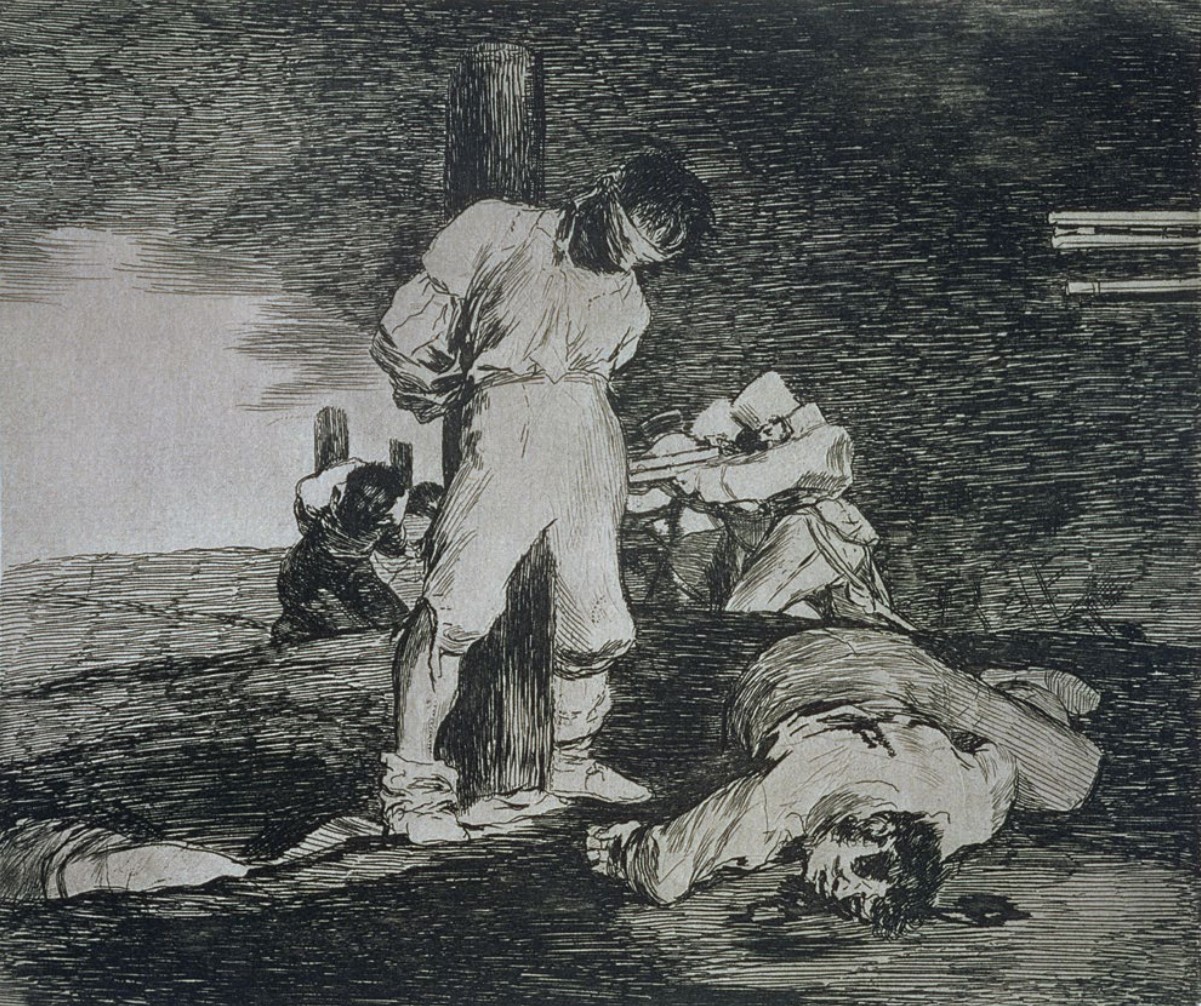
 Y no hai remedio © Private Collection/Index/The Bridgeman Art Library
Y no hai remedio (And There's Nothing to Be Done)
Francisco de Goya. c. 1810–1823 C.E. (published 1863). Etching, drypoint, burin, and burnishing.
Curator Note
"Part of "The Disasters of War" series, this etching depicts the brutal execution of Spanish civilians by French soldiers during the Peninsular War. Goya strips war of its glory, showing only raw violence, despair, and anonymity. It is a protest against the universal cruelty of war."
Form
- Etching with aquatint (creating tonal shading).
- High contrast black and white (stark lighting).
- The composition highlights the central figure bound to a pole.
- The firing squad is faceless or obscured.
- Raw, scratchy lines convey chaos and emotion.
Function
- To protest the atrocities of the French occupation of Spain.
- To document the horrors of war for future generations.
- To critique the nature of human violence.
- To refuse to glorify war (anti-heroic).
- Private portfolio: not published until after Goya's death.
Content
- Central figure: white clothes symbolize innocence (Christ-like).
- Firing squad: visible only by their gun barrels (mechanical death).
- Dead body in foreground: the inevitable result.
- Title "And there's nothing to be done": hopelessness.
- The landscape is barren and dark.
Context
- Created during/after the Peninsular War (Napoleon vs Spain).
- Goya worked for the French court but secretly recorded resistance.
- Marks the beginning of Modernism: art as social critique.
- Influenced Manet and Picasso later.
- Goya became deaf and disillusioned, leading to darker works.