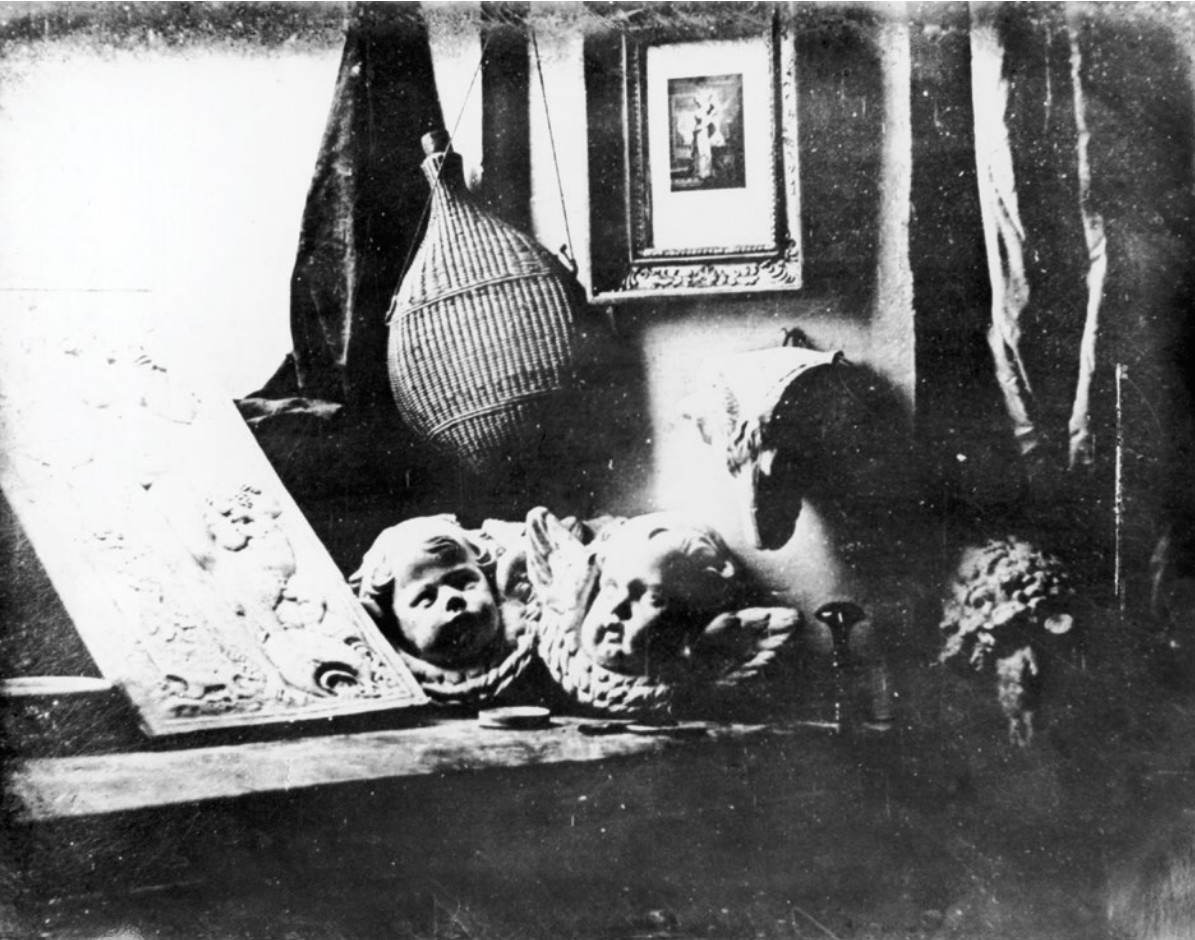
 Still Life in Studio © Louis Daguerre/Time & Life Pictures/Getty Images
Still Life in Studio
Louis-Jacques-Mandé Daguerre. 1837 C.E. Daguerreotype.
Curator Note
"One of the earliest photographs (daguerreotypes) ever made. Daguerre arranged plaster casts and art objects to mimic a traditional painted still life, proving that photography could be an artistic medium, not just a scientific curiosity. The high exposures required meant only static objects could be captured."
Form
- Available light from a window creates strong shadows.
- Monochrome (black and white) image on a silver-coated copper plate.
- Incredible detail and sharpness.
- Composition mimics painting (texture, balance).
- Unique image: no negative, so it cannot be reproduced.
Function
- To demonstrate the capabilities of the daguerreotype process.
- To argue that photography is an art form.
- To capture a permanent image of reality.
- To study light and texture.
- To experiment with composition.
Content
- Plaster casts of angels/putti: reference to art history.
- Wicker basket, textured fabric: showing detail resolution.
- Framed print: picture within a picture.
- The arrangement suggests a "vanitas" theme (fleeting time).
- The light source is the actual light that exposed the plate.
Context
- Louis Daguerre invented the daguerreotype in France.
- Photography was announced to the world in 1839.
- Drastically changed the function of painting (less need for realism).
- Exposure times were very long (minutes).
- Marked the beginning of the modern era of image-making.