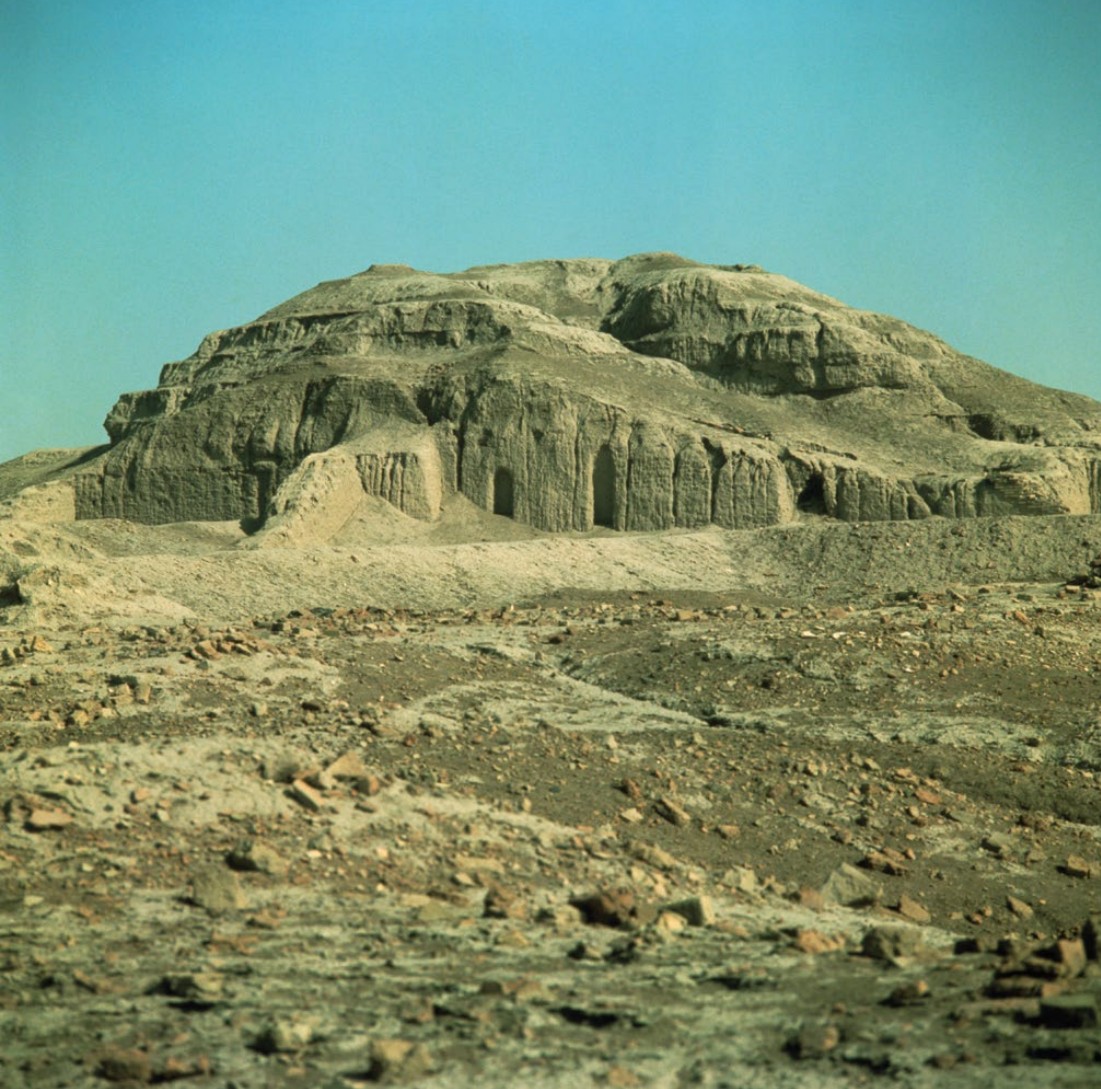
 White Temple © Richard Ashworth/Robert Harding World Imagery
White Temple and its Ziggurat
Uruk (modern Warka, Iraq). Sumerian. c. 3500–3000 B.C.E. Mud brick.
Curator Note
"This massive structure dedicated to the sky god Anu towered over the flat plains of Uruk, visible from afar. It served as a "waiting room" for the deity to descend from the heavens."
Form
- Constructed from mud brick (common in Sumer due to lack of stone), faced with white gypsum plaster to gleam in the sun.
- Ziggurat: A massive raised platform with four sloping sides, shaped like a truncated pyramid.
- White Temple: Rectangular whitewashed structure sitting atop the ziggurat, oriented to the cardinal points.
- Tripartite plan: A long rectangular central hall (cella) flanked by smaller rooms on either side.
- Bent-axis approach: Visitors had to walk around the temple to find the entrance, slowing their approach and increasing reverence.
Function
- Temple dedicated to Anu, the sky god and supreme deity of the Sumerian pantheon.
- Served as a "waiting room" for the deity to descend from the heavens to the earth.
- Theocratic center: The temple was the administrative and spiritual heart of the city-state.
- Exclusive access: Only high priests and royalty were allowed inside the cella; the public worshipped from below.
- Symbolic mountain: The ziggurat elevated the temple to bring it closer to the gods (axis mundi).
Content
- The ziggurat platform itself, rising 40 feet above the city level.
- The Cella (central hall) containing a stepped altar for sacrifices and libations.
- Whitewashed exterior walls that would have been blindingly bright in the desert sun.
- Foundations contained deposits of leopard and lion bones, suggesting ritual sacrifice during construction.
- Interior niches and buttresses created a play of light and shadow.
Context
- Located in Uruk (modern Warka), the first major city in Sumer with a population of ~40,000.
- Constructed c. 3500–3000 B.C.E., predating the Great Pyramids and the invention of the wheel.
- Reflects the highly centralized authority required to mobilize the labor force for such a massive project.
- Sumerian religion was polytheistic and tied to nature; appeasing the gods was crucial for survival in the harsh environment.
- The sheer size dominated the flat landscape, asserting the power of the god and the city.