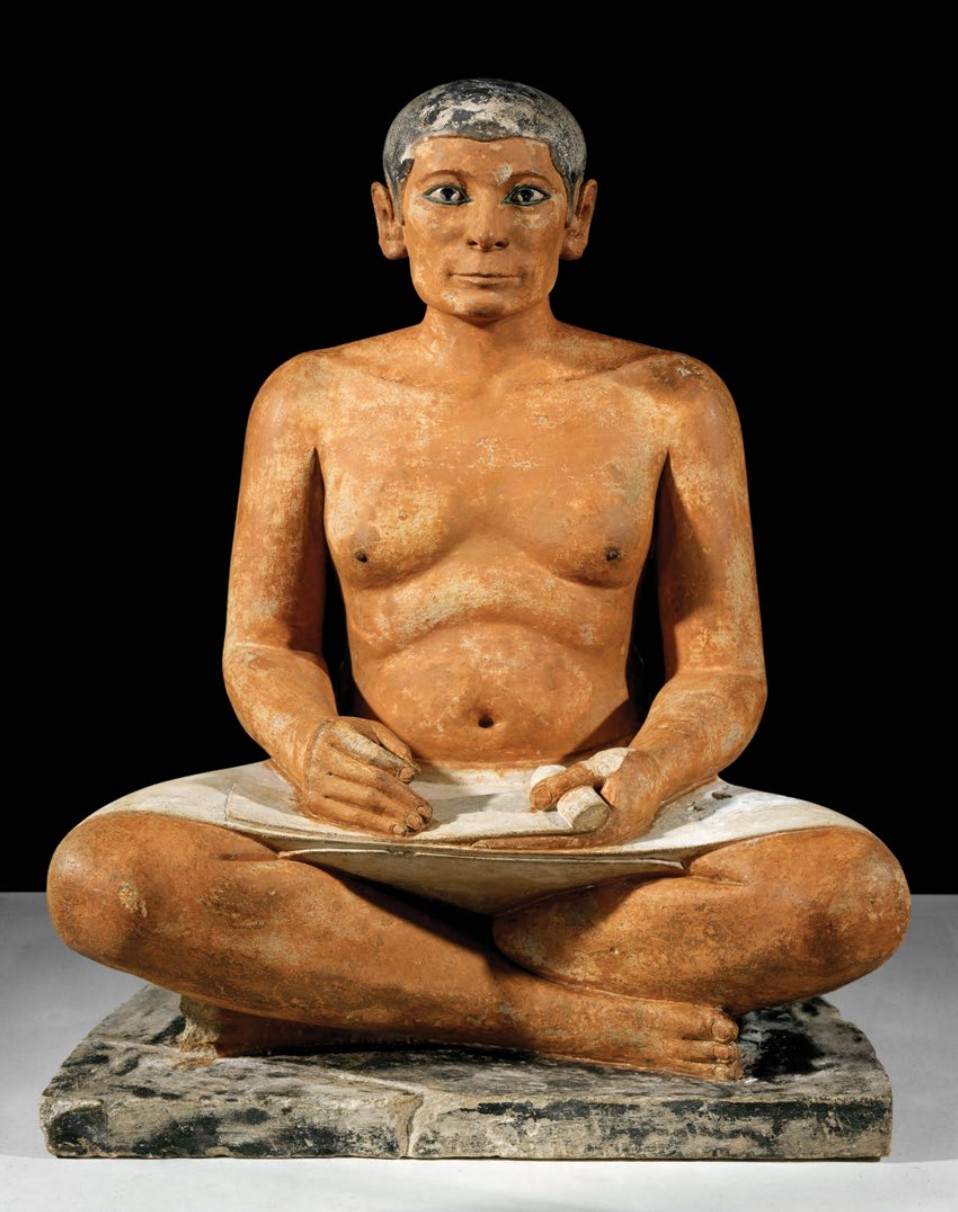
 Seated scribe © Erich Lessing/Art Resource, NY
Seated Scribe
Saqqara, Egypt. Old Kingdom, Fourth Dynasty. c. 2620–2500 B.C.E. Painted limestone.
Curator Note
"Unlike the idealized statues of pharaohs, this scribe is depicted with sagging chest muscles and a protruding belly—signs of a life exempt from hard labor and high status in a literate society."
Form
- Painted limestone sculpture with eyes inlaid with rock crystal, magnesite, and copper alloy.
- Realistic (naturalistic) depiction, contrasting with the idealism of royal portraits.
- Seated cross-legged on the ground, a pose reserved for his profession.
- Soft, flesh-like modeling of the body, showing signs of age and a sedentary lifestyle (sagging chest, belly).
- Frontal orientation, engaging directly with the viewer (or the deity in the afterlife).
Function
- Ka statue: A vessel for the soul (Ka) to inhabit in the afterlife.
- Funerary object placed in a tomb (serdab) to serve the deceased eternally.
- Depicts the deceased performing his professional role, ensuring he can continue his work in the Field of Reeds.
- Commemorates the high status and intelligence of the scribe.
- May have been part of a larger group of statues serving a deceased king or noble.
Content
- A scribe seated with a papyrus scroll unfurled across his lap.
- Right hand is poised as if holding a reed brush (now missing), ready to write.
- Alert, intelligent facial expression with intense, lifelike eyes.
- Fat rolls on the torso signify wealth and a life exempt from hard physical labor.
- Wearing a simple white kilt, the standard attire for his rank.
Context
- Found at Saqqara, the vast necropolis for the capital city of Memphis, Egypt.
- Dated to the Old Kingdom, Fourth Dynasty (c. 2620–2500 B.C.E.), same era as the Great Pyramids.
- Literacy was extremely rare in ancient Egypt (<1%); scribes were powerful administrators.
- Shows the strict "hierarchy of representation": pharaohs are perfect/rigid, lesser elites are more naturalistic.
- The high quality of the carving and materials suggests this scribe was a very important official.