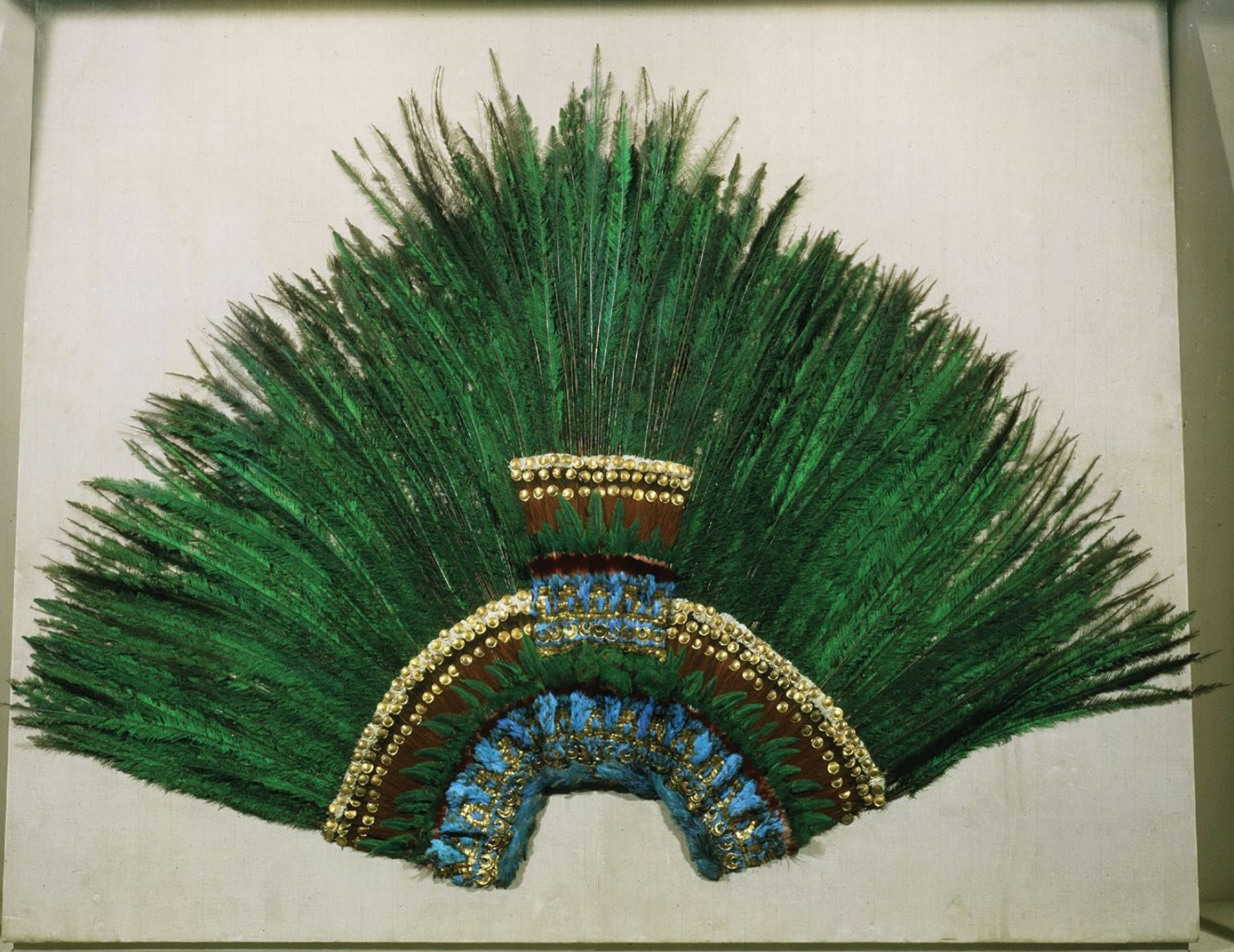
 Ruler’s feather headdress © Gianni Dagli Orti/The Art Archive at Art Resource, NY
Ruler's Feather Headdress (probably of Motecuhzoma II)
Mexica (Aztec). 1428–1520 C.E. Feathers (quetzal and cotinga) and gold.
Curator Note
"Believed to have belonged to Moctezuma II. The 400 shimmering green quetzal tail feathers (each male bird only has two!) represented eternity and the ruler's connection to the divine."
Form
- Materials: 400 Quetzal tail feathers (center) and Blue Cotinga feathers (border).
- Structure: Reed framework reinforced with paper and cotton.
- Technique: Featherwork (Mosaic of feathers) created by specialist Amanteca artisans.
- Gold detailing: Originally included a golden beak/helmet and discs.
- Use of iridescent color (structural color) that changes in sunlight.
Function
- Part of the costume of the Tlatoani (Aztec Emperor) for rituals.
- Visual indicator of supreme status (only the emperor wore Quetzal plumes).
- Transformation: Turned the ruler into a living bird-deity (Huitzilopochtli?).
- Intimidating display of wealth and trade reach.
- Possibly gifted to Cortes by Motecuhzoma II as a diplomatic offering.
Content
- Semi-circular shape represents the sun's rays or the heavens.
- 400 Feathers: The number 400 represented "infinity" or "eternity" in Aztec numerology.
- Green/Blue color palette symbolizes water and burnt (new) vegetation (fertility).
- Gold ornaments represent the sun.
Context
- The quetzal bird was sacred and lived in the distant cloud forests (difficult to obtain).
- Male quetzals have only 2 tail feathers; this headdress required killing/trapping ~200 birds (or collecting molted ones).
- Currently in the Museum of Ethnology, Vienna (subject of repatriation disputes).
- Featherworking was considered more valuable than goldworking by the Aztecs.
- Represents the vast tribute system of the Aztec empire.