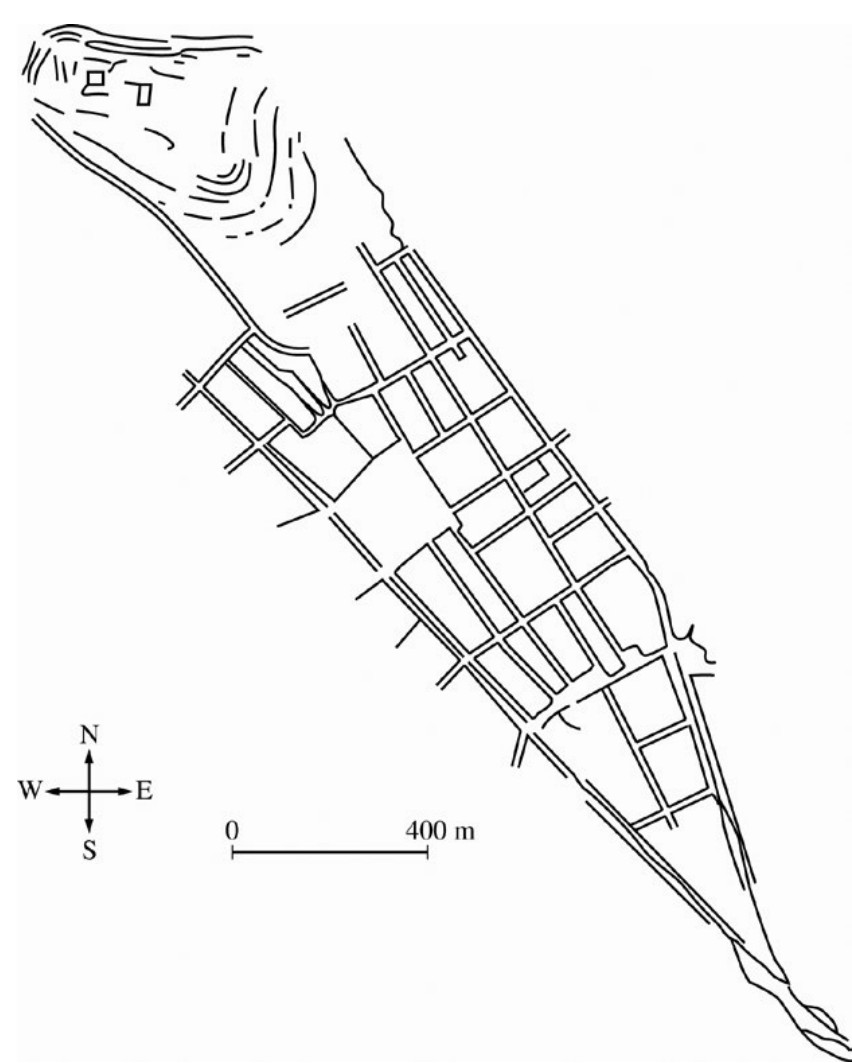
 City of Cusco plan © Michael Freeman/Corbis
City of Cusco
Central highlands, Peru. Inka. c. 1440 C.E.; convent added 1550–1650 C.E. Andesite.
Curator Note
"The city shaped like a puma. The Inka master masons fit massive stones together so perfectly that not even a knife blade could fit between them, creating earthquake-proof walls that still stand today."
Form
- Ashlar Masonry: Stones shaped to fit perfectly without mortar (dry-stone).
- Trapezoidal shapes: Windows, doors, and niches are wider at the bottom for stability.
- Pillow-faced stones: Stones are slightly rounded to shed water and look organic.
- Zoomorphic Plan: The city was laid out in the shape of a Puma (head = fortress, heart = square).
- Integration with nature: Walls follow the rock contours.
Function
- Capital of the Inka Empire (Tawantinsuyu = Land of Four Quarters).
- Axis Mundi: The center from which all 4 roads and 42 ceque lines (spirit paths) radiated.
- Political and religious hub for the elite (Sapa Inka and priests).
- Qorikancha: Temple of the Sun (spiritual heart).
- Saqsaywaman: Fortress protecting the city (head of the puma).
Content
- Qorikancha (Golden Enclosure): Walls were once covered in sheets of solid gold.
- Ceque Lines: Invisible lines connecting the temple to holy sites (huacas) across the mountains.
- Hanan (Upper) and Hurin (Lower) Cusco: Social division of the city.
- Stone of Twelve Angles: Demonstrates the perfection of Inka masonry.
- Santo Domingo Convent: Spanish church built directly on top of the Qorikancha walls.
Context
- Rebuilt by Pachacuti Inka Yupanqui in the mid-15th century.
- Inka Empire did not use the wheel or iron tools; labor was the tax (Mita system).
- Spanish Conquest: Temples were stripped of gold; masonry was repurposed for colonial buildings.
- The masonry style is earthquake-resistant (stones "dance" and resettle).
- Reflects the Inka desire to control and order the natural world.