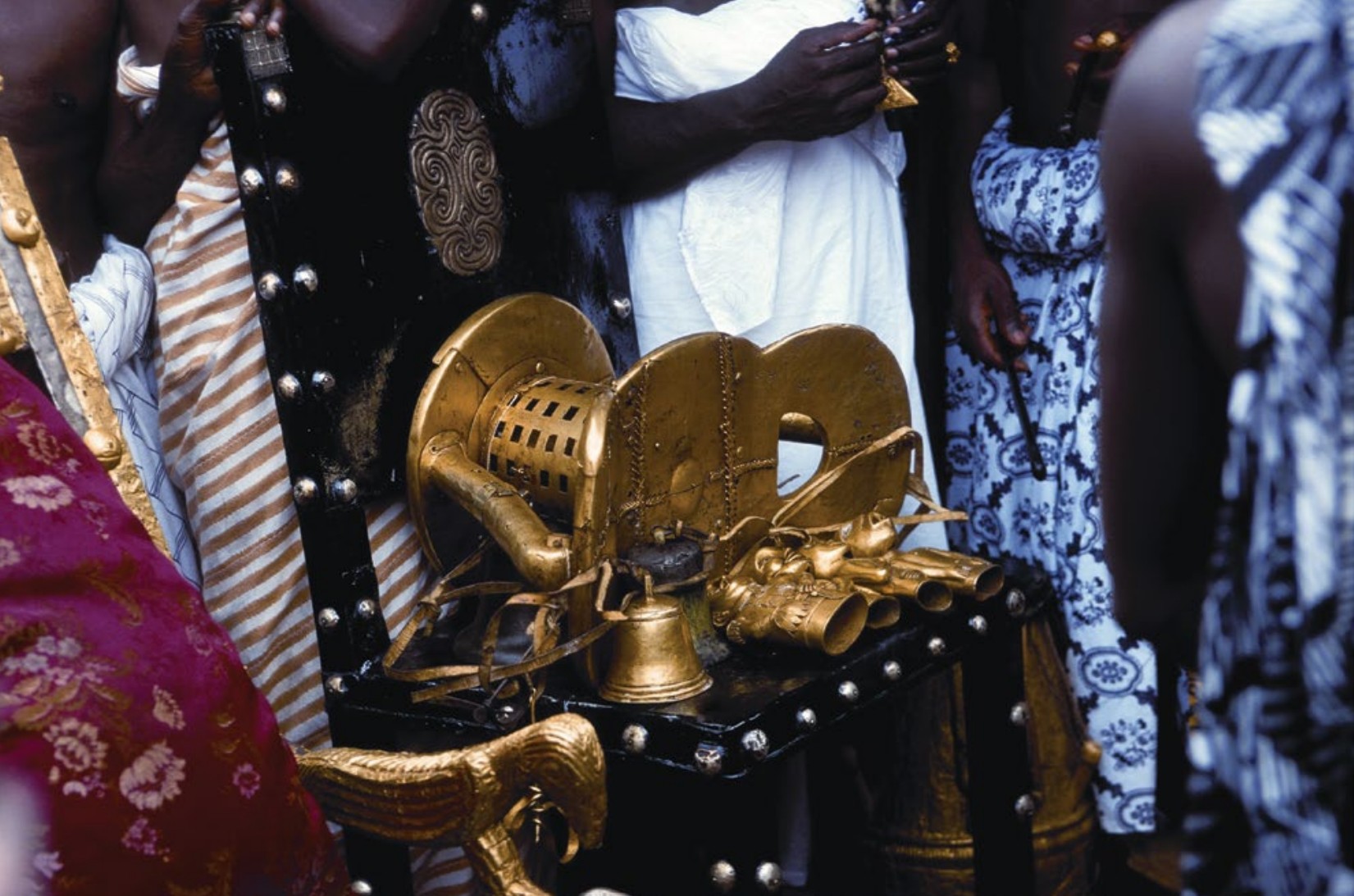
 Sika dwa kofi © Marc Deville/Gamma-Rapho via Getty Images
Sika dwa kofi (Golden Stool)
Ashanti peoples (south central Ghana). c. 1700 C.E. Gold over wood and cast-gold attachments.
Curator Note
"It fell from the sky. This stool is not furniture—it is the soul of the Ashanti nation. It is so sacred that it must never touch the ground, and not even the King is allowed to sit on it."
Form
- Carved wood covered in gold leaf.
- Rectangular base with a curved seat (classic Ashanti stool shape).
- Bells attached to the side to warn of danger.
- Placed on its own chair (hwedom) to keep it off the ground.
- Gold represents the essence of the sun/life force (kra).
Function
- Soul of the Nation: Houses the spirit (sunsum) of the entire Ashanti people.
- Divine Legitimacy: No king can rule without being in the presence of the stool.
- Unity: Binds the loose confederacy of chiefs together under one Asantehene.
- War Standard: Carried into battle (or hidden) to protect the nation's spirit.
- Ceremonial Object: Displayed only on the grandest occasions.
Content
- The Stool: Represents the connection between the living, the dead, and the unborn.
- Bells: Two brass bells represent defeated enemies.
- Gold: Symbolizes royalty, endurance, and the sun.
- Shape: The crescent seat embraces the owner's soul.
- It is assumed to be alive (given food and drink offerings).
Context
- The Ashanti Kingdom (Ghana) was a gold-rich coastline power.
- Myth: Okomfo Anokye (priest) conjured it from the sky onto the lap of Osei Tutu I.
- War of the Golden Stool (1900): British Governor Hodgson demanded to sit on it.
- Yaa Asantewaa (Queen Mother) led the war to protect the stool from the British.
- It remains in Kumasi today, arguably the most sacred object in Africa.