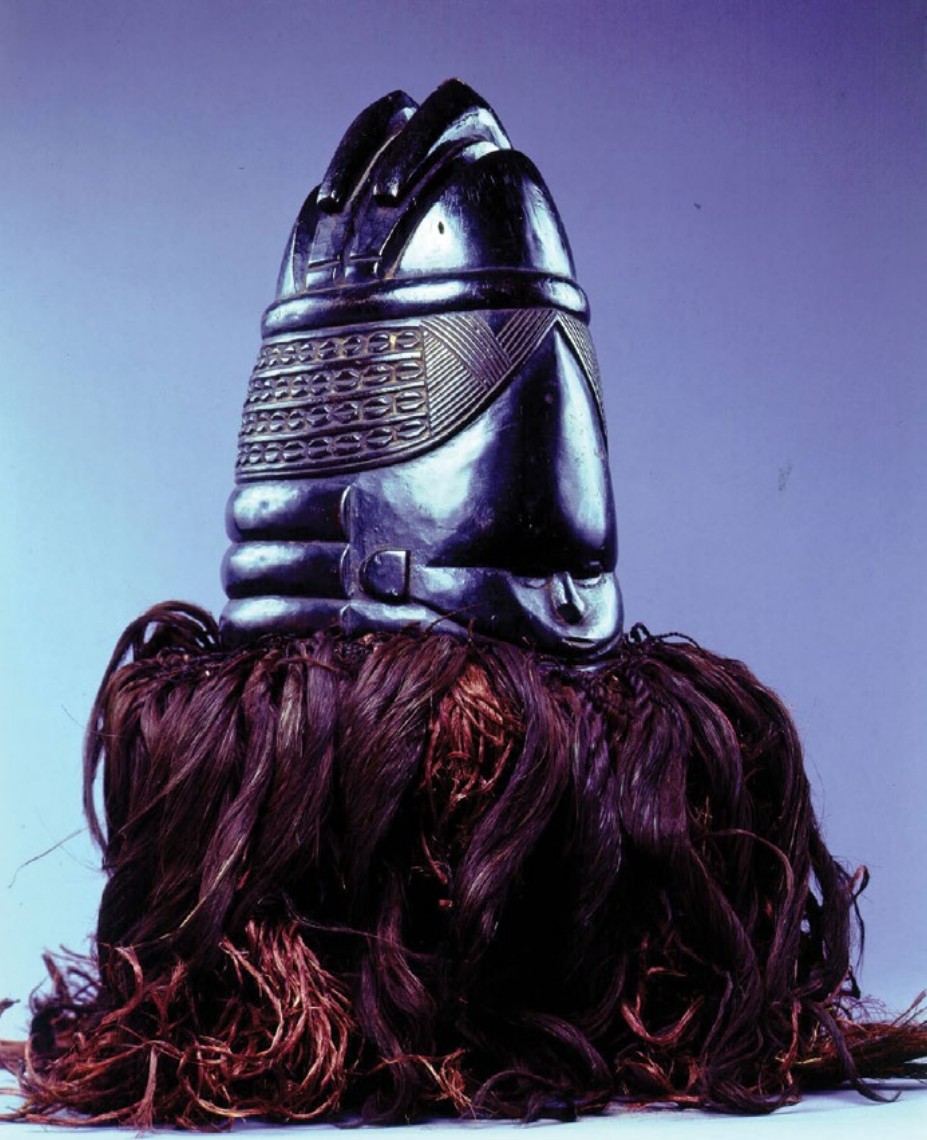
 Bundu mask © Schomburg Center, NYPL/Art Resource, NY
Bundu mask
Sande Society, Mende peoples (West African forests of Sierra Leone and Liberia). 19th to 20th century ce. Wood, cloth, and fiber
Curator Note
"The only mask worn by women. Used by the Sande Society to initiate girls into womanhood. The shiny black surface represents the ideal skin, and the fat rolls on the neck are not just beautiful—they are ripples of water from the spirit emerging."
Form
- Helmet mask: Covers the entire head of the wearer (rare in Africa).
- Shiny black surface: Treated with palm oil to mimic healthy, beautiful skin.
- Small facial features: Small mouth (don't gossip), small eyes (don't look at men).
- Fat rolls on neck: Symbolize fertility, health, and ripples of water.
- Complex coiffure: Elaborate hair indicates wealth and social harmony.
Function
- Initiation: Used by the Sande Society (women's secret society) to teach girls.
- Transformation: The dancer becomes "Sowo" (water spirit).
- Education: Teaches young girls how to be good wives and mothers.
- Social Control: Sande Society set the rules for women's behavior.
- Exorcism/Healing: Sometimes used to cleanse the village.
Content
- Idealized Beauty: Represents the physical and moral ideal of a Mende woman.
- Chrysalis: The girls are taken into the forest (cocoon) and emerge as women (butterflies).
- Water Spirit: The spirit comes from the river bottoms (hence the neck rings).
- Color Black: Symbolizes coolness, water, and humanity.
- Costume: User wears a thick raffia costume to hide the body completely.
Context
- Mende peoples (Sierra Leone).
- Sande Society: A powerful political and religious organization for women.
- Pan-African: This mask type is used by unrelated groups (Bassa, Gola, Vai).
- Gender reversal: While men carve the mask, only women wear/view it.
- Still in use today for transition rituals.