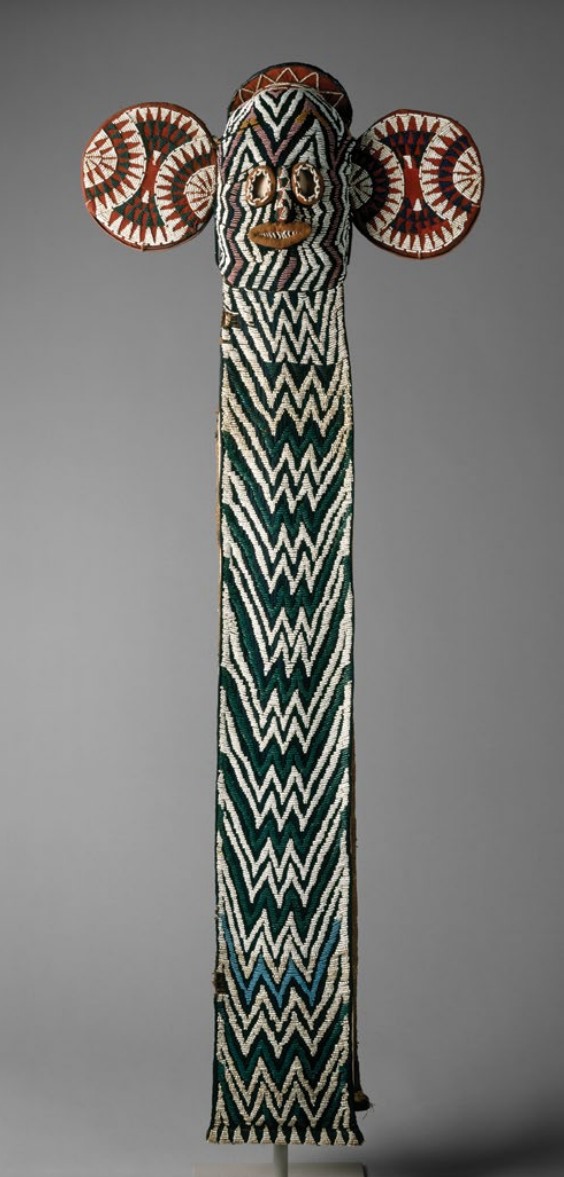
 Aka elephant mask Image copyright © The Metropolitan Museum of Art/Image Source © Art Resource, NY
Aka elephant mask
Bamileke (Cameroon, western grassfields region). c. 19th to 20th century ce. Wood, woven raffia, cloth, and beads
Curator Note
"The power of the elephant and the leopard combined. Worn by the Elephant Society (Kuosi) to enforce the king's laws. The dazzling beadwork represents extreme wealth, and the performance mimics the terrifying strength of the animal."
Form
- Cloth mask covered in thousands of glass beads.
- Shape: Long panels mimic the elephant's trunk (front) and ears (sides).
- Colors: Predominantly dark blue/red on white background.
- Geometric patterns: Triangles/Isosceles shapes often represent leopard spots.
- Costume: Worn with a leopard skin pelt and red feather headdress.
Function
- Masquerade (Tso Dance): Performed by high-ranking officials (Kuosi Society).
- Royal Authority: assert the power of the Fon (King).
- Social Control: The Kuosi enforced laws and collected taxes.
- Funerary: Danced at the funerals of kings or society members.
- Display of Wealth: Beads were expensive trade items.
Content
- Elephant: Represents strength, size, and political power.
- Leopard (spots): Represents cunning, speed, and predator status.
- Human face: Still possesses human eyes/nose (transformation).
- Black beads: Relationship between living and dead.
- White beads: Ancestors and medicine.
Context
- Bamileke peoples (Cameroon Grassfields).
- The King (Fon) is seen as a divine representative.
- Kuosi Society: Originally warriors, later wealthy landowners.
- Trade Routes: Glass beads came from Venice/Czech Republic via trade.
- Dynamic Art: The flaps fly out during the spinning dance.