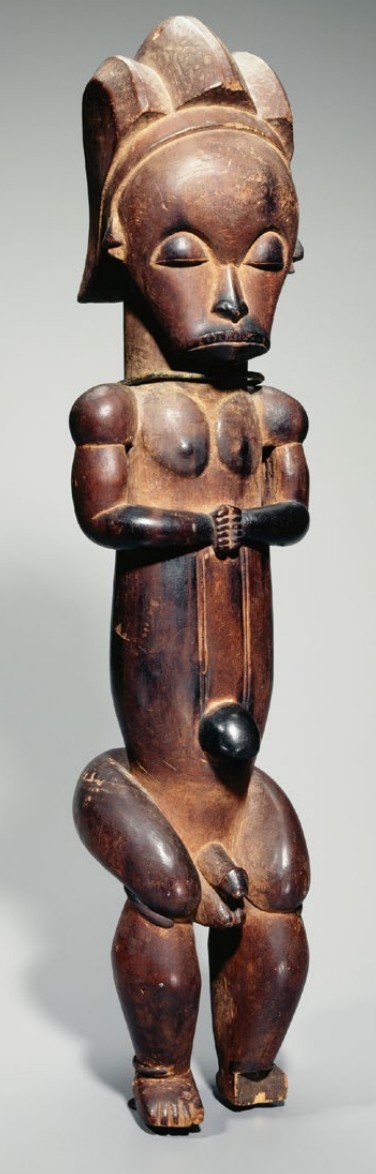
 Reliquary figure (byeri) © Brooklyn Museum/Corbis
Reliquary figure (byeri)
Fang peoples (southern Cameroon). c. 19th to 20th century ce. Wood
Curator Note
"A guardian of bones. The Fang people were migratory, so instead of graveyards, they carried their ancestors' bones in bark boxes. This figure sat on the lid, dangling its legs, protecting the sacred contents from women and uninitiated boys."
Form
- Wooden figure with a disproportionately large head (infantilized).
- Tubular, muscular limbs (arms and legs).
- Shiny surface: Rubbed with palm oil for preservation and ritual.
- Symmetry and Balance: Calm, composed posture.
- Herniated belly button: Suggests the umbilical cord/life.
Function
- Guardian: Sat on the edge of a bark vessel (nsek-byeri) containing ancestor bones.
- Warning: The expression warned uninitiated people to stay away.
- Puppet: Used in initiation ceremonies to teach young men regarding genealogy.
- Consultaion: Removed from the box and consulted for aid.
- Mobile Shrine: Portable ancestry for a nomadic people.
Content
- Duality: Combines qualities of infancy (big head/belly) and maturity (muscles).
- Cycle of Life: Represents the connection between the newborn and the ancestor.
- Nudity: Frank depiction suggests purity or primeval state.
- Three crests on head: Typical Fang hairstyle.
- Introspection: The thoughtful face suggests deep wisdom.
Context
- Fang peoples (Cameroon/Gabon) were rainforest migrants.
- Byeri cult: The religion focused on ancestor worship.
- French Colonialism: Many Byeri were destroyed or sold (banned around 1910).
- Influence: Fang sculptures heavily influenced Picasso and Modernism.
- The bones were the power; the statue was just the "lid."