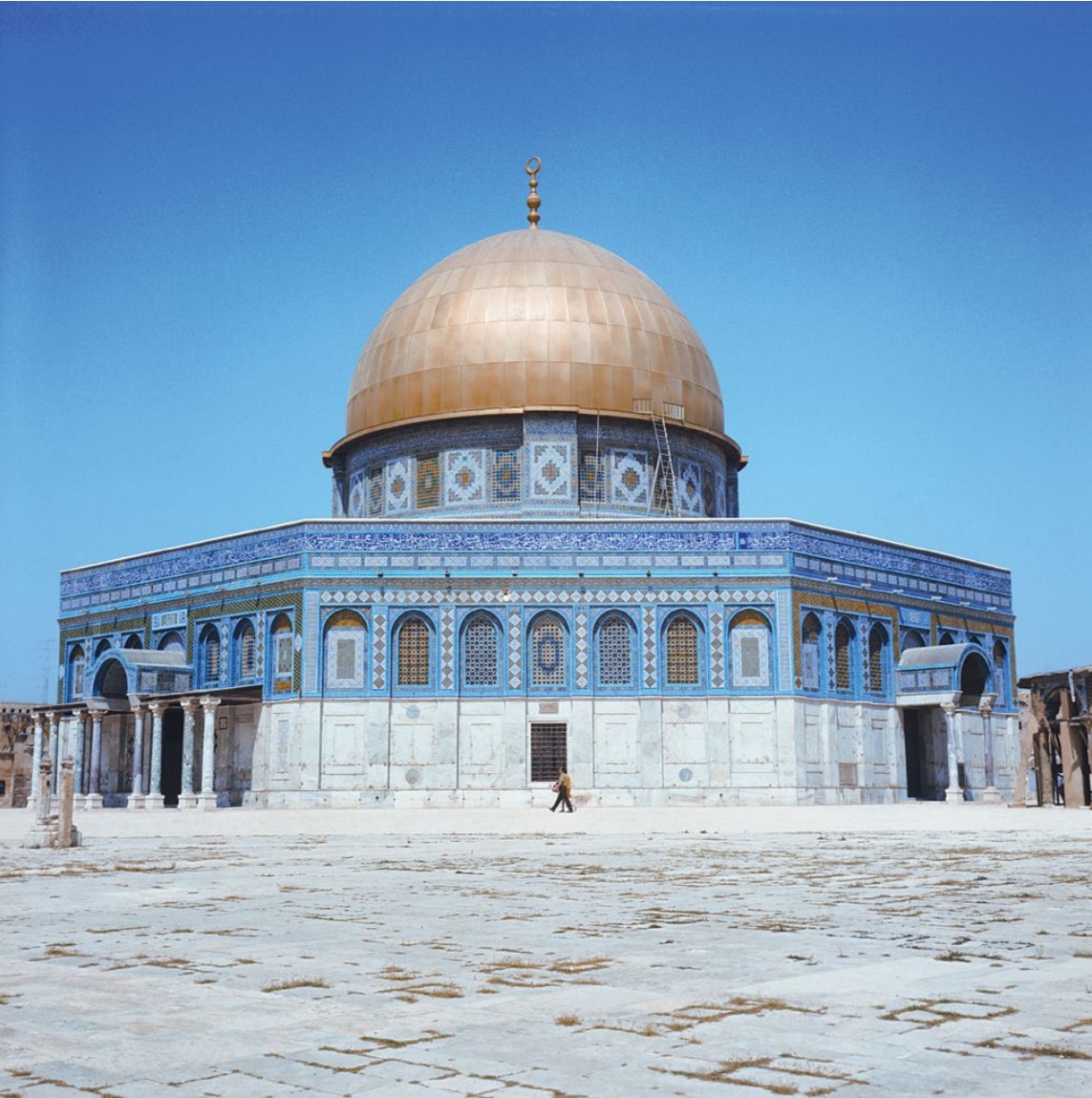
 Dome of the Rock © SEF/Art Resource, NY
Dome of the Rock
Jerusalem. Islamic, Umayyad. 691–692 C.E. Stone masonry and wooden roof decorated with glazed ceramic tile, mosaics, and gilt aluminum and bronze dome.
Curator Note
"A golden crown on the skyline of Jerusalem. It is NOT a mosque, but a shrine. Built on the Temple Mount (Haram al-Sharif), it marks the spot where Muhammad ascended to heaven (Miraj) and where Abraham prepared to sacrifice Isaac."
Form
- Octagonal Plan: Influenced by Byzantine martyriums (e.g., San Vitale).
- The Dome: Wooden double-shell dome covered in gold leaf (originally lead/brass).
- Mosaics: Interior/Exterior covered in glass tesserae (Byzantine style, Islamic motifs).
- Decoration: Aniconic (no figures)—vegetal motifs, calligraphy, and geometric patterns.
- Structure: Stone masonry base with a wooden roof system.
Function
- Shrine: Protecting the "Foundation Stone" (rock at the center).
- Political Statement: Umayyad Caliph Abd al-Malik built it to rival the Holy Sepulchre.
- Pilgrimage: An alternative destination when Mecca was controlled by a rival Caliph (Ibn Zubayr).
- Reliquary: Marks the site of the Night Journey (Isra and Miraj).
- Assertion of dominance: Looking down on the Christian and Jewish holy sites.
Content
- The Rock: The rough bedrock at the center (Site of Holy of Holies? Creation of Adam?).
- Calligraphy: Earliest surviving Quranic inscriptions (emphasizing "God is One, not three").
- Columns: Spolia (reused Roman/Byzantine columns).
- Colors: Green and Blue (Paradise) vs. Gold (Divine Light).
- Circumambulation: Two ambulatories allow pilgrims to circle the rock.
Context
- Jerusalem: Sacred to Jews (Temple Mount), Christians (near Sepulcher), Muslims (Night Journey).
- Completion 691 C.E.: The first great monument of Islamic architecture.
- Byzantine Influence: Artisans were likely trained in Byzantine mosaic techniques.
- History: Controlled by Crusaders for a time (Templum Domini), then retaken by Saladin.
- Still a flashpoint in the Israeli-Palestinian conflict.