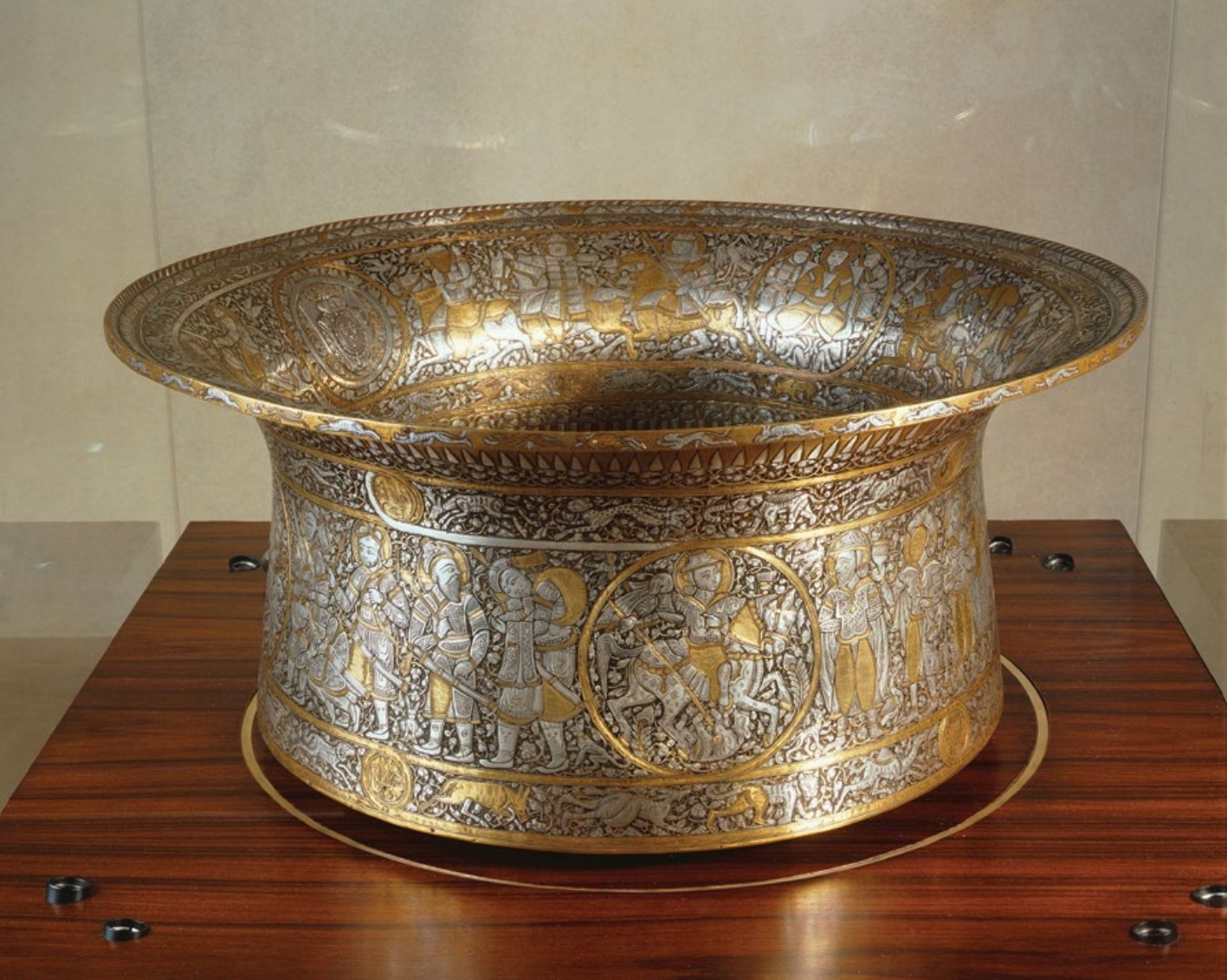
 Basin (Baptistère de St. Louis) © Gianni Dagli Orti/The Archive at Art Resource, NY
Basin (Baptistère de St. Louis)
Muhammad ibn al-Zain. c. 1320–1340 C.E. Brass inlaid with gold and silver.
Curator Note
"A Mamluk masterpiece that ended up baptizing French Kings. Created by a master metalworker in Egypt/Syria, it is so covered in figures (Mongols, hunters, animals) that no background brass is visible. It is signed six times—the artist was proud."
Form
- Material: Brass inlaid with gold and silver (precious metals).
- Technique: Etching/Engraving and hammering inlays.
- Composition: Frieses (bands) of continuous narrative around the rim and body.
- Style: Horror Vacui (fear of empty space)—every inch is decorated.
- Figures: Running animals, hunters on horseback, rulers seated with goblets.
Function
- Original: Probably a hand-washing basin for a Mamluk court official.
- Evolved: Taken to France and used to baptize royal infants (Louis XIII).
- Display: A showpiece of wealth and artistic mastery.
- Export ware: Possibly made specifically for the European market (no Quranic verses).
- Diplomatic gift: How it got to France is a mystery, likely a gift.
Content
- Intertwined figures: Mamluk hunters vs Mongol enemies (identified by hats).
- Fleur-de-lis: Added later? Or a Mamluk symbol? (Scholars debate this).
- Signature: "Work of Master Muhammad ibn al-Zain" appears 6 times.
- Bottom: The floor of the basin features a complex pattern of sea creatures/eels.
- Violence and Leisure: Scenes of hunting alternate with scenes of courtly life.
Context
- Mamluks: Slave-soldiers who took power in Egypt/Syria (ruled 1250–1517).
- Metalwork capital: This region was famous for luxury metal goods.
- Cross-cultural trajectory: Islamic art repurposed for Christian rituals.
- Currently in the Louvre Museum.
- The lack of calligraphy suggests a non-religious use.