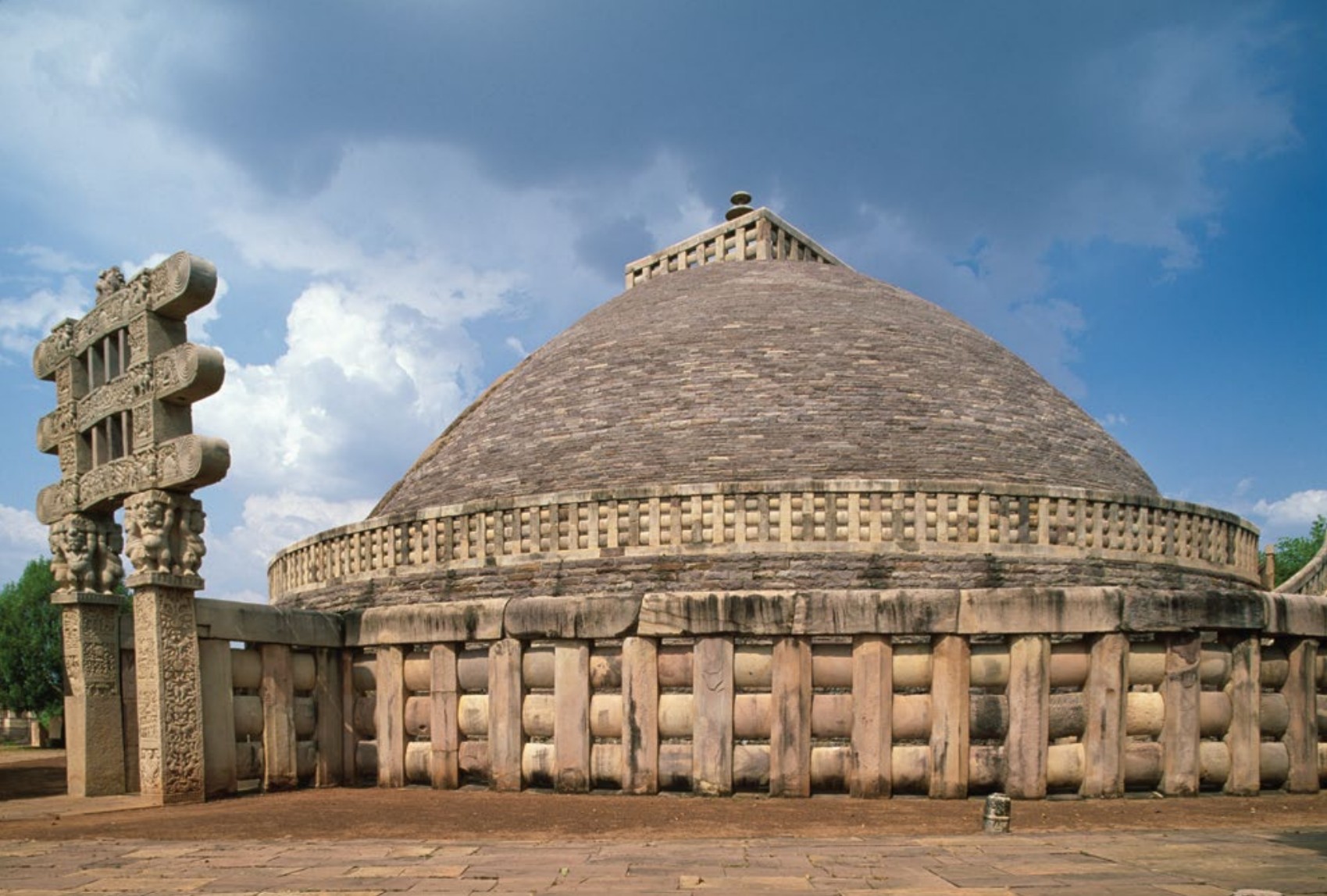
 Great Stupa at Sanchi © Atlantide Phototravel/Corbis
Great Stupa at Sanchi
Madhya Pradesh, India. Buddhist; Maurya, late Sunga Dynasty. c. 300 B.C.E.–100 C.E. Stone masonry, sandstone on dome.
Curator Note
"A cosmic diagram in stone. The Stupa is not a building you enter, but a solid mound representing the Buddha's seated body in meditation. Pilgrims visit not to go "in", but to walk "around" (circumambulation), tracing the path of enlightenment with their footsteps, guided by the four carved gateways (toranas) that narrate the Buddha's past lives."
Form
- Anda: The massive hemispherical dome representing the world/universe.
- Yasti: The central mast connecting heaven and earth (axis mundi).
- Chattras: Three umbrella-like disks on top representing the Buddha, Dharma, and Sangha.
- Toranas: Four elaborately carved gateways facing North, South, East, and West.
- Harmika: The square fence on top symbolizing a sacred enclosure/heaven.
Function
- Reliquary: Houses the ashes (relics) of the historical Buddha.
- Pilgrimage Site: A place for circumambulation (walking meditation) to gain merit.
- Cosmogram: A 3D model of the Buddhist universe.
- Didactic: The carvings teach the Jataka tales (lives of Buddha) to illiterate pilgrims.
- Devotion: A focal point for Buddhist worship (puja) for centuries.
Content
- Yakshis: Fertility spirits carved on the gates (blending earlier animism with Buddhism).
- Aniconism: The Buddha is NOT shown as a human, but as symbols (footprints, empty throne, wheel).
- Jataka Tales: Carvings telling stories of the Buddha's previous lives (e.g., the generous prince).
- Wheel of Law (Dharmachakra): Represents the teaching of the Buddha setting truth in motion.
- Elephants/Animals: Depicted in procession, honoring the Buddha.
Context
- Ashoka the Great: The Mauryan Emperor who converted to Buddhism and founded the original stupa.
- Evolution: Expanded over centuries; the stone casing covers an earlier brick core.
- Location: Sanchi was a major trade center, allowing merchants to sponsor the construction.
- Gender: Inscriptions show many donors were women (nuns and laywomen).
- Rediscovery: Abandoned for centuries, "found" by the British in 1818.