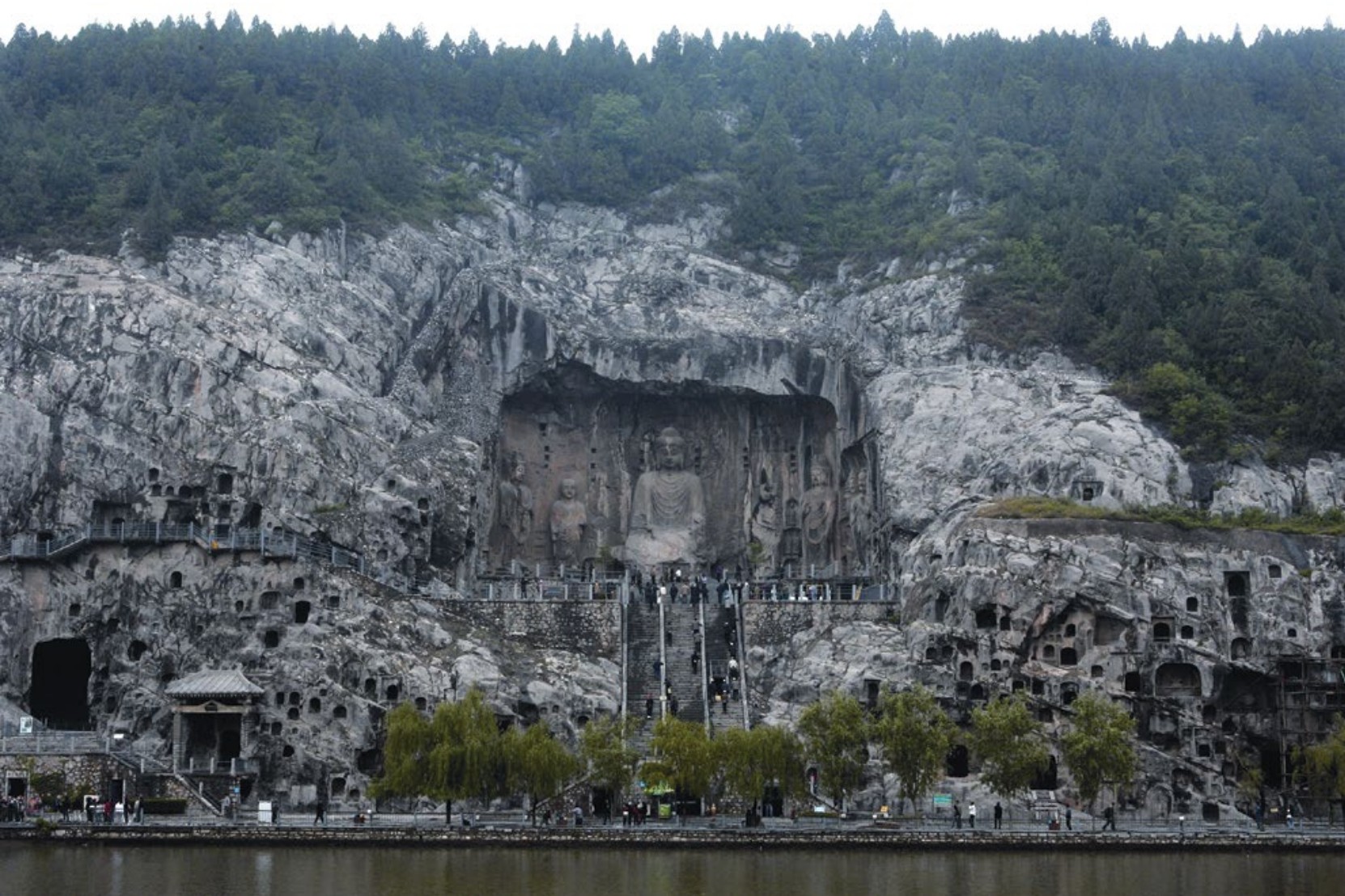
 Longmen Caves © CLARO CORTES IV/Reuters/Corbis
Longmen Caves
Luoyang, China. Tang Dynasty. 493–1127 C.E. Limestone.
Curator Note
"The Empress and the Cosmic Buddha. Carved into cliffs along the Yi River, this massive complex reached its peak under Empress Wu Zetian. The colossal Vairocana Buddha—whose face might be modeled on the Empress herself—represents the universal, all-encompassing nature of Buddhism and the state."
Form
- Rock-cut architecture: Caves and niches carved directly into limestone cliffs.
- Scale: The Fengxian Temple figures are massive (Vairocana is 17m high).
- Style: Tang International Style (plump faces, serene expressions, flowing drapery).
- Volume: Figures are high relief, almost fully 3D, interacting with the space.
- Quantity: 110,000 statues, 60 stupas, 2,800 inscriptions.
Function
- State Buddhism: Used by rulers (Wei, Tang) to affirm their divine right.
- Merit Making: Patrons commissioned caves to gain karmic merit for ancestors.
- Propaganda: Empress Wu used the Vairocana image to support a female ruler.
- Worship: A site for monks and laypeople to pray.
- Record keeping: Inscriptions provide a history of Chinese calligraphy.
Content
- Vairocana Buddha: The "Cosmic Buddha" presiding over the universe.
- Guardians (Lokapala): Fierce, muscular figures protecting the Dharma.
- Monks (Arhats): Ananda and Kasyapa flank the Buddha (youth vs. age).
- Bodhisattvas: Serene, jewelry-adorned figures ready to help humanity.
- Heavenly Kings: Standing on demons, holding stupas/weapons.
Context
- Empress Wu Zetian: The only female Emperor of China; generous patron.
- Northern Wei vs. Tang: The style shifts from linear/archaic (Wei) to naturalistic/grand (Tang).
- Silk Road: Brought Buddhist influence from India to Central China.
- Location: Luoyang was an imperial capital.
- Damage: Many heads were looted in the early 20th century for Western museums.