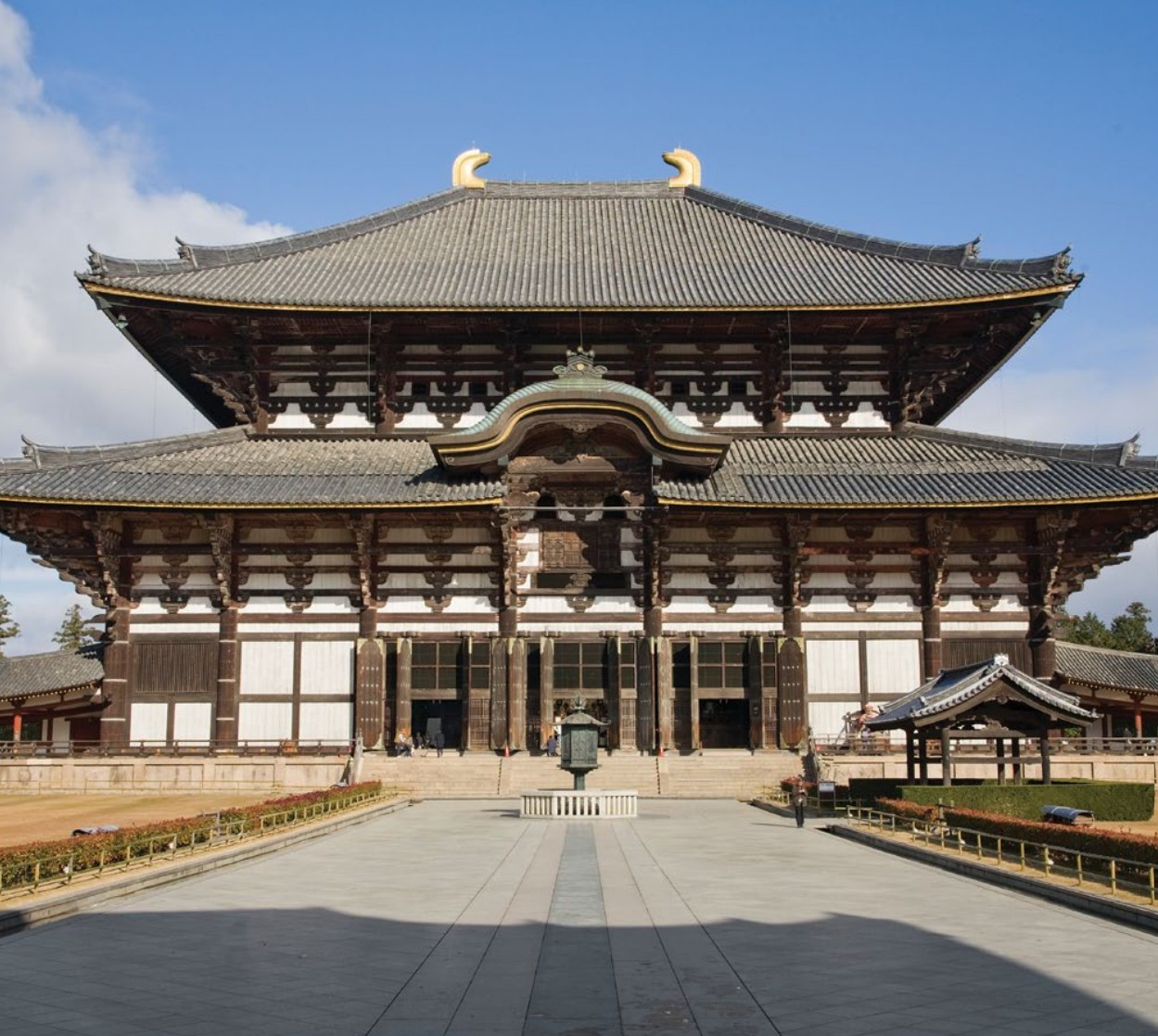
 Todai-ji © Vanni Archive/Art Resource, NY
Todai-ji
Nara, Japan. Various artists, including sculptors Unkei and Keikei, as well as the Kei School. 743 C.E.; rebuilt c. 1700. Bronze and wood (sculpture); wood with ceramic-tile roofing (architecture).
Curator Note
"National unity through Buddhism. Emperor Shomu, facing smallpox and rebellion, built the largest wooden building in the world to house a colossal bronze Buddha (Daibutsu). It was a desperate, massive state project to unify Japan under the protection of the Buddha."
Form
- Architecture: Post-and-lintel wooden construction with massive bracket systems.
- Scale: The Daibutsen (Great Buddha Hall) is huge (and the original was 50% bigger!).
- Sculpture: The Great Buddha is 50ft tall (bronze); Nio guardians are dynamic wood.
- Roof: Hipped roof with ceramic tiles and shibi (golden fishtails) on top.
- Layout: Modeled on Chinese Tang dynasty palace architecture.
Function
- State Temple: The head of the "Kokubunji" system (provincial temples).
- Protection: Built to appease the gods during plagues and disasters.
- Imperial Power: Demonstrated the Emperor's ability to marshal all Japan's resources.
- Worship: Center for the Kegon school of Buddhism.
- Education: A place for monk training.
Content
- Daibutsu (Vairocana): The sun/cosmic Buddha, casting light on the world.
- Nio Guardians: Ungyo (closed mouth) and Agyo (open mouth) by Unkei/Keikei (realism).
- Deer: Sacred messengers of the Shinto kami (syncretism).
- Pillars: One pillar has a hole (nostril of Buddha); squeezing through grants enlightenment.
- Lotus Petals: The Buddha sits on a lotus etched with the Buddhist universe.
Context
- Emperor Shomu: Issued the edict to build it in 743 C.E.
- Nara Period: Japan was heavily mimicking Chinese culture.
- Resource drain: The bronze required nearly bankrupted the Japanese economy.
- Kei School: The Nio guardians (1203 C.E.) show the dynamic realism of the Kamakura period rebuild.
- Destruction/Rebuilding: Burned down twice in civil wars; current hall is from the Edo period (1700).