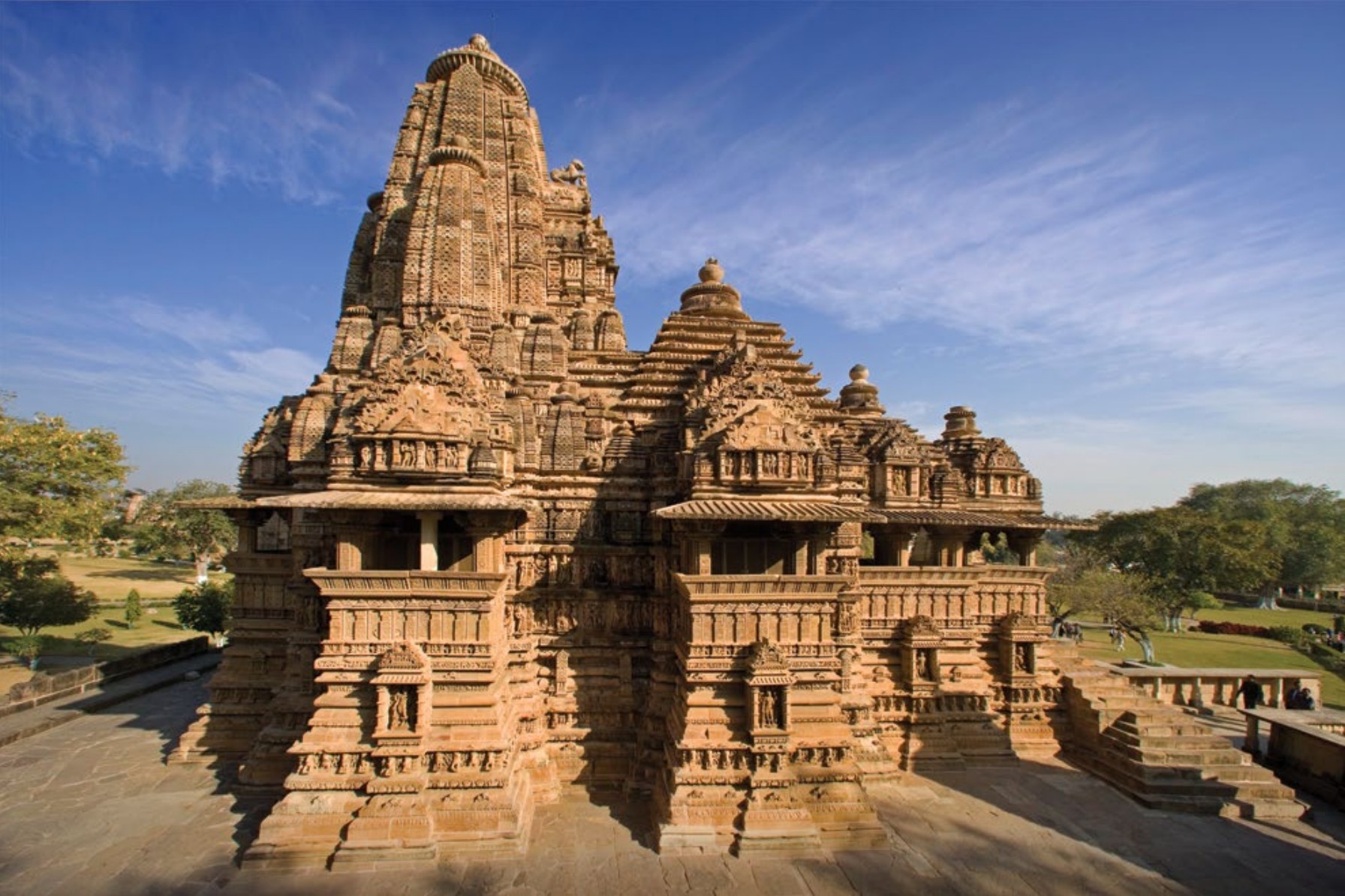
 Lakshmana Temple © Jose Fuste Raga/Corbis
Lakshmana Temple
Khajuraho, India. Hindu, Chandella Dynasty. c. 930–950 C.E. Sandstone.
Curator Note
"The union of the soul and the divine. Famous (or infamous) for its erotic sculptures, this temple is actually a profound theological statement. The "mithuna" (loving couples) represent the bliss of union with the divine, fertility, and protection, decorating the exterior of the house of Vishnu."
Form
- Style: Nagara style (Northern Indian) architecture.
- Shikara: The beehive-shaped main tower representing Mt. Meru.
- Plan: Panchayatana (5-shrine plan) on a high platform (jagati).
- Verticality: Attempt to reach the heavens through rising towers (urushringas).
- Material: Sandstone (ashlar masonry, no mortar).
Function
- Residence of God: A home for Vishnu (Vaikuntha) on earth.
- Worship: Devotees perform circumambulation (pradakshina) around the outside.
- Darshan: The goal is to make eye contact with the deity in the dark inner sanctum.
- Legitimacy: Built by Yashovarman to celebrate independence from Gurjara-Pratiharas.
- Fertility: Erotic imagery considered auspicious and protective.
Content
- Mithuna: Couples in sexual union (symbol of non-duality/moksha).
- Garbha Griha: The "Womb Chamber"—small, dark, windowless inner sanctum.
- Vaikuntha Vishnu: Three-headed Vishnu statue (human, boar, lion).
- Mandapas: Pillared halls for worshippers before the sanctum.
- Axis Mundi: The finial (amalaka) on top connects earth to heaven.
Context
- Chandella Dynasty: Powerful rulers in Central India.
- Khajuraho: A remote site with over 80 temples originally.
- Tantra: Influence of Kaula Kapalika sects who used sex/yoga for spiritual goals.
- Bhakti Movement: Rise of personal devotion to gods.
- Misconception: The "erotic" art is on the OUTSIDE; the inside is pure and simple.