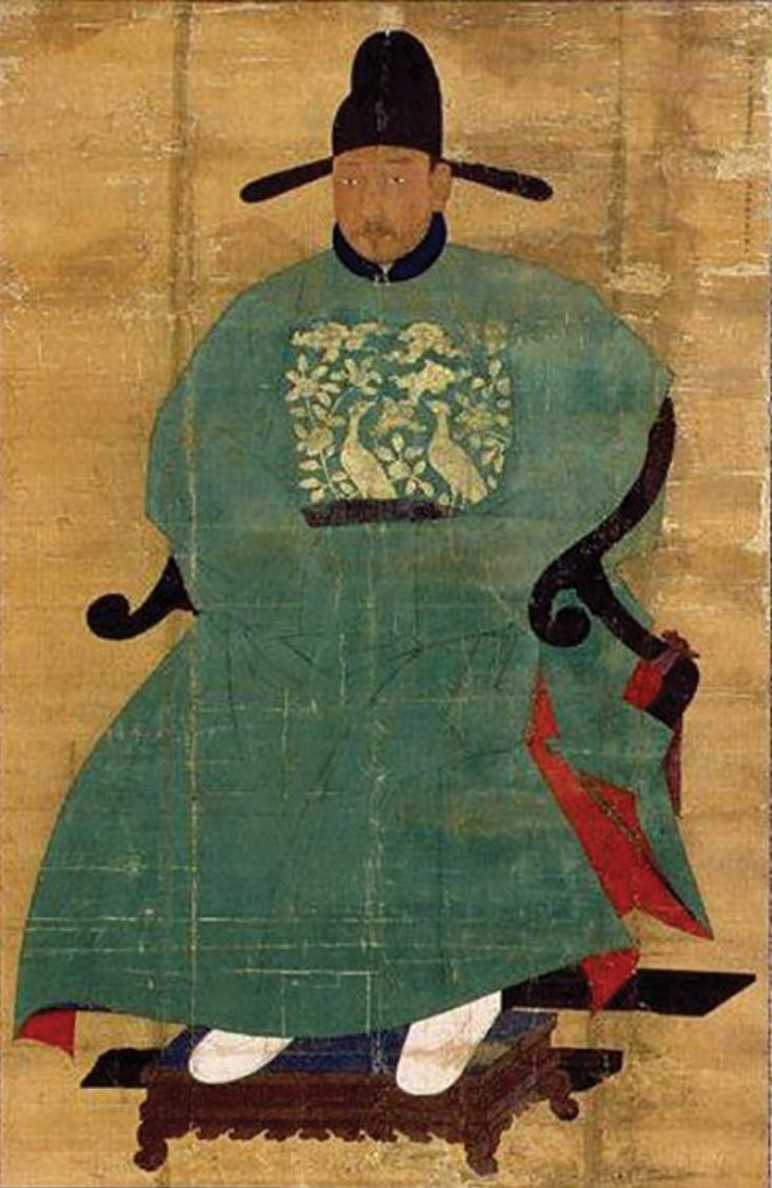
 Portrait of Sin Sukju © Used by Permission
Portrait of Sin Sukju
Imperial Bureau of Painting. c. 15th century C.E. Hanging scroll (ink and color on silk).
Curator Note
"Confucian dignity. Sin Sukju was a brilliant scholar-official who served six kings. This portrait is a "Meritorious Subject" painting—a reward for loyalty. His wrinkled face shows wisdom and individual character, while his rank badge (peacocks) shows his status. It's ancestor worship meets state propaganda."
Form
- Format: Hanging scroll, ink and color on silk.
- Pose: Seated in a chair, slightly 3/4 view, hands hidden in sleeves.
- Face: Realistic, individual features (wrinkles, eye bags)—"likeness".
- Robes: Angular, stiff lines of the official green robe.
- Feet: Perched on a footstool (standard for high officials).
Function
- Commemoration: Honoring him as a "Meritorious Subject" (hero of the state).
- Ancestor Worship: Hung in the family shrine (sadang) for rituals.
- Propaganda: Example of Confucian loyalty to the King.
- Record: documenting his rank and appearance for posterity.
- Gift: Likely commissioned by the Royal Bureau.
Content
- Rank Badge (Hyuangbae): Embroidered gold chest patch with peacocks (civil official).
- Hat: Silk administrative hat (samo).
- Expression: Solemn, dignified, distinct personality.
- Leather shoes: Detail of the costume.
- Empty background: Focus remains entirely on the figure.
Context
- Joseon Dynasty: A customized Neo-Confucian society.
- Confucianism: Emphasized loyalty (King) and filial piety (Ancestors).
- Imperial Bureau: Government artists specialized in these portraits.
- Sin Sukju: A prime minister and scholar (helped create Hangul alphabet).
- Survival: Such portraits were revered and protected by families.