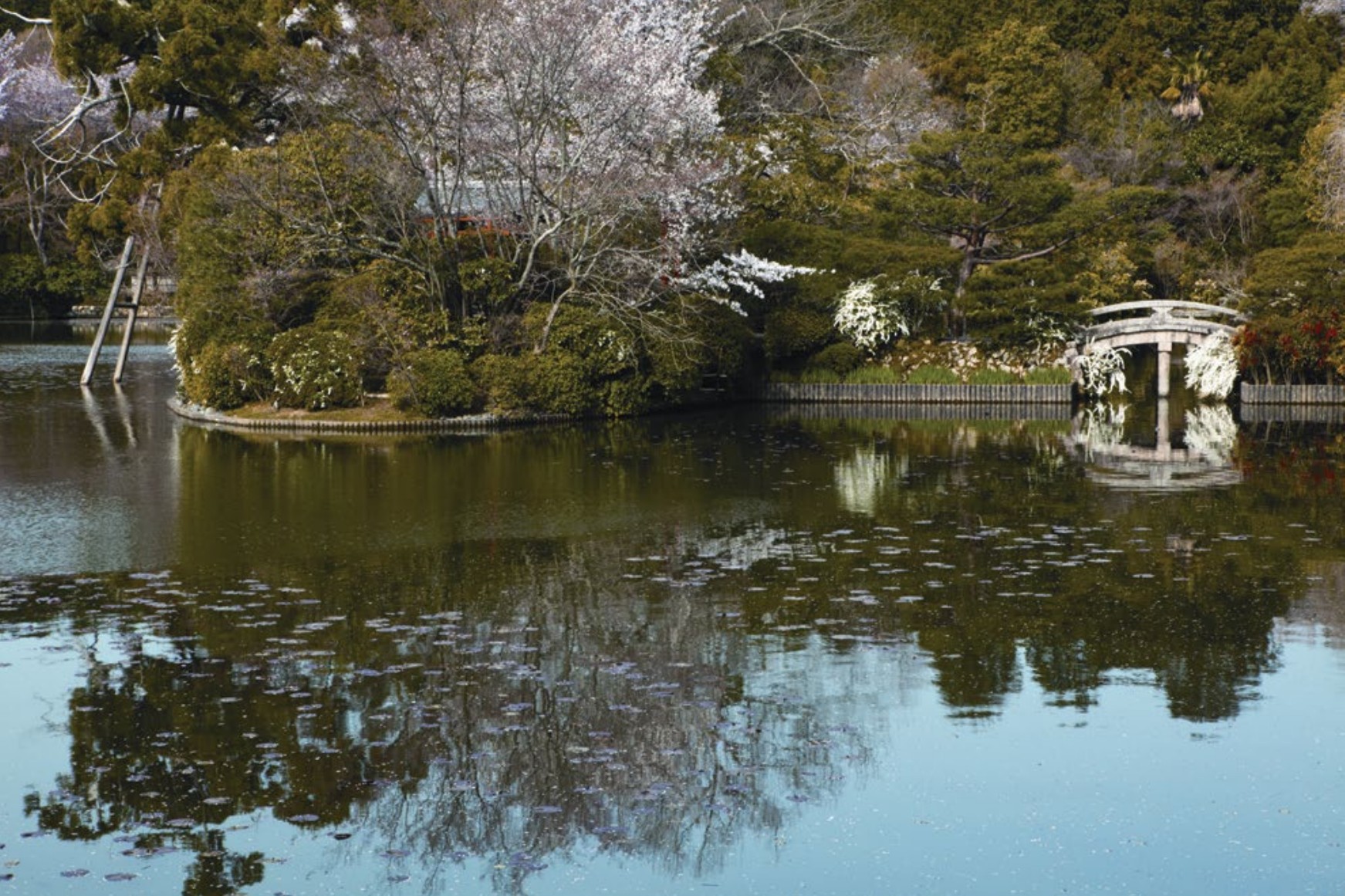
 Ryoan-ji, wet garden © John Lander Photography
Ryoan-ji
Kyoto, Japan. Muromachi Period, c. 1480 C.E.; current design most likely dates to the 18th century. Rock garden.
Curator Note
"The beauty of nothingness. A dry rock garden (karesansui) that is a puzzle for the mind. 15 rocks float in a sea of raked white gravel. The catch? You can only see 14 from any angle. It teaches that our perspective is limited and only through enlightenment ("hovering above") can we see the whole truth."
Form
- Dry Garden (Karesansui): Raked white gravel and 15 stones.
- Wet Garden: A pond with vegetation (often overlooked).
- Composition: Asymmetrical grouping of stones (5, 2, 3, 2, 3?).
- Simplicity: Absence of flowering plants (austere Zen aesthetic).
- Frame: Surrounded by an oil-wall and a viewing veranda.
Function
- Meditation: A tool for Zen monks to focus the mind.
- Koan: A visual riddle to break logical thinking.
- Aesthetics: Wabi-sabi (beauty in imperfection/simplicity).
- Temple: Part of a Zen Buddhist monastery.
- Maintenance: Raking the gravel is a meditative act itself.
Content
- Gravel: Represents water / ocean / void.
- Rocks: Represent islands / mountains / tiger cubs symbolizing clarity.
- The Wall: Made of clay boiled in oil; aged over centuries.
- The number 15: Symbolizes completion/full moon (hidden rock = incompleteness).
- Veranda: The specific viewpoint from which to sit and contemplate.
Context
- Muromachi Period: Zen Buddhism flourished among the Samurai class.
- Zen: Emphasis on meditation (zazen) and direct intuition.
- Creator: Unknown (possibly "Kotaro" and "Hikojiro" - names on a rock).
- Nature: Abstracted nature to its essence (unlike the lush gardens of Heian).
- Change: The garden is static, but the seasons change the wall/trees behind it.