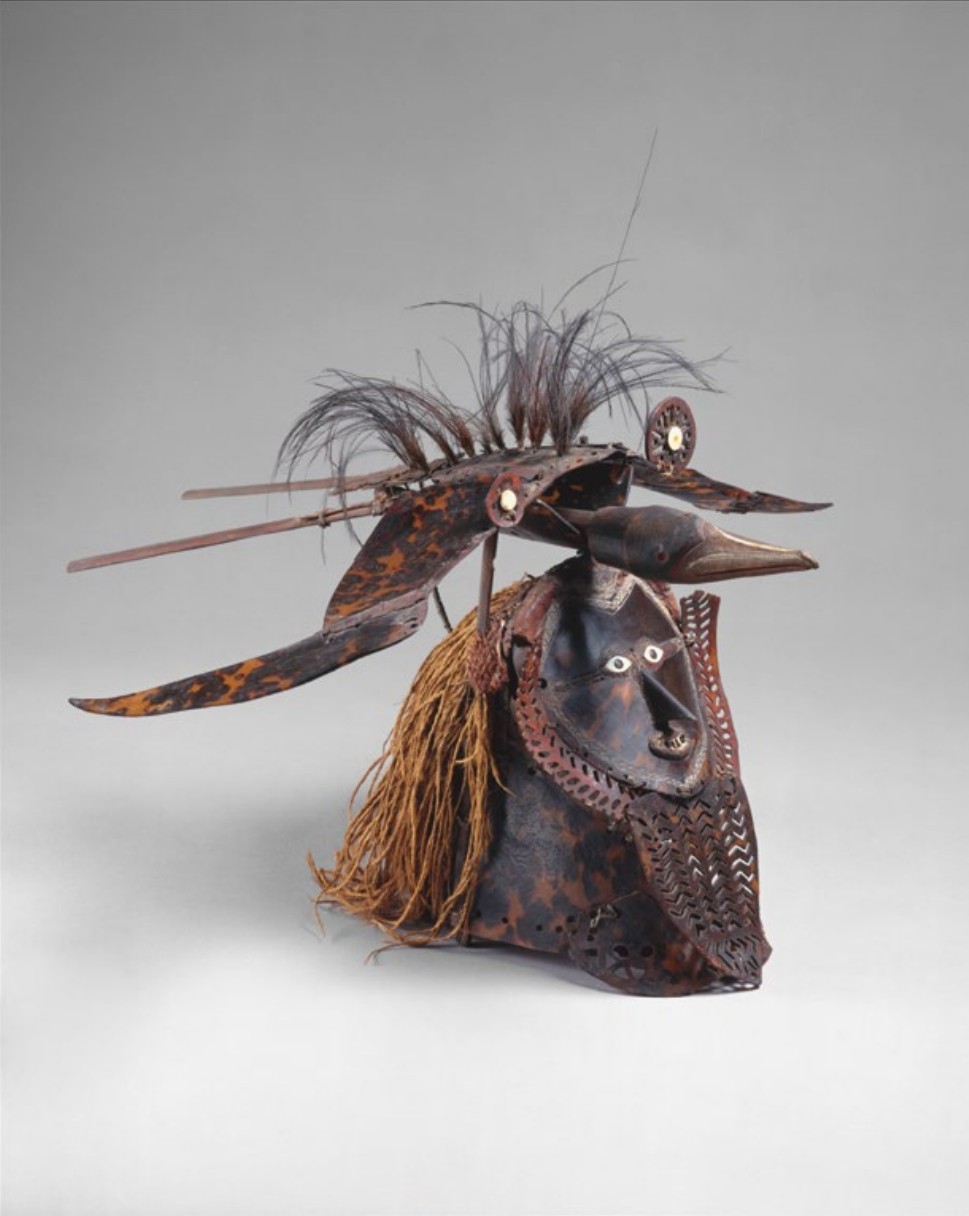
 Buk Image © The Metropolitan Museum of Art/Image source © Art Resource, NY
Buk (mask)
Torres Strait. Mid- to late 19th century C.E. Turtle shell, wood, fiber, feathers, and shell.
Curator Note
"The hero performs. Made from precious turtle shell (a material unique to this region), this mask combines a human face with a bird (frigate bird) on top. It was part of a full-body costume used in dynamic dance performances reenacting the lives of cultural heroes."
Form
- Material: Plates of turtle shell stitched together (steamed/moulded).
- Texture: Combination of smooth shell, rafia hair, and feathers.
- Structure: Three registers: Human face, Bird body, Bird feathers.
- Decoration: Lattice-work beard and details painted/incised.
- Movement: Technically a "kinetic" sculpture when danced (feathers swaying).
Function
- Performance: Worn during funerary ceremonies and male initiation rites.
- Reenactment: Actors portrayed culture heroes (mythological ancestors).
- Totemic: Connected the wearer to their clan totem (e.g., the Frigate Bird).
- Agriculture: Rituals ensured a good harvest.
- Connection: Linked the living with the spirit world.
Content
- Human Face: Represents an ancestor or hero (beard indicates wisdom/elder).
- Frigate Bird: Represents the spirit/totem flying above.
- Feathers: Suggest flight and movement.
- Raffia: simulates human hair.
- Composite creature: Blurs the line between human and animal realms.
Context
- Torres Strait: The water passage between Australia and Papua New Guinea.
- Trade: Turtle shell was a major trade commodity.
- Missionary Burning: Missionaries destroyed almost all masks; this one survived.
- Music: Accompanied by drums and chanting ("fire" light effects).
- Storage: Kept in special stone houses when not in use.