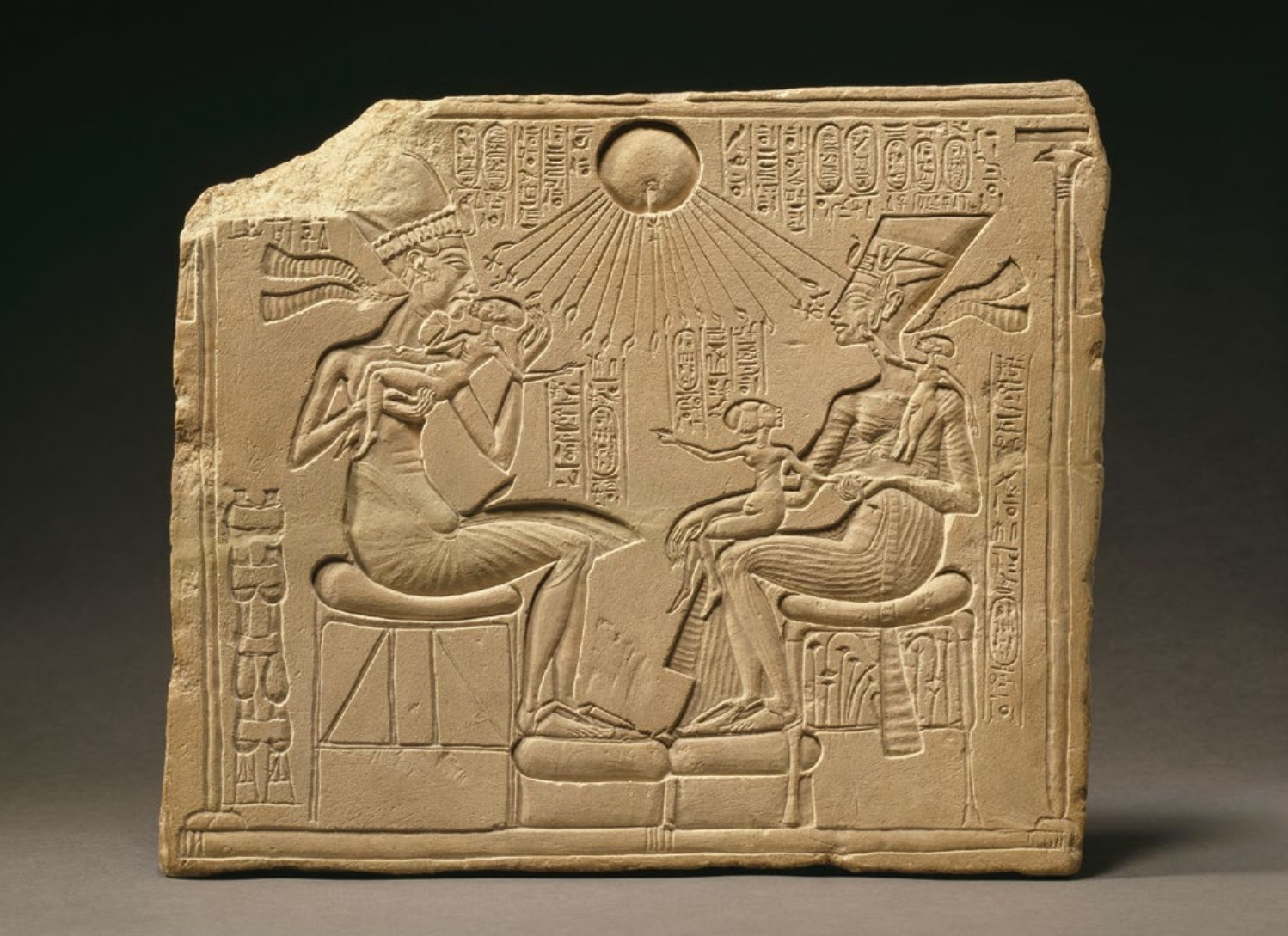
 Akhenaton, Nefertiti, and three daughters © bpk, Berlin/Staatliche Museen/Art Resource, NY
Akhenaten, Nefertiti, and Three Daughters
New Kingdom (Amarna), 18th Dynasty. c. 1353–1335 B.C.E. Limestone.
Curator Note
"A radical break from tradition: Akhenaten shifted the religion to monotheism (Aten) and the art style to informal intimacy. Here, a pharaoh is shown kissing his child—unheard of in Egyptian art."
Form
- Sunken relief carving (figures cut into the stone), typical of the Amarna period.
- Amarna Style: Elongated skulls, thin arms, swelling bellies, and heavy thighs.
- Curvilinear lines replace the rigid rectilinear forms of traditional Egyptian art.
- Composite view is maintained, but with more fluid and casual postures.
- Limestone stele, small enough for domestic use.
Function
- House altar for private worship in a domestic setting.
- Propaganda for the new monotheistic religion (Atenism).
- Reinforced the idea that the Royal Family was the only path to the god Aten.
- Replaced the traditional pantheon of gods in the daily lives of citizens.
- Served as a focal point for family prayer.
Content
- Akhenaten (left) and Nefertiti (right) seated on cushioned thrones holding their three daughters.
- Intimate, informal interaction: Akhenaten kisses a child; Nefertiti bounces one on her lap.
- The Sun Disk (Aten) dominates the top, extending rays that end in Ankhs (symbol of life) held to the royal noses.
- Inscriptions in hieroglyphs identify the figures and the god.
- Nefertiti's throne has symbols of Upper/Lower Egypt, showing her power.
Context
- Created during the Amarna Period (c. 1353–1335 B.C.E.), a brief religious revolution.
- Akhenaten moved the capital to Akhetaten (Amarna) and banned the worship of Amun.
- This radical style and religion lasted only for his reign; Egypt returned to orthodoxy under Tutankhamun.
- The "androgynous" body features may symbolize the sexless nature of the sun god Aten.
- Demonstrates a shift from the timeless/eternal to the ephemeral/momentary.