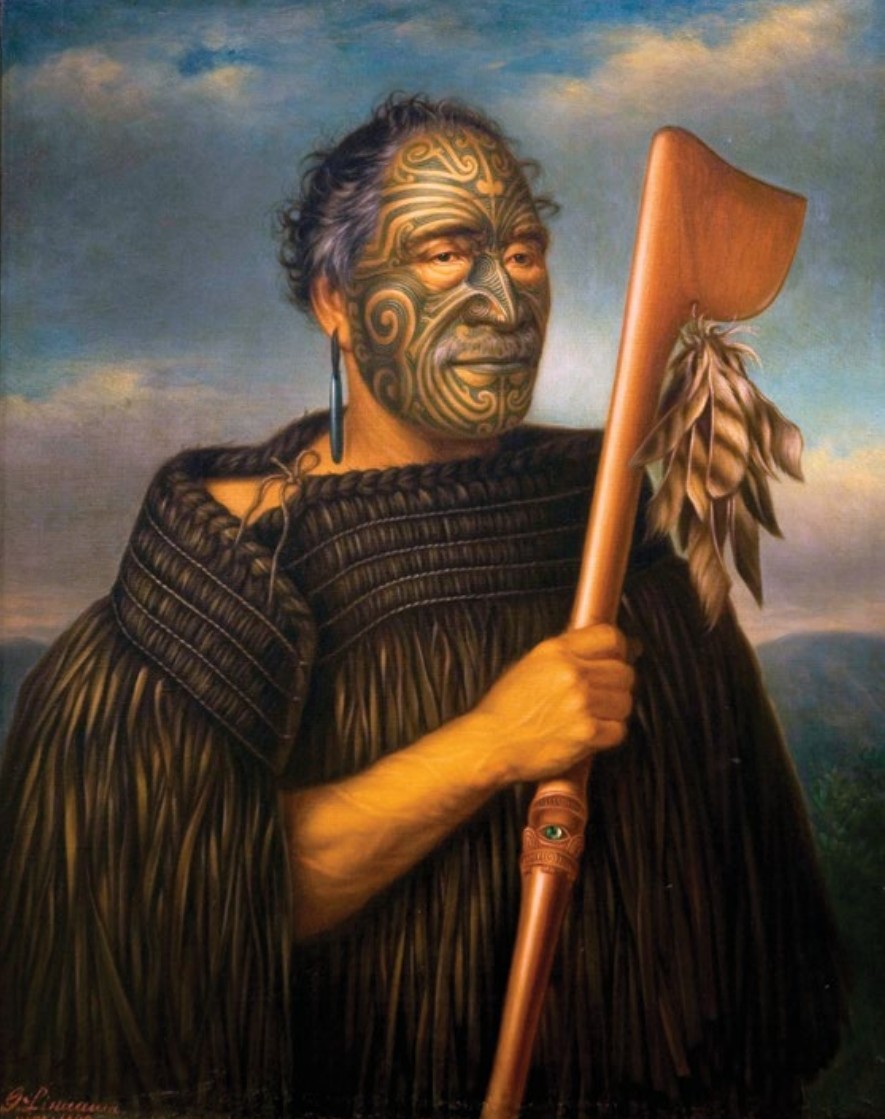
 Tamati Waka Nene © Corbis
Tamati Waka Nene
Gottfried Lindauer. 1890 C.E. Oil on canvas.
Curator Note
"A portrait of mana. Though painted by a European artist in a Western oil style, this portrait serves a Maori function. It is a "taonga" (treasure) that preserves the living presence and mana of the great chief Tamati Waka Nene, to be spoken to and wept over by his descendants."
Form
- Medium: Oil on canvas (Western academic realism).
- Style: Realistic/Naturalistic portraiture.
- Lighting: Studio lighting focusing on the face and details.
- Perspective: 3/4 view, authoritative stance.
- Source: Likely painted from a photograph after the chief died.
Function
- Commemoration: Preserves the image of an ancestor in the family home (Wharenui).
- Mana Vessel: Acts as a conduit for the spirit of the ancestor.
- History: Records a pivotal figure who supported the Treaty of Waitangi.
- Patronage: Commissioned by European settlers (Henry Partridge) to document "vanishing" culture.
- Respect: Honors the dignity and status of the sitter.
Content
- Moko: Facial tattoo—a signature of identity and high status (not just decoration).
- Kiwi feather cloak (Kahu Kiwi): Symbol of high chieftainship.
- Greenstone earring (Pounamu): Precious heirloom (taonga).
- Tewhatewha: Hand weapon with feathers (symbol of command/oratory).
- Expression: Wise, benevolent, yet powerful.
Context
- New Zealand wars: Tamati Waka Nene allied with the British against other Maori chiefs.
- Gottfried Lindauer: Czech painter who immigrated to NZ and became famous for Maori portraits.
- Maori view: Ancestor portraits are not just art; they are LIVING ancestors.
- Photography: Replaced carving as the primary mode of portraiture.
- Colonization: Represents the complex interaction/conversion between Maori and Pakeha.