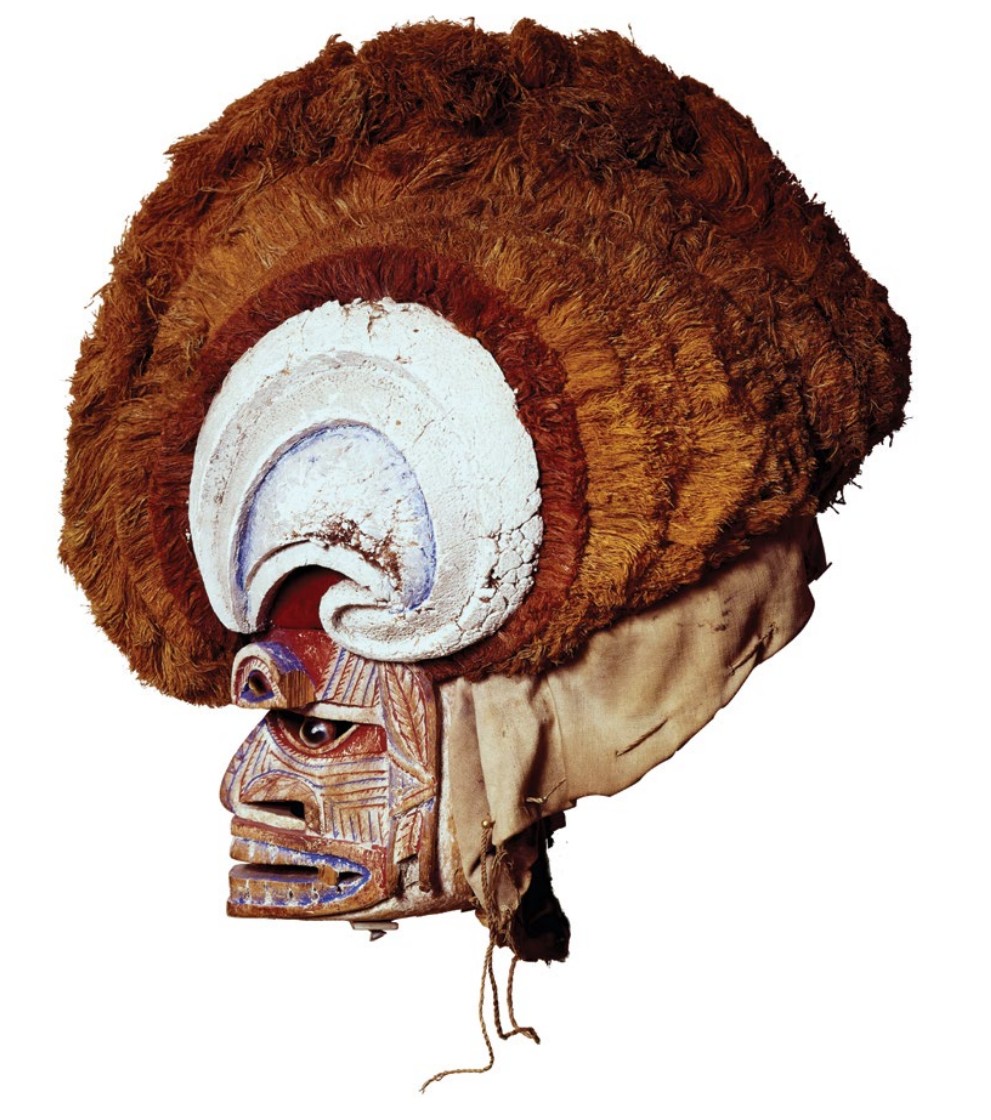
 Malagan mask University Museum, Pennsylvania, PA, USA/Photo © AISA/The Bridgeman Art Library
Malagan display and mask
New Ireland Province, Papua New Guinea. c. 20th century C.E. Wood, pigment, fiber, and shell.
Curator Note
"Art made to die. Malagan sculptures are created for a single, massive funerary cycle. Once the soul is sent to the realm of the dead during the climax of the ceremony, the sculpture is technically "dead" and useless. It is then destroyed or sold to outsiders, having served its purpose."
Form
- Material: Carved wood, painted with pigment, inlaid with snail shell (opercula).
- Style: Intricate fretwork, negative space, and complex layering.
- Color: Black, yellow, red, and white.
- Asymmetry: Often dynamic and asymmetrical.
- Ephemeral: Made of soft wood, not intended to last forever.
Function
- Mortuary Rites: Send the soul of the deceased to the dead.
- Social Glue: The ceremony affirms land rights, debts, and clan structures.
- Copyright: The specific designs belong to the family; selling the carving transfers the right to use the design.
- Initiation: Young men enter adulthood during the cycle.
- Display: Displayed in a temporary house (fenced enclosure).
Content
- Faces: Represent ancestors or spirits (Ges).
- Animals: Birds, fish, and pigs (totems or food sources).
- Eyes: Snail shell eyes look "glaring" and alive.
- Motifs: Rock cod (mythical), Flying fish (transition).
- Verticality: Totem-like stacking of figures.
Context
- New Ireland: Northern island of PNG.
- Copyright system: Buying a Malagan includes the right to the story/ritual.
- Economic ruin: A family saves for years to host a Malagan feast (pigs, taro).
- Collecting: Western museums have thousands because locals were happy to sell them after the rite.
- Cycle: The ceremony can happen months or years after the death.