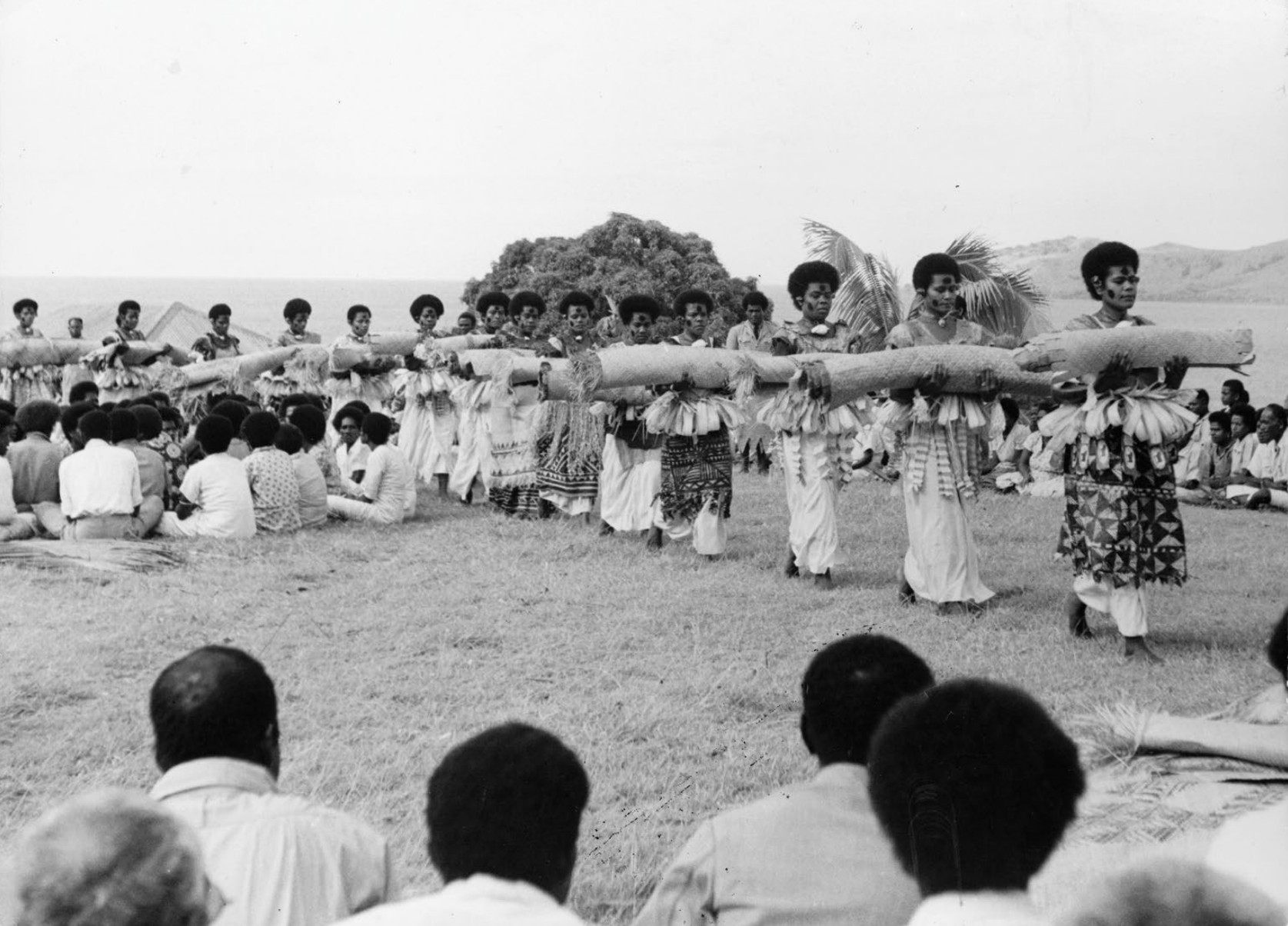
 Presentation of Fijian mats and tapa cloths to Queen Elizabeth II during the 1953-4 royal tour Courtesy of Alexander Turnbull Library, Wellington, New Zealand
Presentation of Fijian mats and tapa cloths
Fiji, Polynesia. 1953 C.E. Multimedia performance (costume; cosmetics, including scent; chant; movement; and pandanus fiber/hibiscus fiber mats), photographic documentation.
Curator Note
"A royal exchange. When Queen Elizabeth II visited Fiji, the women presented her with enormous barkcloths (ngatu) and woven mats. The art here isn't just the object—it is the PROCESS of presentation, the chant, the movement, and the simplicity of the design, proving that "simple" is regal in Fiji."
Form
- Performance Art: The work is the event itself (movements, singing, scent).
- Multimedia: Involves textiles (tapa/mats), body decoration, and oral history.
- Photography: We study the photograph documenting the 1953 event.
- Geometry: The mats/tapa feature simple black and white geometric precision.
- Scale: The mats are enormous, requiring many women to carry them.
Function
- Diplomacy: Cementing the alliance between Fiji and the British Crown.
- Ritual Exchange: Reciprocity is central to Polynesian culture.
- Tribute: Showing the highest respect to the Queen.
- Coronation visit: Part of Queen Elizabeth's first tour after being crowned.
- Cultural Affirmation: Demonstrating Fijian wealth and organization.
Content
- Ngatu (Tapa): Barkcloth decorated with geometric patterns.
- Mats: Woven from pandanus leaves (simplicity = importance).
- Women: The procession is led by women of high rank.
- Queen Elizabeth II: The recipient, acknowledging the chiefdom of Fiji.
- Masi: The specific Fijian style of stark black/white tapa.
Context
- 1953 Royal Tour: Elizabeth II visited the Commonwealth.
- Colonialism: Fiji was a British colony; the relationship was relatively peaceful.
- Status of Mats: In Fiji, mats are often MORE valuable than tapa or gold.
- Process: Drying, boiling, softening, and weaving pandanus is labor-intensive.
- Living Tradition: Similar presentations happen today for weddings/funerals.